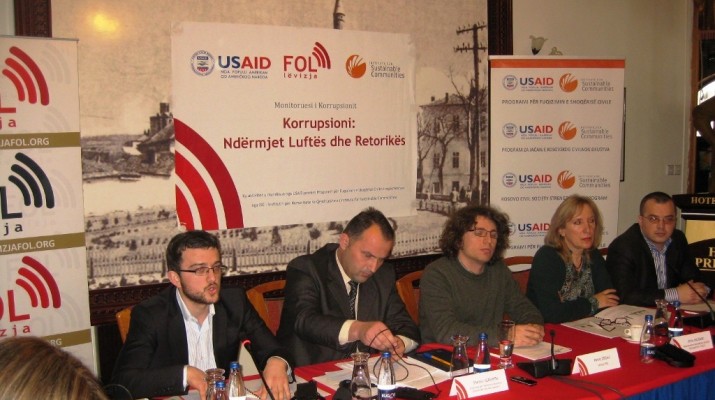
Corruption: Between Fight and Rhetorics”

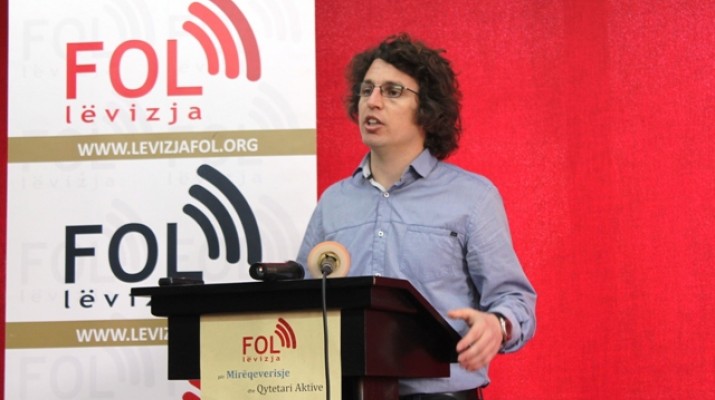
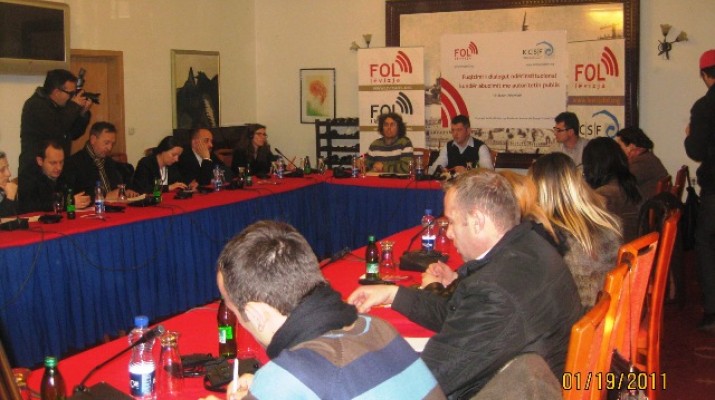
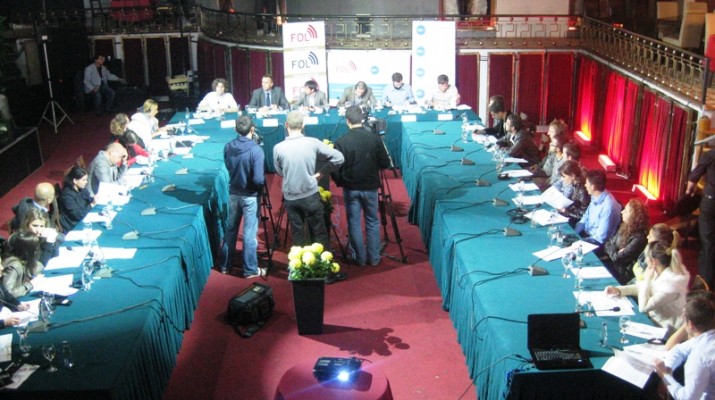
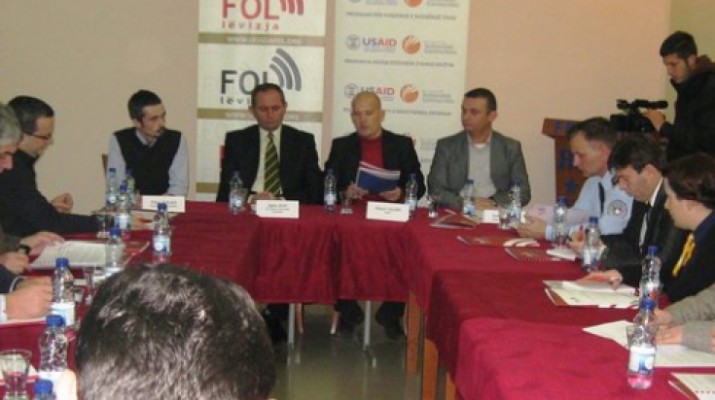
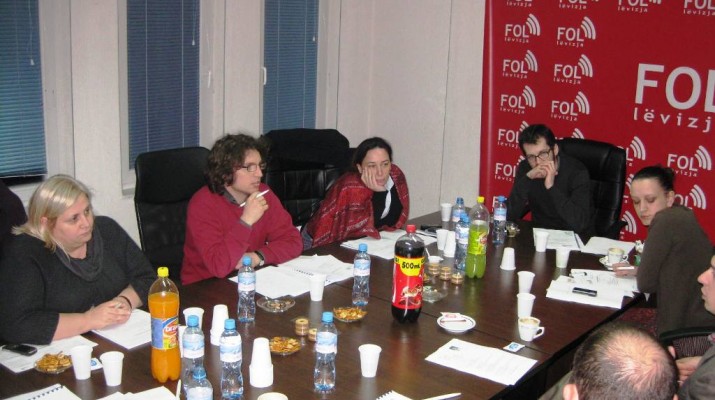
Prishtina, February 23, 2011 – Movement FOL, supported by USAID through the Program for Strengthening Civil Society implemented by ISC – Institute for Sustainable Communities, today held a round table on “Corruption: Between Fight and rhetoric”, and published its annual report “Corruption monitor 2010”. Participants in this table were representatives from Kosovo Prosecution, Anti-corruption Agency, Kosovo Police, Civil Society and other representatives of public institutions in Kosovo.

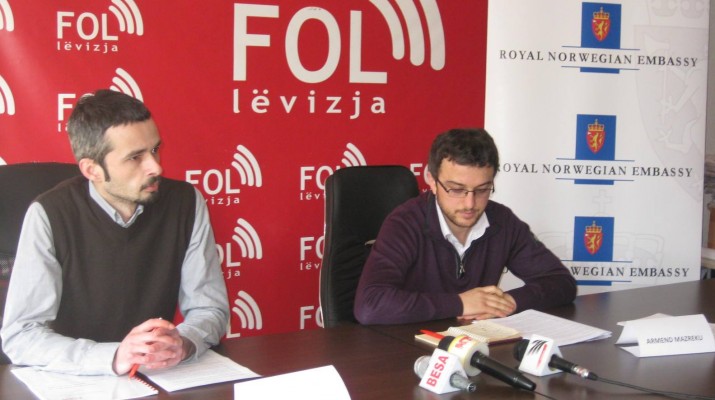
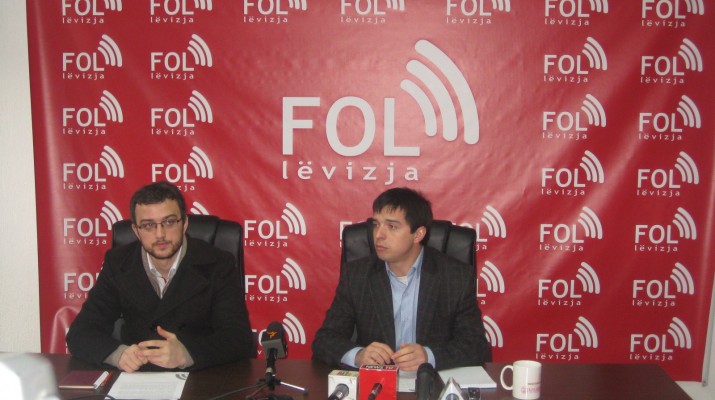
Policy Analyst in the Movement FOL Armend Mazreku, said that the report is a product of monitoring public institutions in fighting corruption throughout the year 2010. According to him, it has been noticed a progress in fighting corruption, but this progress has been limited and insufficient considering the high level of corruption and its widespreadof in institutions. Furthermore he presented the findings of this report, ranging from the activities of Government, Assembly, Judicial Council, Prosecution, Police, Anti -corruption Agency, Kosovo Customs, EULEX, International Reports and civil society.

The prosecutor in the District Court in Pristina and at the same time the Anti-Corruption Coordinator, Drita Hajdari, said that the report showed the actual situation of the level of corruption in Kosovo. She said that the Prosecution was working to fight corruption, which has also established a Task Force consisted of 12 prosecutors and 20 investigativepolice in fighting corruption offenses. According to her the district and municipal prosecution in the municipal of Prishtina is dealing with the half cases of the country in general. Further she said that the fight against corruption should not only be the Prosecution’s burden, but also other mechanisms” and institutions”.

The Head of the Department of Investigation of Economic Crimes and Corruption of the Kosovo Police, Shemsi Igrishta, said that Kosovo police was dealing with human capacity building, profiling the investigators and professional training in anti-corruption field. He further presented the statistics of anti-corruption within the department, where the damage caused by these acts of corruption is estimated to be about 27 million euros.

Meanwhile, the chief of the Division of Legislation and Education in Anti-Corruption Agency, Burim Sadiku, said that ACA has identified several factors that drive up the corruption in Kosovo: the lack of political will, delays in judicial reforms, the lack of supervisory mechanisms and transition. According to him, the most common forms of corruption that ACA has identified are the abuse of official position or authority, falsification of documents, taking and giving bribes and ungrounded judicial verdicts issued.

Clean government and President with integrity are necessary for the country

Prishtina, February 21, 2011– Movement FOL welcomes the constitution of new legislation of Assembly of Kosovo. After 4 months of political and institutional crisis finally it is expected to form the new institutions, government and the President of Kosovo. 120 new members of the assembly, as legitimate representatives of the people are charged with a big responsibility in this mandate. Commitment to democracy and rule of law will be tested today, by voting for the new Government and President of the country.

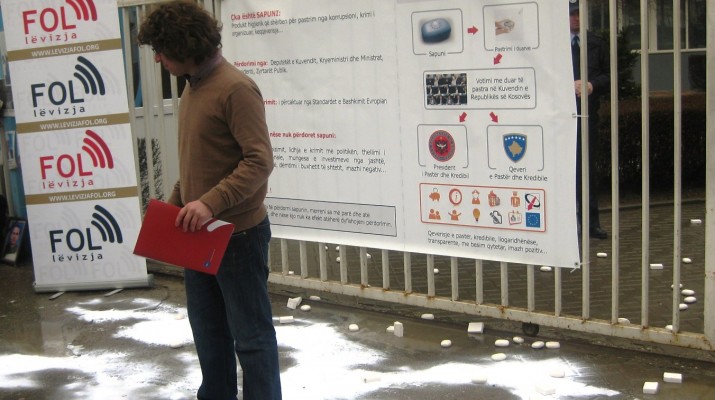
Movement FOL, through an activity-protest require all those who have received the mandate of the voters to elect a clean and competent government, and the President must be a credible person who can represent the unity of the citizens, without difference.

Considering the problems and challenges that the state is facing, in particular the damaged image recently, FOL Movement appeals to the newly elected members of the assembly off the Republic of Kosovo, that with their vote to elect the institutions that guarantee proper functioning of democratic governance and stability.

Petrit Zogaj of FOL Movement stated that “This soap detergent and these 120 soaps cast in the yard of the Assembly are clear indications that the country is embroiled in a extreme political impurity. The fact that in the first legislature of an independent state, which aims to operate according to European values, are also elected parliamentarians who are under investigation or suspected of wrongdoing, and this deeply harms the credibility of every citizen in a fair law-making, impartially and in defense of the country’s interests. “

Besides that the demaged image of Kosovo now is a fact, also the mistreatment of fundamental constitutional and legal principles during the negotiations for a coalition government has brought the possibility that the head of the state become a man with a very controversial past, who even was investigated by a friend state of Kosovo.

Also, considering that the symbolic value of the highest office in the country is already severely damaged by the previous President, who was forced to leave the office because of the violation of the Constitution, this does not seem a prudent political action about the current political situation of the country.

FOL believes that the members of the assembly should serve the interests of the citizens of Kosovo, and not serving the interests of their party or personal ones. They should not vote for institutions that would not be credible to face internal and external challenges facing Kosovo.

Further, Mr. Zogaj added, “These circumstances oblige them to vote people with integrity and competent to fight corruption and organized crime, repair the damaged international image and who will pave our path towards European Union”.

Movement FOL requires all institutions to continue to be responsible in their actions, accountable egarding their decisions and transparent to the citizens. This is the only way that our country should be placed as the process of state building, democratization and good governance.

The Government’s negative reaction towards international reports is disturbing

Panelists at the conference were Agron Demi from GAP Institute and Ramadan Ilazi from FOL Movement, who discussed about the design of international reports on Kosovo and using them to influence the improvement of the performance of state governance in Kosovo (www.koha.net )

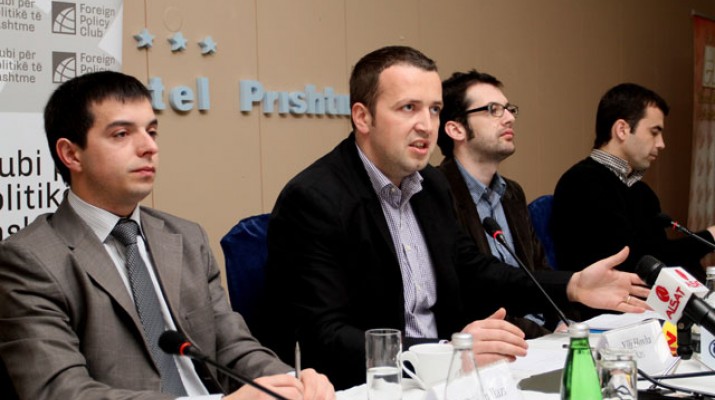
Participants of the conference on “International Relations as an instrument of pressure” organized by the Foreign Policy Club raised their concerns about the negative reaction of the Government of Kosovo towards international reports, stressing the problem of pressure exerted to non-governmental organizations and experts of Kosovo who contribute to the drafting of these reports, reports KosovaLive.

This conference aimed to encourage the debate on the role of civil society in compiling international assessment reports on Kosovo and the use of these reports to exert pressure on state institutions for good governance.
Panelists at the conference were Agron Demi from GAP Institute and Ramadan Ilazi from FOL Movement, who discussed about the design of international reports on Kosovo and using them to influence the improvement of the performance of state governance in Kosovo.

Starting from the Progress Report of the European Commission, and also other international reports on Kosovo, the conference addressed the ability of civil society to transform them into pressure instruments and advocate on improvements in government performance, particularly in the areas most criticized by international reports.
In the conference was presented the Kosovar version of Progress Report, prepared by non-governmental organizations in Kosovo and analysis on international reports for the state of Kosovo in these last two years. The purpose of these products is to offer an alternative view of the progress and regress in Kosovo, reflecting the view and evaluating of Kosovo’s civil society organizations on essential areas of state governance.
The conference specifically addressed the following issues: Is the Kosovo’s civil society capable to use these reports as instruments of pressure” What are the civil society”s capacities to offer alternative reports assessing government performance in Kosovo” How seriously are the international reports taken by Kosovo institutions” What do the international reports in general say about Kosovo” The conference was supported by the Norwegian Embassy in Pristina, which has also enabled the compilation of the Report of Progress Made in Kosovo

The institutional crisis is harming the interests of the citizens of Kosovo

Prishtina, February 14, 2011 – Movement FOL, through this press release expresses its concern about the institutional and political crisis in the country. This crisis, which continues from September 2010, is seriously harming the state-building process in Kosovo and its European perspective.
The disability of the political class and institutions to find solutions to the crisis created is mostly harming the citizens. Because of this situation, Kosovo will be closing the second month of the year without an approved budget.

Also, the lack of institutions will reflect on the third anniversary of Independence of the country, giving bad messages for democracy building and the rule of law in Kosovo.

The elections of the December 12, 2010 did not provide the most votes to any political party to constitute the government, thus imposing a coalition government. We can not understand the delays because of the disagreements of assigning positions.

The interests of the citizens of Kosovo should be a priority and should not remain hostage to the ego and personal greed for power of individuals within political parties, and in this case even within the institutions of the country.

Therefore, political parties, party leaders, representatives who come from the recent parliamentary elections, must exceed their ill-spirited interests by directing the agenda at the practical problems that Kosovo citizens face every day.

“Inoperative triangle”

Prishtina, February 3, 2011 – Movement FOL during 2010 monitored and supported the work of the Ombudsman to influence the growth of inter-institutional cooperation.
Venera Ramaj, legal assistant in Movement FOL said that by monitoring the public activities in the media regarding the Ombudsman by FOL movement shows that among 80 activities, 40 deals with fortnight activities of publication of the work report for 2009, while dozens of other activities are roundtables organized by Movement FOL and other activities reflected in the writings of media.

“Disregarded attention of institutions towards the Ombudsman, the lose of credibility, non-implementation of recommendations from other institutions, limited capacities, the delay of the law, disrespect of the Assembly, are identified as some of the challenges that have followed this institution and as such they negatively impacted in the fight against abuse of power, “said Ramaj. And then non-election of the deputies, the lack of staff and budget, according to her, are some other problems that added to the long list of weaknesses that have characterized the institution in 2010. The failure of the Assembly for several years to elect the Ombudsman was against the credibility of this institution, which by the way scored some successes, which according to its officials are “increasing the number of complaints from citizens and the good will of some institutions to response back to the Ombudsman.”

The members of the assembly paid a little attention to the work and activities of the Ombudsman in the legislative agenda during 2010. Unfortunately, the requirements and recommendations met with deaf ears. To overcome the situation, the Ombudsman proposed alternative forms, such as the establishment of the Administrative Court, but without success, an initiative which wassupported also by movement FOL.

Meanwhile, Armend Pajaziti, project coordinator said that Kosovo and its institutions have been criticized again in the Progress report 2010. Even the Institution of Ombudsman, particularly in terms of addressing the violation of human rights and the delay in electing the Deputy Ombudsman. “This report suggests that the authorities should ensure quick responses to all requirements and recommendations of the Ombudsman,” said Pajaziti.

According to him, power is still being abused in Kosovo. Human rights are being violated, while the Institution of Ombudsman remains helpless when facing these developments. The Report of Movement FOL shows some recommendations for some institutions, the most important recommendations are:

To Institution of Ombudsman:

” The Ombudsman must take a more proactive role in all the areas that affect the freedoms and human rights. It should create closer relations with identified allies such as media and civil society, and create a joint front against the abuse of public authority by public officials;
” IO must make the issue public, when they cannot be fixed through institutional ways;
” IO must initiate a sensibilizing campaign, not only for the purpose of civic awareness to complain, but also regarding the institutions to fulfill their legal responsibilities towards the IO;
” To strengthen the office of public communication, by making more active and more voiced its officials in public in advocacy issues.
” To lunch a telephone line for free services online for citizens to seek the help of the Ombudsman.

To the Kosovo Assembly:
” The Assembly of Kosovo should be consulted more often with IO for its needs, and other activities which are undertaken with the aim of strengthening the work of the Ombudsman in protecting human rights;
” The Assembly of Kosovo, regarding the busy agenda, in the new legislature should form an ad hoc committee that would deal only with the recommendations of the Ombudsman in order to strengthen the authority of theinstitution, as required by the Constitution of Kosovo;
” Parliamentary committees must immediately begin the implementation of the recommendations of the European Commission identified in all Progress Reports, dealing with the work of the Ombudsman;
” The Assembly of Kosovo, before the approval of the Budget for 2011, must allocate a more favorable budget for IO, in order to increase human, organizational and professional capacity in addressing issues relating to abuse of power and violation of human rights;
” Members of the Assembly, particularly those of the Parliamentary Committee for Human Rights, should not wait for the committee agenda, reports the Ombudsman, but to initiate a debate in Parliament, to ask parliamentary questions and taking the side of IO in the fight against abuse of public authority.
Corruption Monitor for 2010

The Government of Kosovo during 2010 has approved altogether 304 verdicts. Five of them were against corruption, two were on suspicion about corruption and 299 others were on different issues. A draft…

 
Corruption Monitor for 2010

Publication of the report “Corruption Monitor” for November-December

Prishtina, February 4, 2011– Movement FOL published the report “Corruption Monitor” for November and December. The Government of Kosovo has approved 17 decisions during November and December and none of them were in the fight against corruption and organized crime. During this time the Government was dismissed and by a non-confidence motion;

In district courts have been reviewed 148 cases: 130 in the prosecution of Prishtina, 2 in Gjilan prosecution and 16 in Prizren prosecution. In 2009 were transferred 248 cases: 231 in the prosecution of Prishtina, 3 in Peja prosecution, 2 in Gjilan Prosecution, and 12 in Mitrovica prosecution. 58 cases have been filed in 2010: 30 in Prosecution of Prishtina, 2 in Peja prosecution, 7 in Gjilan prosecution and 19 in Prizren prosecution. At present, there are 158 cases in total: 131 of them in Prishtina, 5 in Peja, 7 in Gjilan, 3 in Prizren and 12 in Mitrovica. However, if we examine the anti-corruption statistics at the municipal level we find out that 93 cases were transfered from previous years, 256 of them filed only in 2010, 85 cases were dealt in 2010 and 264 cases are ongoing;

Of these cases, 20 were sent to Special Prosecution in 2010 and still are ongoing, not being solveda single one;

In December were accused Slavisa Petkovic Branislav Gerbic by the District Court in Prishtina, along with nine other suspects, in charges ofmisusing 1.1 million euros. Slavisa Petkovic is accused of constructing a house where he lives today in the amount of 95 thousand euro. Without any money of his own he had renovated his restaurant called “Tropikana” in Caglavica. Petkovic was summoned to the District Court in Prishtina accused of five offenses. This group of 11 people 2 Serbs and 9 Albanians have been accused of harming the Budget of Kosovo more than one million euro by signing fictitious contracts to construct houses for returnees;

November statistics from the Department of Investigation of Economic Crimes and Corruption (DIECC) show that 15 people were being investigated: 3 for taking bribes and 12 of them for misuse of official duty; 6 cases have been sent to the prosecution with known perpetrators: 1 for taking bribe and 5 for abuse of official duty; 5 cases were sent to the prosecution with Special Reports and only 2 people were arrested for misuse of official duty;

45 reports were published by daily newspapers in December (Koha Ditore, Zeri, Kosova Sot and Express), 24 were published as opinions, and 21 as news. Koha Ditore and Zeri were more focused on government and public enterprises in Kosovo. Meanwhile, Kosova Sot was more focused on the Judiciary of the country and less on the Government and Public Enterprises, and Express was more focused on local issues.

2009-2010

The debate “Karl Popper” Tournament

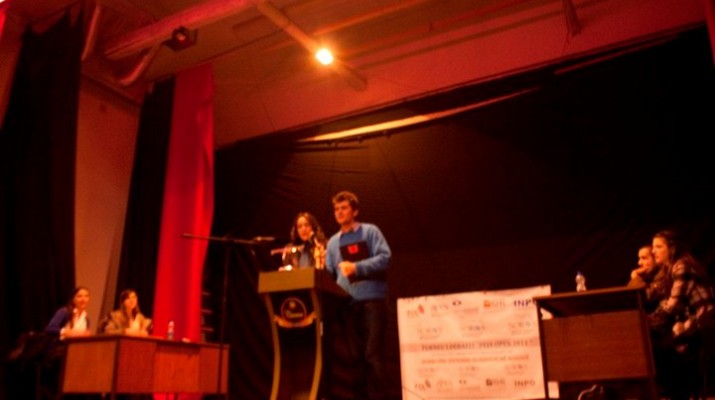
Peja, 29-30 January 2011- Movement FOL along with BIRN, and in cooperation with organizations: Syri I Vizionit in Peja, Initiative for Progress (INPO) in Ferizaj and Youth Initiative for Human Rights (YIHR) in Pristina, held on 29 and 30 January 2010, the debate “Karl Popper -” tournament “Peja Open 2011 ” on the topic” Kosovo needs to implement electronic voting. “The format of the debate ‘Karl Popper’ aims to deal and handle the essential elements of a controversial issue. It stresses above all the development of critical thinking, tolerance and assessment of different views. This format is being developed in high schools.
Movement FOL and BIRN with the support of SOROS/KFOS Foundation since the beginning of January 2010 have been working along with partner organizations INPO, SIV and YIHR to establish debate clubs in town and to train the club members in Karl Popper debate. Currently in Kosovo there are 3 debating clubs in 3 municipalities (Ferizaj, Prishtina and Peja) and the number of debaters from city high schools is constantly growing.
“Peja Open 2011” is the third tournament held in Kosovo since 2010, and since the debating program had began. The innovation of this tournament has been the participation of two teams from Gjakova, a team from the American School of Kosovo and a team from RAE community.

A major contribution to the Tournament “Peja Open 2011” was given by the municipalities of Peja, respectively the Department of Culture, Youth and Sports. Aver Husaj, an official of this department said that Peja Municipality supports the organization of this tournament, and will do so in the future.

On Saturday (29 January) during three rounds of debate have been faced 21 teams from four municipalities of Kosovo: Prishtina, Peja, Gjakova and Ferizaj. Meanwhile, quarterfinals, semifinals and finals of the debate were held on Sunday. On the semifinals were qualified four teams that have colllected the most points based on the number of the wins and points that were collected by speakers of the teams.
Semifinals teams of this debate were: Manekenet from Prishtina debate club, Feniks and Supernova from Ferizaj, and The Young Europeans from Peja. On finals were qualified, Phoenix and The Young Europeans.

Judges in this tournament were former debaterrs who have previously taken part in the debate, “Karl Popper”. The jury of the judges who judged the finals of this tournament, announced the winner of this tournament The Young Europeans from Peja, with six votes in favor and one against.
The tournament was held in Elementary School “Lidhja e Prizrenit “, while the final was held at the Theater of Peja.
Last September was organized a National Tournament in the format of the debate ‘Karl Popper’, “Ferizaj Open 2010”. Meanwhile, the next National tournament “Prishtina Open 2011” will be held in April this year in Prishtina.
Movement FOL in cooperation with BIRN this month will expand their network of debate clubs in Mitrovica, Suhareka and Malisheva.

Debate: Transparency of public investment in road infrastructure

Gjilan, January 27, 2011 ” Today, Movement FOL has organized the next debate with citizens in the municipality of Gjilan, on “Transparency of public investment in road infrastructure.”In this debate were discussed about the trend of public investment in road infrastructure in the central and local level during 2008-2010 and those planned for 2011-2013, the level of transparency in these investments, the current situation and the steps to be taken in future.
Participants in this debate were the Mayor of Gjilan Municipality, Assembly members (Chairman and members of the Municipal Assembly of Gjilan), representatives from the procurement office, civil society, media and citizens of this municipality.

At the beginning, the project coordinator Mr. Fidan Kalaja, presented the report “Transparency of public investment in road infrastructure.” According to him, investments in road infrastructure were government”s priority during the last three years and this can be seen clearly in planning and budget allocation for this sector. “Only in the last three years (2008-2010), approximately 30% to 50% of the budget of the Republic of Kosovo for capital investments is allocated to road projects, and during the next three years (2011-2013) it is believed that this percentage will be up to 60%.” said Kalaja. According to him, focusing mainly on the largest infrastructure project ” Merdare-Morine highway”, after the war in Kosovo, this report has identified some weaknesses regarding the respect for principles of transparency, such as not informing the public about the planning of this project especially the financial cost, failing to provide information about sources of funding, denial of access to project documentation, without any grounded reason, and the tendency to leave aside the supervision function of Parliament in this process.

The debate continued with speech of the Mayor of Gjilan, Mr. Qemajl Mustafa, who stated that “the current problems in the implementation of public investments are as a consequence of the lack of long and medium term economic, fiscal and development planning.” According to him this makes unclear what the priorities of central and local investments should be supposed to be realized in five or 10 next years. One of the ways that this problem would be avoided, according to Mr. Mustafa, would be “a stable communication with community”, and this implies a higher level of transparency in the planning, implementation and completion of capital projects, particularly those in road infrastructure. He also pointed out a problem that has to do with central investments in municipalities. According to him “the share of government grants and realization of investments in the municipalities is not based on several parameters and specifications of each municipality, but these investments were based more on the preferences of ministers,” capabilities “of the mayors or perhaps prime minister himself “. Regarding the investments realized in road infrastructure during recent years “they were generally right investments and even absolutely necessary even though there were wrong investment among them as well” concludes Mr. Qemajl Mustafa.

The Chairman of the Municipal Assembly, Mr. Izmi Zeka said, “The road infrastructure investments made by the central level are a prerequisite for economic development of Republic of Kosovo”. In Gjilan, according to him, there was no project implemented without discussing it with citizens and that all investments made in this municipality are prioritized based on several parameters. According to Mr. Zeka “in Gjilan, the citizen is an essential part of decision making and the priorities of investments in road infrastructure are made based on debates and demands of citizens.” Regarding the transparency of these investments in the municipality of Gjilan, it is in the “proper level and maybe even exceeding the levels of transparency,” added the Chairman of the Municipal Assembly Mr. Izmi Zeka.

Municipal Assembly member of the LDK, Mr. Sadedin Berisha, stressed that the lack of appropriate legislation which directly affects non-promotion of the transparency of public investments. According to him, the level of transparency in the municipality of Gjilan regarding these investments is not on the satisfactory level, because “neither me as a municipal councillors don”t have the needed information about the contracts of these constructions of road projects.” Also according to him a special care should be paid to the quality of these investments.
This debate was organized within the project: “Transparency of public investment in road infrastructure,” which is supported by ISC / USAID.

Students of EMA program visit Movement FOL

Prishtina, January 20, 2011 – Today Movement FOL welcomed a delegation of students enrolled in master’s program for human rights and democratization within the European Inter-University Center.

At the meeting, Ramadan Ilazi and Venera Ramaj notified the audience about the work of the organization as well as the overall situation in Kosovo.
Ramadan Ilazi, in this meeting, mentioned the claims of Movement FOL that the fight against organized crime and corruption will best rehabilitate the country’s impaired image.

The participants were interested about the general situation in the country, specifically the role of the international presence in Kosovo in the fight against organized crime and corruption.

We Lack the inter-institutional cooperation in the fight against abuse of public authority

Prishtina, 19 January 2011– Today Movement FOL held the round table on the topic “Strengthening the inter-institutional dialogue against the abuse of public authority”.The debate was organized in order to discuss openly the work of the Ombudsman Institution (OI), inter-institutional coordination, cooperation and support that this institution has from the perspective of movement FOL during 2010 by monitoring the work of this institution and organizing meetings and debates in various municipalities of Kosovo.

Armend Pajaziti, project coordinator mentioned that the independent institutions reports are often in media attention only for few days, and they remain only reports and do not initiate any action to improve the situation. “Such an example is the report of the Ombudsman as an institution that last year presented its annual report to the Assembly of Kosovo and which was approved without any serious debate. On the same day this report was presented in a round table organized by Movement FOL, where the discussion has been much deeper and more substantive than the one in the Assembly of Kosovo. “According to Pajaziti, this is proved also by the fact that no recommendations presented by the report of IO were incorporated in the work strategy of the Assembly. Pajaziti said the Assembly did not take any initiative to discuss the findings of the report and demand the institutions to take action or the Assembly itself to take measures that are its responsibility.

Ardian Ajvazi, from Legal Aid Commission stressed the need for inter-institutional cooperation as the best way to have successful results. “Only now we have drafted a memorandum of cooperation with the Institution of Ombudsman about the forms of cooperation,” said Ajvazi. According to him, there is a lack of cooperation with other institutions such as Judicial Council which did not allow the Legal Aid Commission to provide legal assistance for criminal cases.
Petrit Zogaj, Programs Manager on FOL Movement explained the reasons of the realization of this project by Movement FOL. “Considering that the Institution of Ombudsman is a constitutional category and is mandated to protect human rights and the fight against abuse of power, we have held meetings and debates in municipalities to discuss the role and work of this institution, we have conducted a multimedia campaign to promote this institution, “said Zogaj. According to him, we have noticed that most of the initiatives of this institution in local level have been ignored. “While in the central level the year 2010, is remembered for only one serious initiative initiated by civil society that has to do with the Law on Privileges of Parliamentarians and the Ombudsman has raised the issue to the Constitutional Court,” he said.

Movement FOL expresses its indignation for the absence of any official of the Ombudsman Institution in this table. This is seen as a lack of sincere willingness to cooperate with Civil Society relating debates about the existing problems that hold back the fight against abuse of power.
This debate was conducted within the project “Strengthening the triangular Dialogue against Abuse of Public Authority between Ombudsman Assembly and Civil Society”, supported by Kosovar Foundation for Civil Society (KCSF).

Transparency of public investments in road infrastructure

Ferizaj, January 13, 2011 – Movement FOL, supported by USAID through the Program for Strengthening Civil Society implemented by ISC – Institute for Sustainable Communities, organized a debate with citizens in the municipality of Ferizaj, on “Transparency of public investment in road infrastructure “. In this debate we discussed about the trend of public investments in road infrastructure by the central and local level for 2008-2010 and those planned for the years 2011-2013, the level of transparency in these investments, the current situation and the steps to be taken in future.

Participants in this debate were municipal officials, assembly members (chairman and heads of all party groups in the Municipality of Ferizaj), the chief of procurement office in the municipality, traffic unit police, civil society, media, business representatives of road construction sector and citizens of this municipality.
Initially, the project coordinator Mr. Fidan Kalaja, presented the report briefly, he mainly mentioned what was concerning the transparency of public investment in road infrastructure at the central level and a trend of these investments made in the Municipality of Ferizaj.

The debate continued with the Head of the Municipal Assembly of Ferizaj, Mr. Agim Aliu, who presented the work of the Municipal Assembly related to municipal investments in road infrastructure. He said that regarding transparency of these investments “municipality has organized public hearings with citizens of the municipality since the planning of budget until it has been approved.” According to him, when the transparency of investment in road construction is concerned, then this should be discussed based on the phases of project implementation. In this context he said that he considered an achievement that the annual report of the work of the Municipal Assembly this year will be published earlier than it used to be in the previous years and the project of airing live the metings of the Municipal Assembly is currently the final phase of realization. He emphasized that the Municipality does not have any complaints from citizens regarding access to official documents.

Director of Planning and Development, Mr. Ardian Ferizi, revealed the trend of investments in road infrastructure in the municipality for 2007-2010 and the average of investments is about 40% of the of capital expenditure budget and those planned for 2011-2013 ranging from 16% up to 58 % of capital expenditure. He emphasized that the draft of the projects is is characterized with public hearings with citizens of the villages or Ferizaj citizens for each project which is realized in the area where they live. According to him from 2008 until now MTC has invested in road infrastructure in the municipality about 6 million euros.

Mr. Medain Hashani, head of the LDK group in the Municipality of Ferizaj, stressed that the lack of a National Strategy for Development is causing major problems while the essential problem in this context is the Public Procurement Law itself.
Problems that have been identified and other matters discussed in this debate:
1) Low investments by MTC in Ferizaj ” Kacanik, Ferizaj – Gjilan and Ferizaj ” Shtime highways.
2) Road projects financed by the MTPC in this municipality are characterized with bad planning, quality and realization and it was also required that projects financed by the Ministry are supervised directly by the municipality
3) The problem of supervision of works during the implementation of road infrastructure projects;
4) Poor maintenance of roads, especially during the winter season;
5) Discrimination of serious companies during the announcement of the winners of tenders for construction and road maintenance.

Threats should be stopped

STATEMENT OF NON-GOVERNMENTAL ORGANIZATIONS IN DEFENSE OF FREEDOM OF EXPRESSION:
Threats should be stopped
Prishtina, January 8, 2011: The above mentioned organizations of civil society are concerned about hate-encouriging statements of representatives of the Association of Veterans of the Kosovo Liberation Army against public personalities. In the series of attacks, this association has targeted a day earlier a political leader and journalist Halil Matoshi recently.

By accusing without any grounded reason and blacken the critical voices in Kosovo society, whoever they are journalists or politicians, people who speak on behalf of KLA veterans, they impaire any public debate, and at the same time they impair the project of the liberation of Kosovo itself and the image of our country. The language of threats blackens the noble idea of the liberation of Kosovo. We must pay attention to our common values from becoming an instrument of daily politics and narrow personal interests, which depics a bad image over the unprecedented commitment of many KLA fighters.
Civil society demands institutions to condemn the irresponsible behavior of the head of the Association of KLA Veterans. We also, ask the institutions of Kosovo and the European Union mission (EULEX) and accredited diplomats in Prishtina to be engaged strongly in defense of free speech, which is a prerequisite for the further democratization of our society.

Civil society also condemns any attempt to acquire with a bad purpose of merits of liberation of Kosovo. Kosovo independence and freedom are the result of long efforts of several generations of this country. Aims for privatization and monopolization of the fight for freedom are extremely harmful for the European future of Kosovo.
We support everyone’s right to speak freely and critically, but we are against the misuse of free speech and personal attacks to kill criticism.

The fight against crime and corruption should be productive

Prishtina, January 6, 2011 – The fight against organized crime and corruption in the Republic of Kosovo has come at a critical point. In the situations we are right now there is no space for corruption and organized crime along with rhetoric about the rule of law. Been in this situation, the citizens of Kosovo are the viewer of the actions that are ruining the democratic values of our society and the country’s European future.

Ramadan Ilazi, executive director of the Movement FOL, said that local and international law enforcement institutions shall end the practice of rhetorical reaction to criminal acts of corruption. According to him, the fight against crime and corruption is the responsibility of Kosovo’s institutions, but also an obligation of the European Union Rule of Law Mission in Kosovo – EULEX.

“While in 2010 there was progress in the fight against crime and corruption, this progress has been limited, minimal and in no way compatible with what the country needs to see in this regard. Appointment of Judges and Prosecutors, drafting the Law on Courts, establishment of Anti-corruption Task Force, are appreciated as good news during the year 2010. However, even in the institutional aspect something is done, the progress report on Kosovo by the European Commission has stated again that the country has serious problems with corruption and organized crime, “said Ilazi.

According to him, the judicial system in Kosovo continues to be in serious condition and as the major part within the rule of law institutions, the state of the judiciary is the best indicator of the progress of EULEX regarding the rule of law component. “While the largest part of the stuff of EULEX is concentrated in the police sector, they say they have no policemen for Kosovo’s north, and on the other hand, the Kosovo Police estimation is too high by EULEX! We therefore demand from this mission to focus on the justice sector more, “said Ilazi.

Meanwhile Armend Mazreku, policy analyst at the FOL Movement said that in some cases, EULEX, instead of arresting, convicting and punishing persons involved in criminal activities and corruption, this mission is shown “compassionate” by releasing them, arguing “lack of evidence.” In these cases, according to Mazreku, Kosovo Judges and EULEX ones, they could punish these groups at least for illegal construction or illegal possession of fire arms.

“We ask EULEX to justify their own presence in Kosovo, by fighting corruption and criminal activities. Its mandate is not only to advise and supervise the Kosovo institutions, because this mission has the executive mandate in particular for cases dealing with organized crime and corruption. If EULEX continues with current practice, where the fight against crime and corruption is only rhetorical, then this mission is pointless, “he said.

Mazreku said that on this occasion, we wish to express our concern about the non-signing of the decision to dismiss the former Governor of Central Bank of Kosovo by the Acting President of Kosovo, Krasniqi. “Even though the recommendation for his dismissal was approved by the CBK Board and by Assembly, acting president Krasniqi has not signed his dismissal yet. We strongly request by the acting President to sign the dismissal decision of the ex-Governor as soon as possible, he has been held in custody and subsequently released on suspicion that he is involved in corruption practices. “He stated.
According to him, FOL movement has positively assessed the establishment of Anti-Corruption Task Force and we believe that now is the time that this body, along with Kosovo Special Prosecution, make a balance of their work during 2010.

EULEX – responds to FOL?s criticism

It took several hours for European mission to respond after the release of a press conference of Movement FOL, which criticized the work of EULEX in Kosovo. In a press release, it was stated that EULEX welcomes the debates dealing with the rule of law in Kosovo, and the active participation of civil society in these matters.

“However, EULEX would like to stress that it takes very seriously the fight against organized crime and corruption. Since the establishment of the mission, EULEX judges have taken about 160 decisions, including 13 decisions on corruption cases and 4 decisions on organized crime cases. EULEX prosecutors are investigating 91 cases on corruption and 55 corruption and organized crime cases. Moreover, along with Kosovo institutions was established Anti-Corruption Task Force in order to investigate high profile cases. It should be taken into consideration that it takes time to investigate cases properly,” was stated in the communication.

Further, it states that “EULEX, the European Union Rule of Law Mission, reports regularly to the institutions and member countries of the European Union for its work in Kosovo, and has full support from the EU”. Movement FOL criticized the mission for lack of work and fight against corruption is rhetorical and nothing else. / indeksonline /

Discussion – transparency of public investment in road infrastructure

Ferizaj, January 13, 2011 ? Movement FOL, supported by USAID through the Program for Strengthening Civil Society implemented by ISC – Institute for Sustainable Communities, has organized a debate with citizens in the municipality of Ferizaj, on the topic “Transparency of public investment in road infrastructure”. In this debate were discussed the trend of public investment in road infrastructure in the central and local level in 2008-2010 and those foreseen for the years 2011-2013, the level of transparency in these investments, the current situation and the steps to be taken in future.

Participants in this debate were municipal officials, municipal assembly officials (the chairman of the assembly and heads of all party groups in the Municipality of Ferizaj), the chief of procurement office in this municipality, the traffic police, civil society, media, business representatives of road construction sector and citizens of this municipality.

Initially, the project coordinator Mr. Fidan Kalaja, prezented briefly the report concerning the transparency of public investment in road infrastructure at the central level and atrend of these investments made in the municipality of Ferizaj.

The debate continued with the Head of the Municipal Assembly of Ferizaj, Mr. Agim Aliu, who presented the work of the Municipal Assembly regarding the municipal investments in road infrastructure. He said that in terms of transparency of these investments “municipality since the planning of the budget and its approval organizes public hearings with citizens of this municipality.” According to him, when we are talking about the transparency of investment in roads, then this should be discussed based on the phases of the implementation of the project. In this context, he said that according to him it is an achievement that the annual report of the Municipal Assembly this year will be published earlier than it has been previous years and the project of direct emissions of the meetings of the Municipal Assembly is currently in the final phase of realization. He stressed that in they don?t have any any complaints in the municipalityfrom citizens regarding access to official documents.

Director of Planning and Development, Mr. Ardian Ferizi, presented the trend of investment in road infrastructure in the municipality of Ferizaj for the years 2007-2010 and the average of the investment is about 40% of the capital expenditure of the budget and that provided for the years 2011-2013 ranging from 16% up to 58 % of capital expenditure. He stressed that the projects are being designed through public hearings with citizens of the villages or those of Ferizaj town for each project that is realized in the area where they live. According to him since 2008 until now MTPC has invested in road infrastructure in this municipality about 6 million euros.

Mr. Medain Hashani, head of the LDK group in the Municipality of Ferizaj, stated that the lack of a National Strategy for Development is causing major problems and the fundamental problem in this context is the Public Procurement Law.

Identified problems and other issues discussed in this debate:
1) Low level of investment by MTPC in Ferizaj highways Ferizaj- Kacanik, Ferizaj – Gjilan and Ferizaj – Shtime
2) Road projects funded by MTPC in this municipality are described with a weak planning, quality and a realization of works,  also it has been required that the projects financed by the MTPC be supervised directly by the municipality
3) The problem of supervision of works during the implementation of road infrastructure projects;
4) Poor maintenance of roads, especially during the winter season;
5) Discrimination of serious companies during the announcement of the winners of tenders for construction and road maintenance.

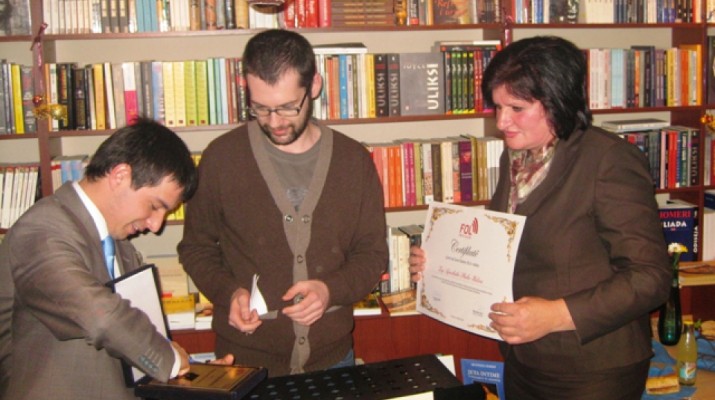
Ajnishahe Shala-Halimi awarded with Citizens Award for Courage in 2010

At the annual party, FOL Movement for the second time awarded the Citizens Award for Courage. In the first time this award was awarded to Mr. Rufki Suma in 2009, an independent candidate who won the election for mayor of Hani Elezit whereas in 2010 the Citizens Award for Courage was presented to Mrs. Ajnishahe Shala – Halimi.
Mrs. Halimi is a civil society activist, dedicated in protecting the rights of women and children, with a special focus on improving the position of women in society. She was a coordinator of the Center for Protection of Women and Children in Skenderaj and in 2004, she founded and currently leads the Women’s Center “Prehja” in Skenderaj.
FOL Movement by presenting the Citizens Award for Courage recognizes and supports the valuable and courageous contribution of the individuals in cultivation and development of democracy and political culture in Republic of Kosovo. Activities such as Ms. Shala – Halimi has organized proved courage to challenge important processes and issues in the community where she lives.
Hajrullah Ceku, the Chairman of the Advisory Board of FOL Movement when presenting the award stated that “It is an honor for me to present the award for the second time and what makes special this year award is that the award is presented to a woman. Mrs. Shala – Halimi proved success in her initiative and we should appreciate her courage”.
When accepting the award, Ms. Shala – Halimi stated “I am very happy to accept this award and I feel also responsible. I am only one of many women who are trying for the best of this country, therefore I feel so privileged that I have been chosen to receive this award”.
After presenting the award there was a cocktail for participants which at the same time was the closing activity of FOL Movement in 2010.

Corruption Monitor for October

The Government of Kosovo during October has taken eight (8) verdicts but none of them was on struggle against corruption and organized crime. This month is the poorest month regarding governmental act…

 
Corruption Monitor for October

Corruption Monitor for September

From 37 verdicts of Kosovo Government taken in September only one was on struggle against corruption and organized crime. This month along with the last month, are the poorest months regarding governm…

 
Corruption Monitor for September