Confiscation of Illegal property – where is anti-mafia law?

Confiscation of property obtained through criminal offense presents only one side of the coin in Kosovo’s efforts to fight organized crime and corruption and any other goods that results from them. The other side of the coin has to do with the confiscation of property that is not potentially as a result of a criminal offense or the latter fails to be fully proven. And here is the problem.

Currently, the seizure and confiscation of property in Kosovo is regulated by the Code of Criminal Procedure and the Law on Extended Powers of Seizure of the Property derived from crime. In both these laws, the seizure and confiscation of assets should be done in the context of the commission of a criminal act by which it is obtained that property or other assets. One thing is clear – any criminal offense that generates wealth is punishable and that property is confiscated. However, we have situations where a certain asset can not be justified, on the other hand can not even relate to a specific criminal offense. In this regard, currently, the prosecution authorities and Kosovo courts are limited and may not take any action of seizure and confiscation regarding those assets.

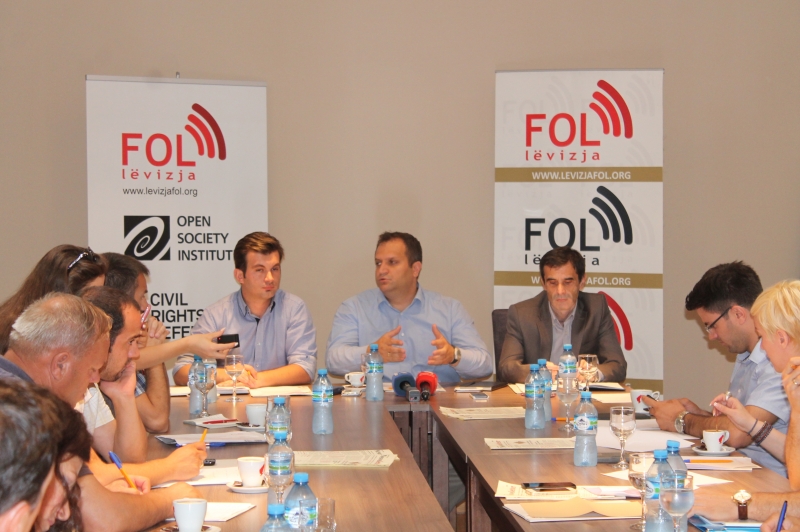
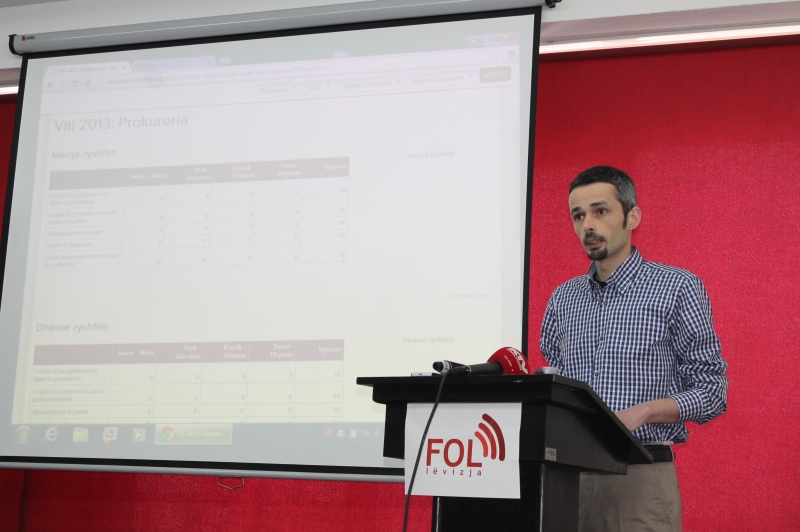
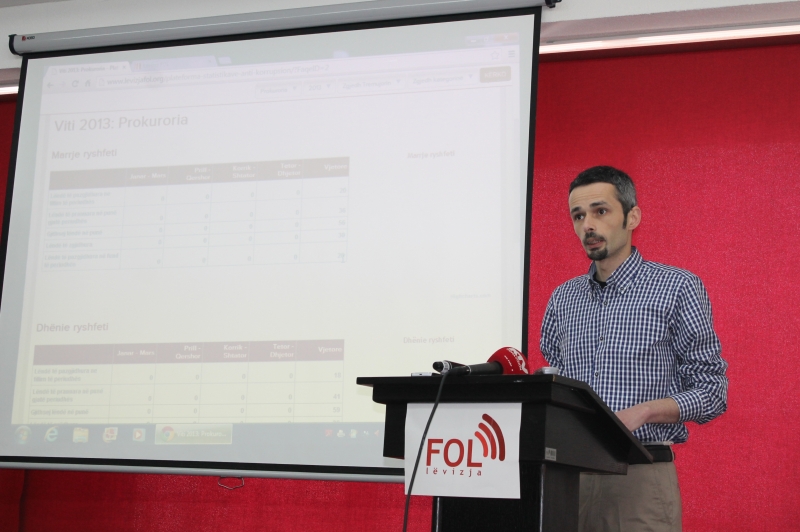
In a debate organized earlier by FOL Movement, the National Coordinator for Fighting Economic Crime in Kosovo presented impressive statistics of seized property – about 30 million euros per year, however, only about half a million of them were confirmed by final decision of the courts. The Coordinator raised the need for increased efficiency of the prosecution and courts about the seizure and confiscation of assets obtained illegally and the need for anti-mafia law.

Untill now, the initiative for drafting the anti-mafia law was not successful. This law basically dealt with unjustified wealth. Anti-mafia law would not necessarily require a charge or criminal proceedings against a person for confiscation of unjustified property. But, there are some considerations about such a law. First, who should bear the burden of proof in the event that a particular asset is seized – the owner of the property or body seeking seizure. Second, is it guaranteed and van be guaranteed the constitutional and legal rights of the parties against arbitrary state interference in private life and property. Third, could anti-mafia law act back in time?

A number of attornies are sayibg that primarily the individuals should have the burden of proof to justify a certain asset whether it is lawfully obtained, on the other hand, yet a great deal of attornies including me say the the body that requires the seizure, in this case the prosecution or other body we must bear the burden of proof to prove that a property was obtained illegally. The importance of this argument lies in the role that the state has in monitoring and fighting crime in any circumstance, including the seizure of property obtained illegally. The state can not transfer this role to individuals and play only a passive role.

Seizure and confiscation of property in each case requires state intervention in private wealth and property of citizens. In the case of criminal offenses such intervention is justified. In the absence of a criminal offense, the interference could jeopardize the constitutional and legal rights of citizens, where the state will have the opportunity to seek seizure of a property grounded on a suspicion about the origin of an asset. In this respect any law that the government will bring, would require the need to exercise caution in establishing a fair balance between the interests of the state and society to fight crime and the goods that are generated by crime, in one hand and constitutional and legal individual rights to use private property freely and without the risk of an arbitrary state interference through unjustified confiscation of property.

Can we draft an anti – mafia law which would allow us to go back in time and to seize assets that have been obtained illegally? No and yes. No, because in principle every law operates looking forward, otherwise violates the principle of legality and legal certainty. Yes, if it is argued that a certain property acquired illegally before 10 or 20 years continues to generate benefits for its owners. But the last argument is difficult to be related to the first argument.
Eventually, the need for anti-mafia law prevails all of the above considerations. They should serve more to make a good law than to refuse to make such a law. On the other hand, the current framework, however, creates a good basis for the responsible authorities to do more in fighting organized crime and corruption and the confiscation of assets that generate these affairs.

[av_heading heading=’This project was funded through a grant of the American Embassy in Prishtina. The opinions, findings, and conclusions or recommendations expressed herein are those of the Author (s) and do not necessarily reflect those of the Department of State’ tag=’h4′ style=” size=” subheading_active=” subheading_size=’15’ padding=’10’ color=” custom_font=”][/av_heading]

A request to PRB for additional clarification about the tender Kosovo Police Supply of Vehicles

Prishtina, 26 August 2014 Today FOL Movement sent a letter to Procurement Review Body – PRB where they asked for additional clarifications about two PRB decisions on the tender “Supply of Vehicles” of Kosovo Police.

In their first decision, the Review Panel of PRB on 30 July 2014 partly approved as grounded the appeals of three economic operators and that the case had to be returned for re-tender. Whereas the Chairman of PRB on August 8, 2014, takes another decision declaring the decision of PRB Review Panel as with no legal effect emphasizing that the Review Panel has decided under the pressure of influence and contrary to Procurement Law.

In this context, FOL Movement asked PRB for additional clarification about the conclusion of the President of PRB that the first decision of the Review Panel was taken under the pressure of influence, thus:
1. Based on, particularly, the Article 130 of LPP, specifically under what sort of influence were the members of the Review Panel.
2. If the President of PRB concluded that this decision was taken under the influence, then what measures were taken by the PRB against the members of the Review Panel?
3 Is the Ministry of Internal Affairs informed about the situation, and is there any, if yes, what are the results of MIA regarding this matter in accordance with Article 130 paragraph 3 of the Law on Procurement.
The letter sent to PRB can be found in this link

During the first six months of this year, about 1,800 unsolved corruption cases by Courts and Prosecution

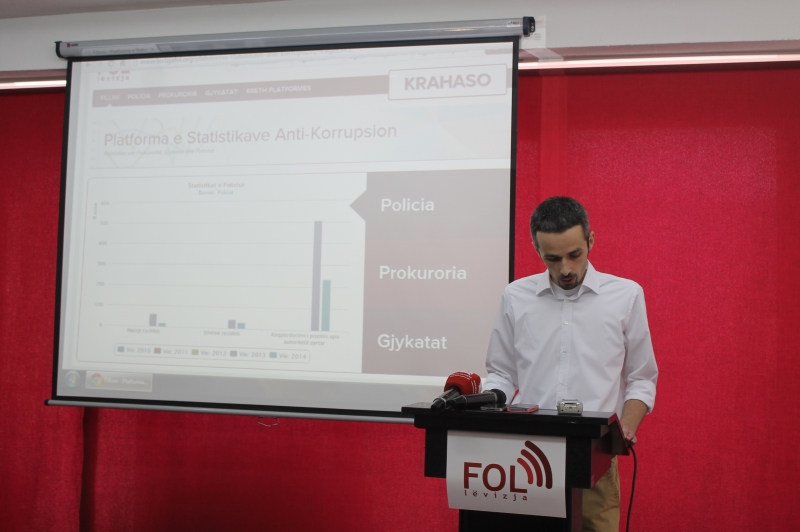
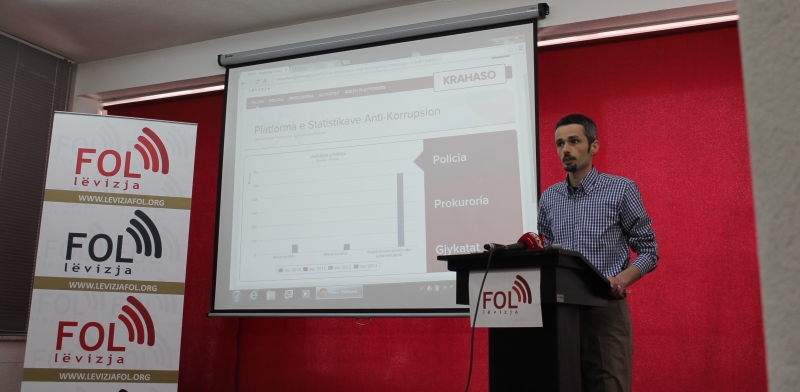
Prishtina, August 3, 2014 – Today, FOL Movement held a press conference and published the six month period statistics of Police, Prosecution and Courts within the Anti-Corruption Statistics Platform and also the decisions and actions of the Assembly and Government of Kosovo in the fight of corruption in Kosovo during this period.

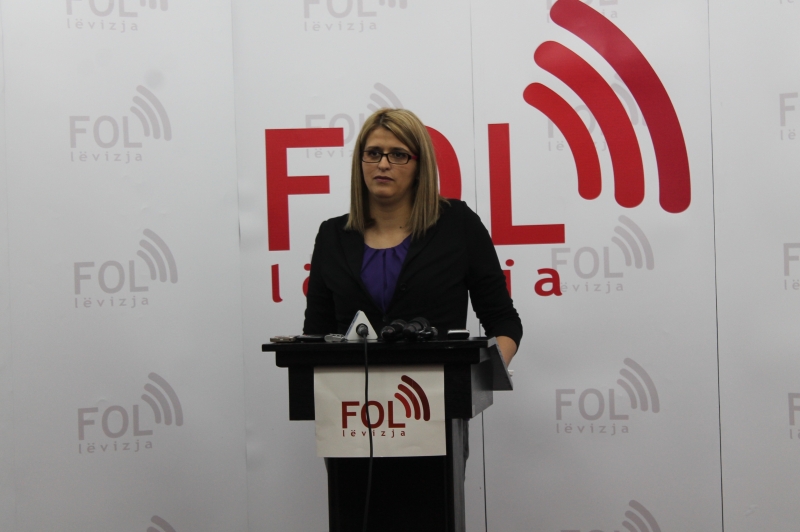
Fidan Kalaja from FOL Movement said that during the first six months of 2014, Kosovo Police has dealt with 19 cases of corruption and taking bribes, filing criminal charges against six people and six other people have been arrested. For the offenses of corruption and bribery during the first six months of this year they have dealt with 30 cases, filing criminal charges against 10 people and six people have been arrested. Meanwhile, for the offenses of corruption, abuse of authority, Kosovo Police has handled 236 cases of corruption, filing criminal charges against 106 people and 34 people have been arrested.

He further said that Kosovo Prosecution during the first six months of 2014, for the offenses of corruption and taking bribes had ongoing cases implicating 53 people, only 13 of them have been solved, whereas at the end of the period were left unsolved 19 cases. For the offenses of corruption and giving bribes, the prosecution had ongoing cases implicating 55 people, 24 of these cases have been solved while 16 of them remained unsolved at the end of the first half of 2014. For the offenses of corruption and abuse of authority, the Prosecutor of Kosovo had ongoing cases implicating 1,244 people, only 372 of these cases have been solved while 1,065 cases remained unsolved during the first six months of 2014.

According to him, during the six month period of 2014, Kosovo Courts for criminal cases of corruption and bribe taking handled ongoing cases involving 171 people; only 20 of these cases have been solved, while 77 cases remained unsolved at the end of this period. For the offenses of corruption and giving bribe Kosovo Courts handled ongoing cases implicating 87 people, 8 of these cases have been solved while 44 of these cases remained unsolved at the end of the first half of 2014. For the offenses of abuse of authority,

Kosovo Courts handled ongoing cases implicating 619 people during the first six months of 2014, only 93 of these cases have been solved while 573 cases remain unsolved at the end of this period.
Fidan Kalaja also said that FOL Movement, except these three institutions involved in this platform during this six-month period, has monitored the decisions of Assembly and Government of Kosovo.

Kosovo Assembly from 15 plenary sessions held in the first six months of 2014, only one of them discussed the fight against corruption. While the Government in the first six months of 2014 from 169 approved decisions, only one was in the fight against corruption.
For more information on Anti-corruption Statistics Platform check the attached link http://www.levizjafol.org/plateforma-statistikave-anti-korrupsion/?message=true&FaqeID=1

Activity Gallery

Ne gjashte mujorin e ketij viti - rreth 1800 lende korrupsioni të pazgjidhura nga Gjykatat dhe Prokuroria2Ne gjashte mujorin e ketij viti - rreth 1800 lende korrupsioni të pazgjidhura nga Gjykatat dhe Prokuroria

A roundtable discussion on the activities and problems of public procurement in Ferizaj

Ferizaj, July 18, 2014 – Today, FOL Movement has organized a roundtable discussion in Ferizaj on the topic “Public procurement activities in the first six months of the year.” During this meeting was presented a report with summarized statistics on procurement activities initiated by Gjakova municipality.
Participants in this meeting were the Mayor of Ferizaj, Muharrem Svarqa, director of procurement, Hanife Obrazhda – Selimi, assembly members of various political parties and representatives of civil society and media.

Kenan Tora from FOL Movement said that the purpose of that meeting was to discuss the possible problems and irregularities that might go with the development of public procurement procedures in Ferizaj Municipality. He further went on with the findings of the report of the municipality stating that during the first 6 months of this year Gjakova Municipality has announced 47 contract notices, 31 notices of contract award, 0 cancellation notices and 2 cancellation of the contract award, whereas the PRB has taken two decision against Ferizaj Municipality by returning a procurement activity in re-evaluation. Regarding the problems that are generally present in public procurement, he stressed the problem of non-standardization of the drafting process of the tender dossier, exceptionally low prices, non-coordination between different institutions and non-professionalism of evaluation committees.

Later spoke the Mayor of the Municipality of Ferizaj Muharrem Svarqa, who said that irregularities or problems raised by FOL Movement are partly present in the Ferizaj as well. He went on to say that there are often cases with exceptionally low prices and that this problem has been present in one of the cases that were sent to the PRB and that from now on they will seriously consider along with the procurement office cases where it is suspected that economic operators are trying to manipulate with low prices lower and these cases will be send to the prosecutor. The mayor Svarqa then went on saying that since coming to power he has implemented the standard of not allowing to tender in case they do not have available funds in order to avoid debts as it used to happen in the previous government and they have inherited these debts. He said that he also was working on implementation of the standard of not accepting guarantees from insurance companies except of banks and he had tried to have a systematic approach in order to address the evident problems and procurement office do its work in the most professional manner.

Whereas the procurement manager Obrazhda-Selimi said that exceptionally low prices are a problem constantly present in offers of economic operators and that this is creating serious problems in selecting quality bidders and then is reflected in the performance of work. In terms of professionalism, she said that committees tend to be professional but there is always a goal to do better, particularly in the context of supervision of activity.
Admir Salihu a law assistant, said that in despite that the current Public Procurement Law has some shortcomings, this does not prevent a contracting authority to develop procedures in a professional manner and that the municipal authorities should pay more attention to non-discrimination of economic operators.

On the other hand, Afrim Demiri, a journalist said that there should be investments in the procurement office capabilities and professionalism and that this office has often fallen prey to pressures from outside and even qualified as a black hole. He went on to say that the procurement office should report directly to the Municipal Assembly and in terms of project implementation should pay attention to the supervision of the activity based the signed contract.

Gazmend Rexhepi from INPO, in the context of the supervision of the implementation of projects said that it is evidenced that the Municipality of Ferizaj has more employees than it should, therefore, it should engage its employees in supervision of works and make sure they are done properly.

A roundtable discussion on the activities and problems of public procurement in Gjakova

Gjakova, July 16, 2014 – Today, FOL Movement has organized a roundtable discussion in Gjakova on the topic “Public procurement activities in the first six months of the year.” During this meeting was presented a report with summarized statistics on procurement activities initiated by Gjakova municipality.

Participants in this meeting were the Mayor of Gjakova, Mimoza Kusari-Lila, Acting Director Jalal of procurement, Xhelal Halilosmani, assembly members of various political parties and representatives of civil society and media. Kenan Tora from FOL Movement said that the purpose of that meeting was to discuss the possible problems and irregularities that might go with the development of public procurement procedures in Gjakova Municipality. He further went on with the findings of the report of the municipality stating that during the first 6 months of this year Gjakova Municipality has announced 28 contract notices, 14 notices of contract award, 14 cancellation notices and 1 cancellation of the award, whereas the PRB has taken a decision against Gjakova Municipality by returning a procurement activity in re-evaluation. Regarding the problems that are generally present in public procurement, he stressed the problem of non-standardization of the drafting process of the tender dossier, exceptionally low prices, non-coordination between different institutions and non-professionalism of evaluation committees.

Later spoke the Mayor of the Municipality of Gjakova, Kusari-Lila, who said that the findings of FOL Movement’s report in general are sustainable since these problems are present in public procurement. She went on to mention the tender which was disputable in the PRB, because the price is exceptionally low, where in the economic operator’s complaining bid there are units priced with 0.0001 euro which makes no sense at all. Kusari-Lila further said that the Public Procurement Law needs to be amended because it leaves room for interpretation in many areas and since she came to power has tried her best to separate public procurement from political governance at the local government and thus to prevent political influence in the process.
The acting director of procurement Halilosmani in meantime said that they tried to consist a committee by professional and asking each department or unit to carry the responsibility for drafting the specifications so that they are more professional.

On the other hand, Arbërie Nagavci, municipality assembly member from Self-Determination Movement said there must be done more in order that the committee members be professional and not be influenced whether by businesses or politics, because it is directly harming public money.

Activity Gallery

Tryeze diskutimi mbi aktivitetet dhe problemet e prokurimit publik ne Prishtine5Tryeze diskutimi mbi aktivitetet dhe problemet e prokurimit publik ne Prishtine4Tryeze diskutimi mbi aktivitetet dhe problemet e prokurimit publik ne Prishtine3Tryeze diskutimi mbi aktivitetet dhe problemet e prokurimit publik ne Prishtine2Tryeze diskutimi mbi aktivitetet dhe problemet e prokurimit publik ne Prishtine

Performance in relation to the political setback on the constitution of the new state bodies

July 04 2014. FOL Movement considers that with the parliamentary elections held on June 8, Kosovo has managed to show progress in organizing elections. But the post-election process has plunged the country into a political setback in constitution of the main state bodies.
In accordance with the decision of the Constitutional Court, FOL Movement calls the political forces that after the certification of election results to quicken the establishment of parliament and government in order to avoid any institutional vacuum.

We consider that referring to the decision of the Constitutional Court, it should be proceeded with the next steps to avoid the necessary for other new elections. The credibility of these elections can be preserved only if this process is concluded with the establishment of the new parliament and government.
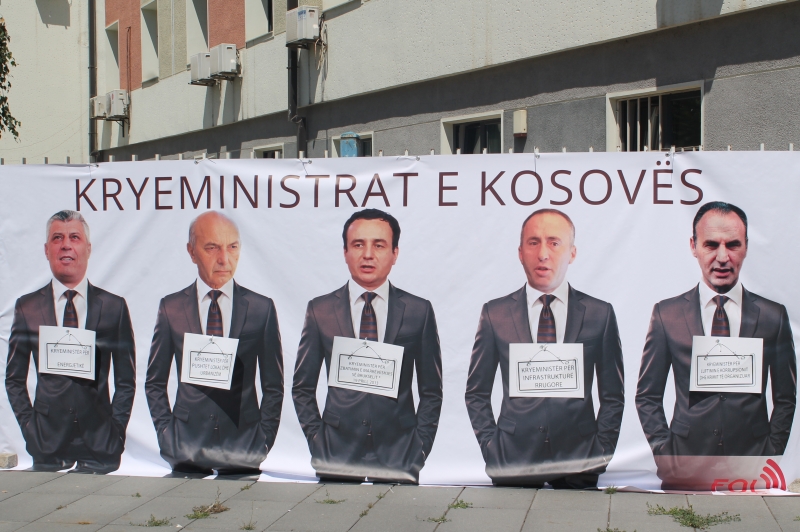
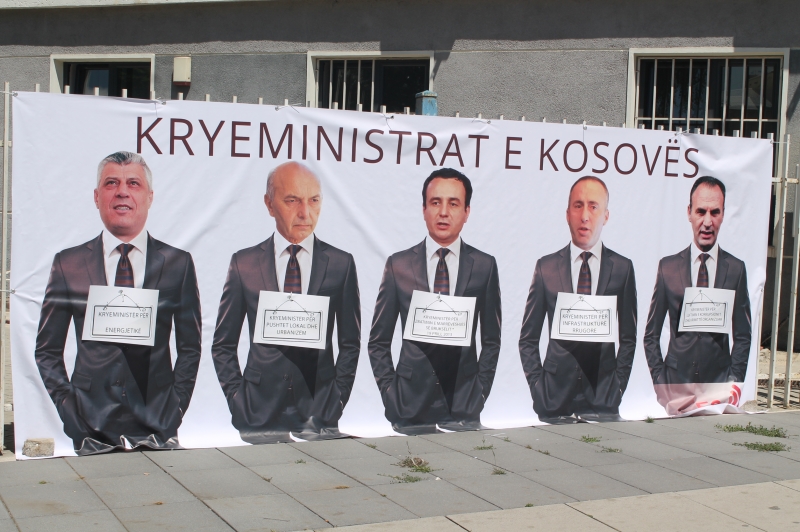
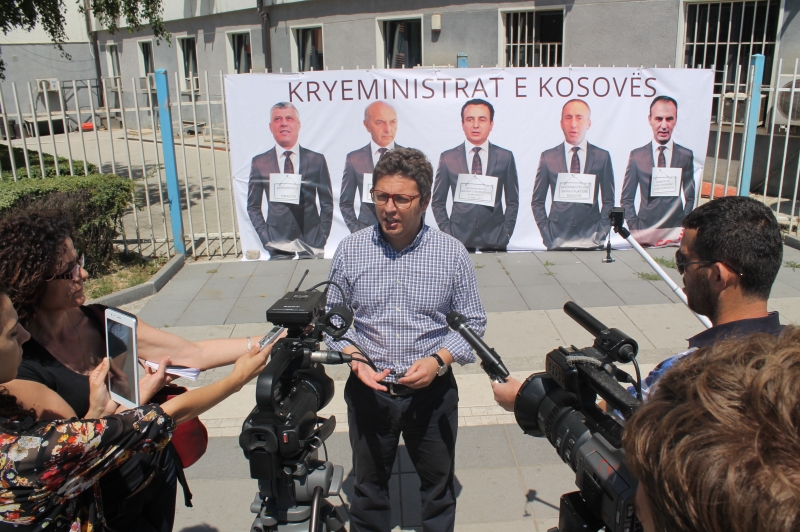
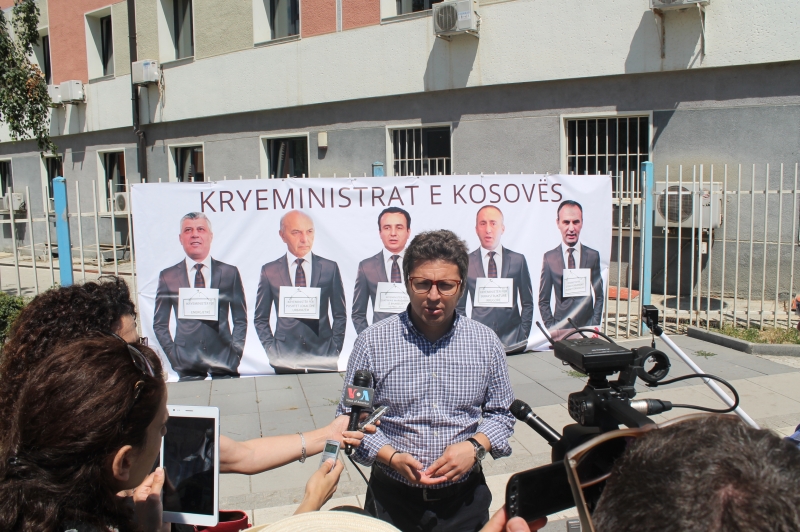
Kosovo needs a Parliament, a Government and a Prime Minister
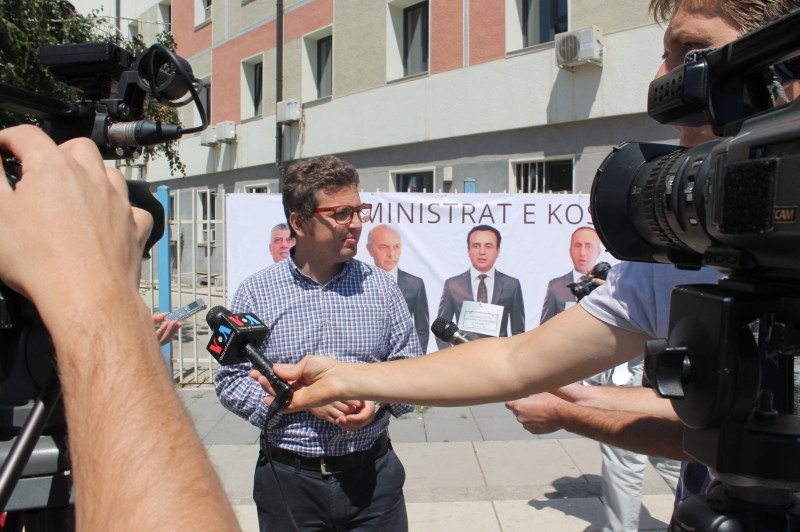
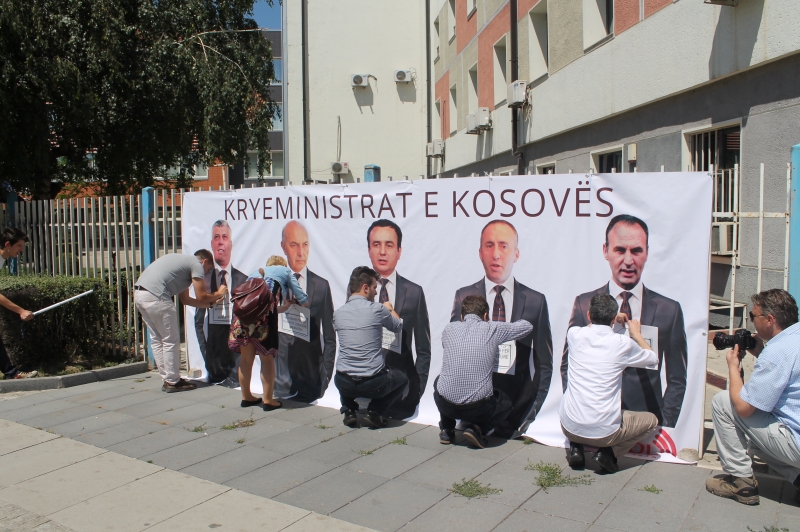
Through the performances, FOL wants to draw attention regarding the degradation of the process and the political class. According to this, FOL tries to remind to all potential candidates for Prime Minister, the failures they have been facing. Therefore, FOL proposes that all the contestants may be elected as Prime Minister in relation with specific areas such as: Hashim Thaci for Energy, Isa Mustafa for Local Governance Spatial Planning, Albin Kurti for Implementation of Brussels Treaty, Ramush Haradinaj for Infrastructure, and Fatmir Limaj for fighting Corruption and Organized Crime.
Activity Gallery


Performance ne lidhje me ngercin politik per konstituimin e organeve te reja shteterore8Performance ne lidhje me ngercin politik per konstituimin e organeve te reja shteterore7Performance ne lidhje me ngercin politik per konstituimin e organeve te reja shteterore6Performance ne lidhje me ngercin politik per konstituimin e organeve te reja shteterore5Performance ne lidhje me ngercin politik per konstituimin e organeve te reja shteterore4Performance ne lidhje me ngercin politik per konstituimin e organeve te reja shteterore3Performance ne lidhje me ngercin politik per konstituimin e organeve te reja shteterore2Performance ne lidhje me ngercin politik per konstituimin e organeve te reja shteterore

FOL’s five years on anti-corruption, transparency and accountability

Prishtina, 25 June 2014 -Today, FOL Movement marks the fifth anniversary of its foundation. Faced with many challenges in its functioning and sustainability, today FOL has managed to advance its mission in promotion of good governance, law enforcement and advancement of active citizenry. Today FOL Movement is considered the leading organization in promotion of the fight against corruption, transparency and accountability of public institutions in Kosovo.

During this 5 years, FOL Movement has realized over 290 public activities, among them 54 different publications (Reports and Analysis), 67 press conferences, 57 roundtables in central and local level, we have coordinated 10 joint statements of Civil Society, we had 33 public reactions, we have signed nine understanding memorandums with institutions of central and local level in the area of ​​access to justice and public procurement. We have organized 7 National Debate Tournaments “Karl Popper”. We have organized the Summer Camp 2012 with young volunteers of FOL, we have realized the Declaration and Comparative Platform of the assets of Senior Public Officials have we also launched the Anti-Corruption Statistical Platform as the only platform not only in Kosovo but also in the region that measures the performance of institutions in the fight against corruption. With the aim of advancing the level of active citizenry FOL has conducted a series of street performances through which has reacted against various phenomena and events that relate to the organization’s mission. We have also organized the campaign Accountability Test in eight municipalities of Kosovo, public consultations regarding the process of Kosovo’s membership in OGP and the campaign FOL’s Week in different villages of Kosovo. Since 2009, FOL Movement has awarded five civil awards.

FOL Movement has initiated and co-coordinated the process of Kosovo’s membership in the Open Governance Partnership – OGP and since January this year, FOL has become a member of the Anti-Corruption Convention of the United Nations – UNCAC Coalition representing Europe Region in Committee Coordination of this coalition.

FOL is committed to continue with all its powers on its efforts and contributions to bring the institution closer to the citizen, to decrease corruption in the country, as well as to enhance the transparency and accountability of public institutions in spending the state budget.

On the occasion of the 5th anniversary, FOL Movement has prepared the bulletin which contains a number of major activities carried out during these years. For more click here!

FOL Movement in this 5th annual thanks all the members of the Advisory Board, the members of the Assembly of FOL, activists and supporters, media and donors for their help and great support they have provided over these years.

FOL will always speak up for public interest!

FOL’s week in Kamenica villages

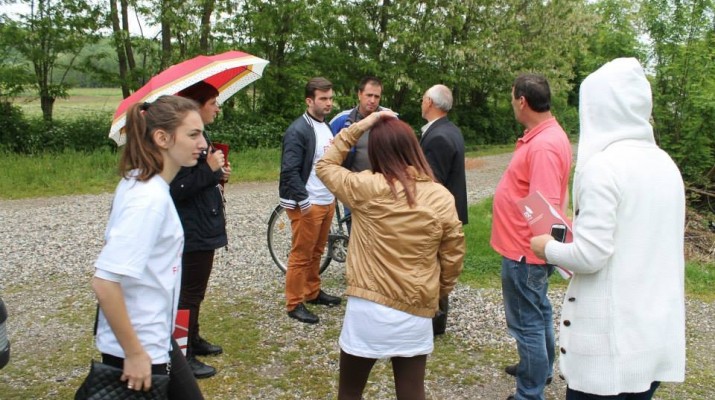
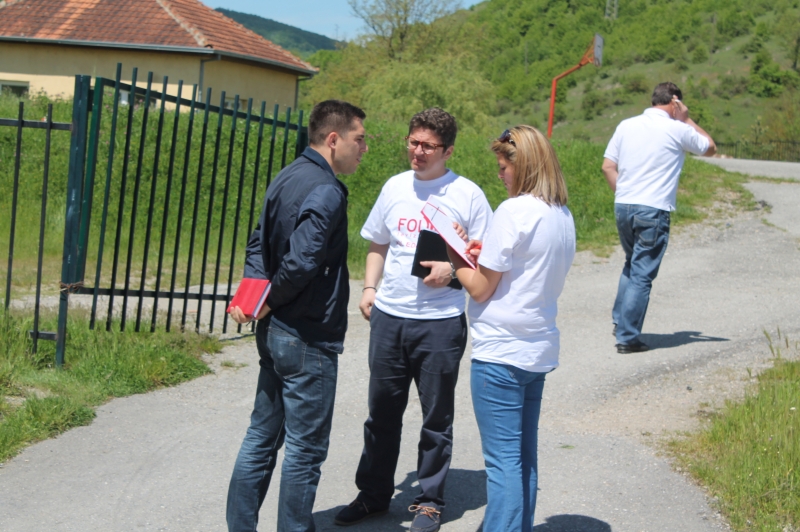
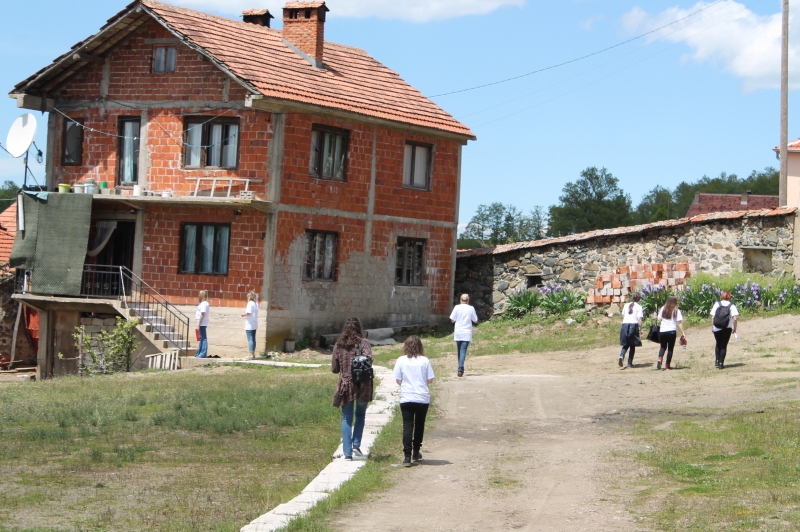
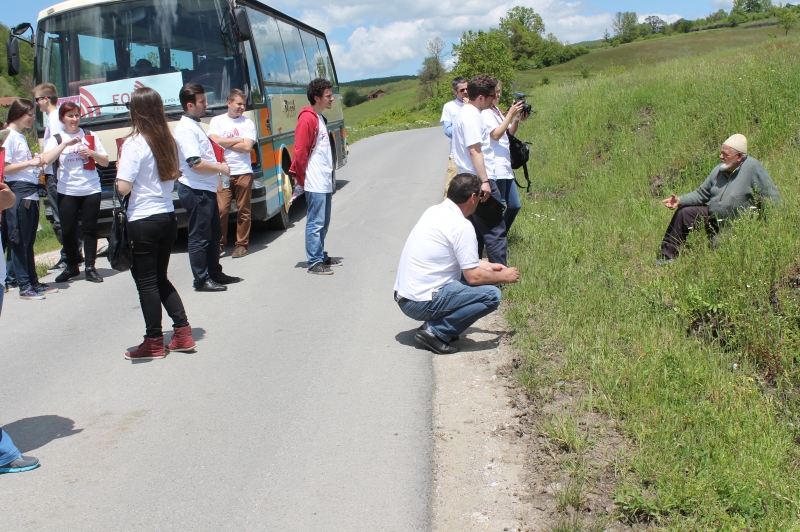
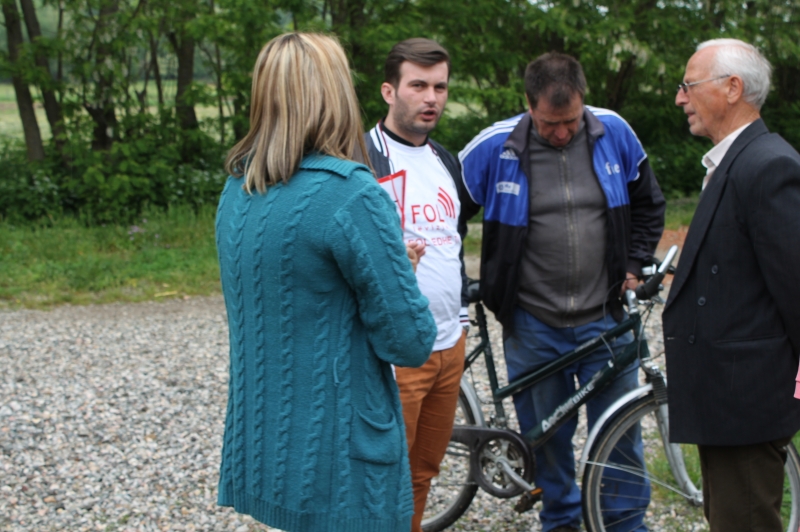
By visiting the villages Strezofc and Leshtar in Kamenica municipality on Friday, FOL completed the FOL’s week called “You too, Speak Up”‘. Throughout the week, FOL visited several villages of the five municipalities of Kosovo. Residents demands from all those villages will be sent to each municipality and will be advocated that municipal investment are carried out in these villages as well.

FOL’s week in Mitrovica and Ferizaj villages

On Monday, FOL began FOL’s week called “You too, Speak up”‘, where will be visited several villages in five municipalities of Kosovo. While meeting the residents, FOL will make possible for them to make specific requests regarding investment in those villages and later these requests will then be sent to the respective municipalities. On Wednesday, FOL was in Bare village in Mitrovica municipality and on Thursday in Jezerc in Ferizan municipality.

FOL’s week in Peja villages

Last Monday, FOL began FOL’s week called “You too, Speak up”‘, where will be visited several villages in five municipalities of Kosovo. While meeting the residents, FOL will make possible for them to make specific requests regarding investment in those villages and later these requests will then be sent to the respective municipalities. On Tuesday, FOL was in villages Baran and Poqesta in Peja municipality.

FOL Movement begins the implementation of the campaign “FOL’s Week”

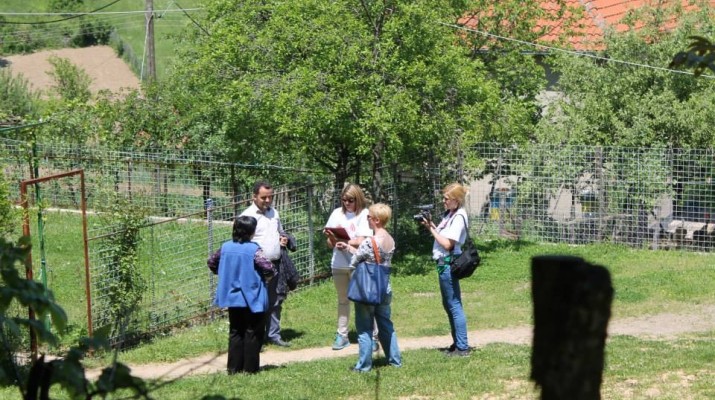
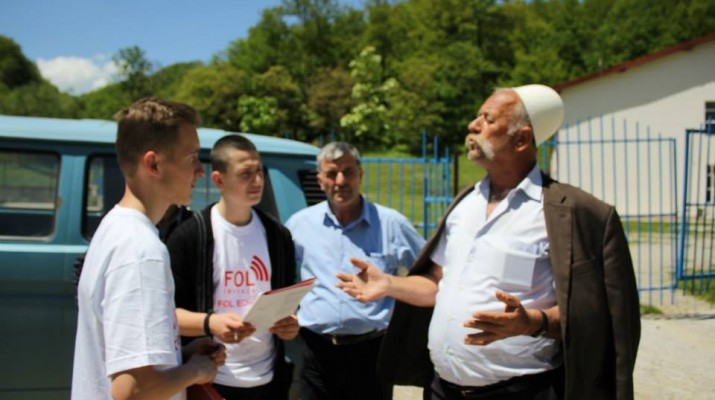
Prishtina, 19 May 2014 – Today, FOL Movement began the implementation of the campaign “FOL’s Week,” in several villages of major municipalities in order to identify the needs and advocate about municipal and government investments in these areas.
FOL’s activists, during this campaign, will offer the opportunity to the residents of these areas to make specific requests regarding the investments, and then these requests will be sent to municipalities or certain government sectors and FOL will advocate that these requirements be a priority of the budget planning of these institutions in the future.

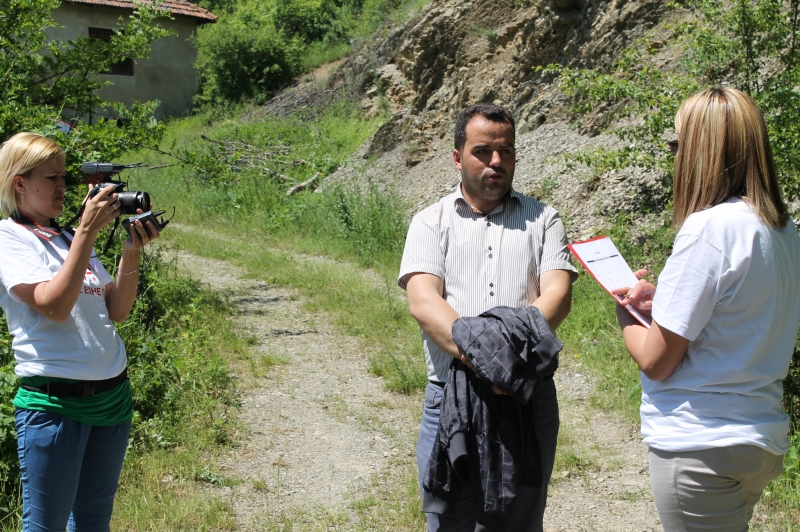
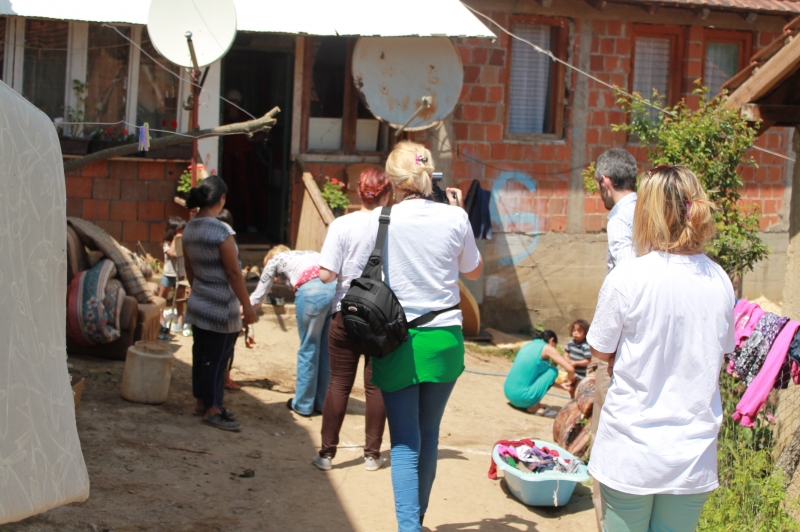
Today, FOL Movement visited some villages of Prishtina municipality, and a preliminary investigation shows that there were no investments in the recent years. The residents of the villages Slivove and Llajshevc, told that despite their many request to the municipality and other government institutions for various investments, they never received a response from these institutions and leave alone any investment. According to the residents of these areas there is an immediate need for construction of water supply and sewage system, subsidies on agriculture and livestock, improvement of the electricity network, improvement of road infrastructure by building sidewalks whose lack endangers the safety of residents, investments in education and especially preschool program startup.

FOL Movement during this week will visit the villages of Peja municipality on May 20, 2014; Mitrovica Municipality on May 21, 2014, Ferizaj Municipality onMay 22, 2014 and Kamenica municipality on 23 May 2014.

Activity Gallery

FOL Movement begins the implementation of the campaignFOL Movement begins the implementation of the campaign2FOL Movement begins the implementation of the campaign3FOL Movement begins the implementation of the campaign4FOL Movement begins the implementation of the campaign5FOL Movement begins the implementation of the campaign6FOL Movement begins the implementation of the campaign7FOL Movement begins the implementation of the campaign8

Open Government Partnership Action Plan is being implemented

Prishtina, 30 April 2014 – FOL Movement praises the approval of National Action Plan for Open Government Partnership. After more than a year of intensive work of the group consisted of civil society organizations and public institutions in the process of drafting the National Action Plan for Open Government Partnership (OGP), the Government of Kosovo approved the two-year plan yesterday.

The obligations arising from this National Plan are exceptionally important for policy-making, function of institutions and providing services to citizens, and their participation in decision-making. This plan clearly shows the actions to be taken by the Government and public institutions in areas such as: Improving Public Services; Increasing public integrity; More effective management of public resources; and Increasing corporate accountability.

Moreover, the plan defines clearly the deadlines of the actions that public institutions should take in order to improve services in health, education, public finances, agriculture, civil service, public administration and a series of other sectors in order to progress services to citizens and political and public accountability. Therefore, the approval of this plan is an important news and the beginning of its implementation will be a very good news for the citizens of the country.
FOL will actively monitor each step which will be taken by public institutions during the implementation of the plan in terms of monitoring and supervising the implementation of this Plan. FOL will make sure that such monitoring will involve other factors in Kosovo, as well as representatives of civil society in Open Government Partnership.

Open Government Partnership – OGP is a global inter-governmental initiative, which began in the autumn of 2011 and its mandate is to create conditions for an open and accountable government towards citizens in the respective countries. This global mechanism obliges its member states to implement their national plans otherwise they may be excluded from this global initiative. The Republic of Kosovo is in a sensitive stage of negotiating for membership in OGP, where careful steps are taken in the accession process, believing that one day Kosovo will become a member of the OGP.

The Programs Director of FOL Movement becomes a member of the Coordination Committee for Europe in UNCAC Coalition

Prishtina, 25 April – Fidan Kalaja, Programs Director of FOL Movement, has become a member of Coordination Committee for Europe in the Anti-Corruption Convention of the United Nations, respectively the UNCAC Coalition. Besides the promotion of the principles and values of the UNCAC Coalition in fight against corruption, the members of this committee are responsible to consolidate and strengthen the coalition and its members in the fight against corruption, and support the performance of the coalition in national, regional and international aspect.

FOL Movement has became a member of the Anti-Corruption Convention of the United Nations, respectively the UNCAC Coalition. UNCAC Coalition is a global network consisted of more than 350 civil society organizations from more than 100 countries worldwide. This network of organizations is committed and promotes anti-corruption fight through advocacy for the ratification, implementation and monitoring of the Anti-Corruption Convention of the United Nations – UNCAC. The coalition was established in 2006, through the mobilization of civil society organizations of UNCAC in international, regional and national level.

Movement thanks the media, organizations and its partners who supported and contributed to the selection of Mr. Kalaja as a member of the Coordination Committee for Europe of the UNCAC Coalition. Being part of the UNCAC and its Coordination Committee, FOL will be even more engaged in promoting anti-corruption war in Kosovo by exchanging experiences and implementing effective practices of the UNCAC Coalition members in fight against corruption fight.

Regional conference: Kosovo’s membership in the Open Government Partnership and regional experiences

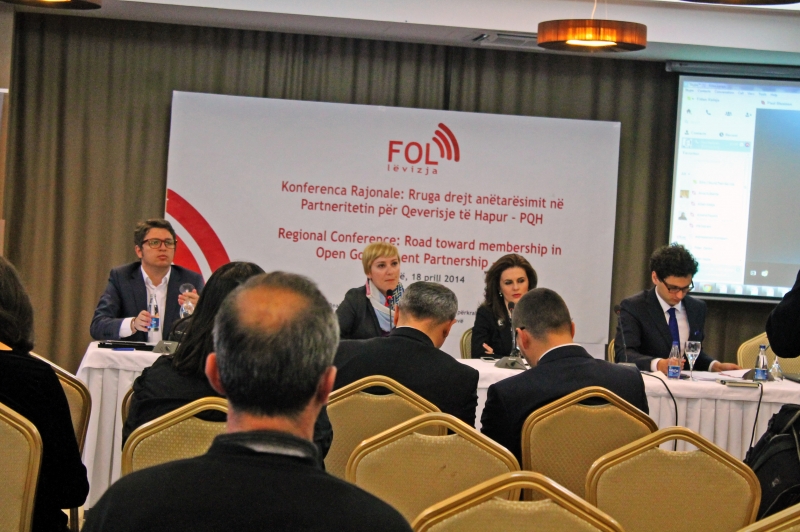
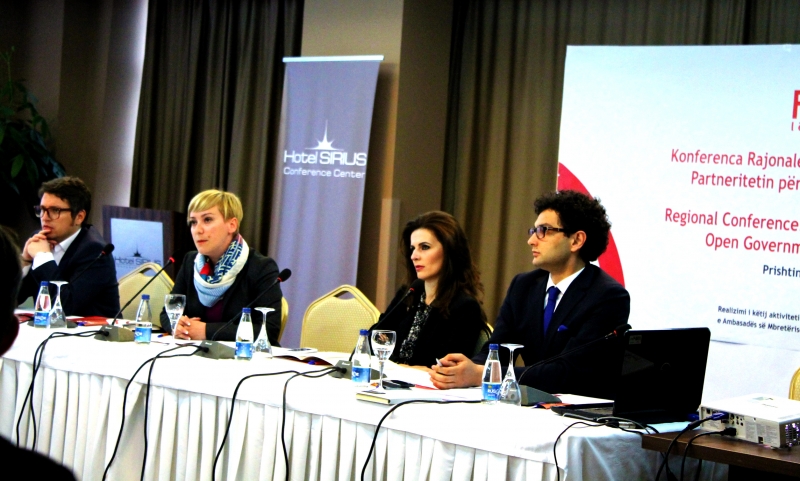
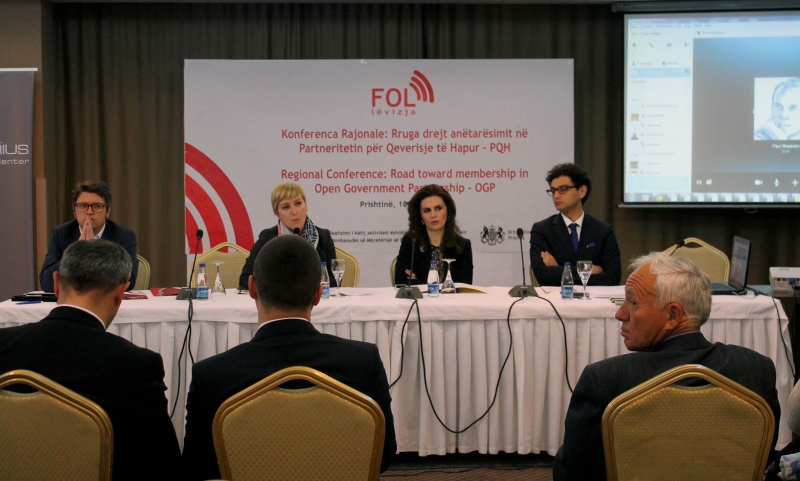
 Prishtina, 18 April 2014 – With the support of the British Embassy in Kosovo, today FOL Movement organized a regional conference on “The road towards membership in the Open Government Partnership – OGP”. The conference was attended by representatives of institutions and civil society from Kosovo and region, as well as representatives from OGP.

Minister of European Integration, Mrs. Citaku said that the Republic of Kosovo was committed to open government and use of technology in order to be more accessible by citizens . Mrs. Citaku mentioned that Kosovo faces a serious of challenges, where corruption is a serious challenge and the membership in OGP, is seen by Kosovo as an opportunity to intensify the efforts to fight corruption. She said that it was important that government and other institutions make their data public at the right time because the data that actually are public is not sufficient. Thus, according to Ms. Citaku, the open government aims to increase accountability, reduce inequality and increase access in education, and health care. According to Minister Citaku, despite any possible political problem in Kosovo’s qualifying process in OGP, Kosovo government must demonstrate a commitment to the principles of OGP by implementing the National Action Plan 2014-2016.

Paul Maassen , the coordinator of Civil Society in OGP, stressed that the main challenge for Kosovo and other member countries of OGP is the implementation of the National Action Plan, and then he said it takes not only political will but also the commitment of civil servants from several institutional. Kosovo National Action Plan is a plan that meets the principles of OGP, it provides concrete actions and results and it is a plan that is not based only on activities. The reforms foreseen in this plan will help a lot about how institutions will cooperate with citizens in decision-making. According to Mr. Maassen ” without civil society this process will not work and the challenges are that civil society remains involved and interested in the process.” And this is something that they should do it themselves, by working together but also the government should take seriously the demands and ideas of civil society and thus to achieve the joint ownership in the process.

Lorin Ymeri, from Ministry of Innovation and Public Administration of the Republic of Albania, presented the process through which Albania went through during the membership in OGP and work that the government is carrying out in the second action plan, a plan which Albania will submit to OGP. Ymeri said that this is the second action plan of the Government of Albania. Now we are interacting to get the observations of the civil society on the second plan.

Natalia Mirkovic, a representative of the GONG organization from Croatia, presented the experiences of Croatia during its membership in OGP. She said that during the period when Croatia was preparing to join the OGP, the country was going through an important period. During that year there were elections in Croatia as well as the process of joining the European Union. One of the challenges that she mentioned was the challenge of the involvement of local government in the OGP plan. According to her Croatia’s new action plan will focus more in local level. And there are many members who are interested to do more at a local level by opening the local budget.

Petrit Zogaj from FOL Movement, made a presentation of the performance FOL Movement so far within the Coordination Group in terms of Kosovo’s membership in OGP. He said the Coordinating Group has held five regular meetings, online public consultations with citizens across 6 regions of Kosovo were conducted. The Coordination Group has also held the final workshop where the group has structured and finalized the National Action Plan which then was sent to the government for approval.

Activity Gallery

Regional conference - Kosovo-s membership in the Open Government Partnership and regional experiencesRegional conference - Kosovo-s membership in the Open Government Partnership and regional experiences2Regional conference - Kosovo-s membership in the Open Government Partnership and regional experiences3

Municipalities should change their Transparency Regulations

Prishtina, 16 April – Today, FOL Movement held a press conference presenting the request which will be sent to Kosovo municipalities regarding the review and amendment of the Municipal Transparency Regulation in accordance with the Law on Access to Public Documents which has been approved in October 2010.

Mexhide Demolli- Nimani from FOL Movement stated that the findings of FOL Movement show that from all municipalities of Kosovo, 11 of them did not publish the Transparency Regulation on their official website, these municipalities are: Klina, Novobërda, Partesh, Ranillug, Shtërpca, Vitia, including here northern municipalities Zubin Potok, Leposaviq and Zveçan whose websites are still being developed whereas North Mitrovica has not yet anofficial website. Decan and Suhareka, seem to have the Transparency Regulation on the list of regulations, but they are not complete.

According to Demolli-Nimani, only eight Kosovo Municipalities (Graçanica, Hani i Elezit, Istog, Mitrovica, Obiliq, Prizrei, Rahovei and Vushtrri) have made amendments to the Transparency Regulations.
“Kllokot is a special case even though they have approved their regulation in February 2011 they still apply the new Law on Access to Public Documents, regarding the deadline of response to a requests for access to public documents, the deadline is 15 days,” she said.
Meanwhile, 17 other municipalities such : Dragash, Ferizaj, Fushë Kosova, Gjakova, Gjilan, Gllogoc, Junik, Kamenice, Kaçanik, Lipjan, Malisheve, Mamushe, Podujeve, Peja, Prishtina, Shtime, Skenderaj, they have the old regulations which due to the changing of the legislation on access to public documents they must be change their municipal transparency regulation as well.

She further said there are cases where municipalities have approved the Transparency Regulation later than 2010, that is, after the approval of the new law, but they used to apply the old law on access to public documents 2003/12.
The reason why this regulation should be changed is that the current regulation is compatible with the old law on access to public documents no.2003/12, this law was revoked with the application of the new Law on Access to Public documents.
According to the current transparency regulation the deadline to respond to a request for access to public documents is 15 days, whereas according to the Law on Access to Public Documents is only 7 days. Also the application forms, according to the current regulations is limited only in written form, whereas the Law on Access to Public Documents reads that “Requests for access to public documents can be summoned in any form which enables the public institution to identify the document.”

“Therefore, considering as necessary, that municipalities strengthen the increase of transparency and accountability, FOL calls the Municipalities to the make necessary changes in their Municipal Transparency Regulations. Besides, this is also one of the recommendations of the report ‘Transparency Index 2012 “, where it is required the accordance of the legal provisions for public communications and information at the municipal level,” Demolli-Nimani said.

Activity Gallery

Municipalities should change their Transparency Regulations4Municipalities should change their Transparency Regulations3Municipalities should change their Transparency Regulations2Municipalities should change their Transparency Regulations

The year 2013, a year of high corruption and low efficiency of fighting it

Prishtina, April 5, 2014 – Today, FOL Movement held a press conference presenting the annual police, Prosecution and Courts statistics within the Anti-Corruption Statistics Platform (platforms: http://www.levizjafol.org / statistics-platform anti-corruption /? message = true & FaqeID = 1) and also the decisions and actions of Assembly and Government of Kosovo and European Rule of Law mission – EULEX in the field of fighting corruption in Kosovo in 2013.
Fidan Kalaja from FOL Movement said that during 2013, Kosovo Police has handled 57 cases on corruption offenses and taking bribe. Criminal charges have been filed against 22 people and 12 people have been arrested. During this year they have handled 43 cases on corruption offenses and giving bribe, criminal charges have been filed against 16 people and 10 people have been arrested. Regarding the cases on corruption offenses, abuse of authority, Kosovo Police has handled 441 cases of corruption, filing criminal charges against 242 people and arresting 45 people.

He further stressed that the Kosovo Prosecutor in 2013, regarding the corruption offense, taking bribes dealt with cases where were implicated 56 people , among all these cases the prosecution solved an amount of cases involving 30 people and at the end of the period remained unsolved cases where were involved 26 people . On the corruption offense giving bribe the dealt with cases where were implicated 59 persons , solving cases with 36 people involved whereas cases with 23 people were involved remained unsolved at the end of 2013. And on the corruption offense , abuse of authority, Kosovo Prosecution dealt with cases where were implicated 1,585 people during 2013, among all these cases the prosecution solved an amount of cases involving 363 people and at the end of the period remained unsolved cases where were involved 1,222 people .

According to him, during 2013, Kosovo Courts on the corruption offence taking bribe dealt with cases implicating 122 people, solving cases with implicating only 31 people whereas cases with implicating 91 people remained unsolved at the end of this period. On the corruption offense giving bribery Kosovo Courts dealt with an amount of cases involving 67 people, solving cases where were involved only 23 people whereas cases involving 44 people remained unsolved at the end of 2013. And for the corruption offense abuse of authority, Kosovo courts dealt with an amount of cases where were implicated 603 people during 2013, solving cases with 66 people implicated while cases with 537 people implicated remained unsolved at the end of this period .
Fidan Kalaja further mentioned that besides the three institutions involved in this platform, FOL Movement has been monitoring anti-corruption activities of three other institutions as well, such as the Government, Parliament and EULEX, regarding their activities in the fight against corruption.

According to the findings of FOL Movement, Kosovo Government in 2013 has approved a total of 427 decisions, among them only 4 decisions were in the fight against corruption, compared with 2012 where 5 of them were in the fight against corruption.
Meanwhile, Kosovo Assembly from 23 plenary sessions held in 2013, only in 6 of them was discussed about the fight against corruption, compared with 2012 where only in 3 sessions was discussed the fight against corruption.

According to anti-corruption statistics for 2013 from EULEX, EULEX courts held only nine trials on corruption cases while EULEX prosecution during 2013 has dealt with nine new cases, has conducted 29 preliminary investigations, there were 15 ongoing investigations, has filed five charges, has amended 2 charges, and confirmed 2 charges.

Activity Gallery

The year 2013, a year of high corruption and low efficiency of fighting it3The year 2013, a year of high corruption and low efficiency of fighting it2The year 2013, a year of high corruption and low efficiency of fighting it

PRB Board must review 279 complaints filed since August 2013

FOL Movement calls the Board of PRB not to pass on its responsibility to procurement officials, but try and find the possibility to review the filed complaints even with an expedited procedure and decide as it is mandated by law.
Prishtina, March 26, 2014 – Public Procurement Review Body, after a nearly eight-month period is re-functionalized with the appointment of new Board members by Kosovo Assembly at its session held on March 20, 2014. During the period from 1 August 2013 to 20 March 2014, the PRB has not performed its function of reviewing the complaints of public procurement procedures, in this institution are filed a total of 279 complaints about various procedures.

On the other hand, according to recent information that emerged in public, even from the employees of this institution, the PRB board will review only 24 complaints which were filed after 14 February 2014, whereas will not consider the rest of 255 additional complaints justifying that they have expired legal deadlines for review. These procurement procedures will remain to be decided by the relevant procurement officials in the relevant contracting authorities.

FOL Movement has constantly expressed concern that the non-function of the PRB has created opportunities for mismanagement, abuse and corruption in public procurement.

FOL concludes that if the complaint filed during the period when the PRB has been non-functional will not be reviewed and leaving them to public procurement officers to decide for, will create:
1.Possibilities for mismanagement, abuse and corruption in public procurement.
2. Damage the interests of economic operators, and
3. Create a precedent for other cases where authorities that are obliged by law enforce justice to refuse to do so.
Therefore, FOL Movement calls the Board of PRB not to pass on its responsibility to procurement officials, but try and find the possibility to review the filed complaints even with an expedited procedure and decide as it is mandated by law. We consider that any other form of action is extremely dangerous and can create abusive opportunities by contracting authorities.

Public consultation on Open Government Partnership in Mitrovica Municipality

Mitrovica, march 19, 2014 – FOL Movement in cooperation with CMB in Mitrovica, as a member of the Coordination Group for Kosovo’s membership in international organization for the Open Government Partnership, organized a public consultation today in Mitrovica Municipality in order to draft the National Action Plan 2014-2016.This event was attended by representatives of local institutions, civil society, media and interested citizens

Florentina Hajdari – Hajra from CBM after a brief introduction of the history of the establishment of Open Government Partnership – OGP (for more information please see OGP background: http://www.ogpkosova.org/what-does -open-government-mean /), said that they have supported this initiative. He said that “through this debate today, we are trying to identify the problems faced by the citizens of Mitrovica and Kosovo as well regarding the access to public institutions.

Fidan Kalaja from FOL Movement, briefly presented the steps that have been taken and have to  be taken from Kosovo in order to become a  member of the  in the Open Government Partnership. He mentioned that the Coordination Group is established which consists of representatives of civil society, institutions and private sector representatives, whose mission is drafting the Kosovo National Action Plan. He said the Coordinating Group has decided that the plan focuses on four main challenges anticipated and suggested by OGP, that is: Improving public services, Increasing public integrity, more efficient public resources management and Increasing corporate accountability. He also said that this public consultation campaign will serve to increase the inclusion of all interested parties in this process and also obtain concrete proposal activities, which will be included in the National Action Plan of the Republic of Kosovo.

Hajrullah Mustafa, from NGO ‘Shtëpia e Shokut’ said considering that we have lots of problems of disinterest on politics, the meeting of drafting this plan is completely independent of political influence. He said that independent institutions cannot function as such. According to him, in legislative terms Kosovo has made a great advancement, but regarding the executive the matter is different, and only because of political interference.

Skender Kerolli, from  Association of the Blind said that access to municipality is very difficult. “There are two months since we requested a meeting with the mayor and  we were not able to accomplish it regardless numerous requests. Also another big problem is the employment of blind people who even if they have graduated the college cannot get a job. “

Ragip Hyseni from LYAC stated that the focus should be on the selection of employees. “As it is now based on political orientations and the hired people should be in services of the political party which hired him. There should be more transparency in terms of employment and vacancies criteria to be clear, because right now the calls for vacancies are just for show, even in some cases they are published after the employee has started working “

Florentina Hejdari – Hajra from CBM stressed that it would be better if in municipalities were formed  all-inclusive committees, including civil society but also experts in relevant areas. According to her, the planning of the last year budget was open, but in these  meetings there  were no ​​prior analysis which would point out the most urgent needs of the citizens. It is also noticed that there are no cost analysis of those projects.  It has happened that certain projects were planned and not included in the municipal budget but to foreign donations. “

Lulzim Hakaj, from Human Rights Civil Initiative, said that there should be more attention to the specifications of the criteria of special advertisements.

Ramadan Uka from NGO ‘Eco-Trepca’ said the they select directors with no previous work experience therefore this issue should be considered because although they are political staff, the mayors should be careful in their appointments.

Public consultation on Open Government Partnership in Prizren Municipality

Prizren, March 18 2014 – FOL Movement in cooperation with Ec me Ndryshe, as a member of the Coordination Group for Kosovo’s membership in international organization for the Open Government Partnership, organized a public consultation today in Prizren Municipality in order to draft the National Action Plan 2014-2016. This event was attended by representatives of local institutions, civil society, media and interested citizens
Elmedina Baxhaku from Ec me Ndryshe after a brief presentation of the activities of the organization in increasing the transparency of the Prizren Municipality, said that their organization has supported this initiative. She said that through this debate, they were trying to identify the problems that the citizens of Prizren and Kosovo were facing in terms of access to public institutions.

Kenan Tora, from FOL Movement, after a brief introduction of the history of the establishment of Open Government Partnership – OGP (for more information please see OGP background: http://www.ogpkosova.org/what-does -open-government-mean /), and went on explaining briefly the steps that have been taken and have to be taken from Kosovo in order to become a member of the in the Open Government Partnership. He mentioned that the Coordination Group is established which consists of representatives of civil society, institutions and private sector representatives, whose mission is drafting the Kosovo National Action Plan. He said the Coordinating Group has decided that the plan focuses on four main challenges anticipated and suggested by OGP, that is: Improving public services, Increasing public integrity, more efficient public resources management and Increasing corporate accountability. He also said that this public consultation campaign will serve to increase the inclusion of all interested parties in this process and also obtain concrete proposal activities, which will be included in the National Action Plan of the Republic of Kosovo.

Dea Spahiu from UNDP in Prizren expressed the support of the UNDP for Kosovo’s membership process in OGP.
Afrim Tejeci from Handicraft Association in Prizren said they were very committed to having greater transparency by the municipality in terms of the industrial area. “We have had foreign investors who intended to invest in Prizren, but we did not managed to have a plan for the industrial area. We lack such information and we do not know how to explain this to the interested parties since we don’t even know. ”
Aqim Emurli from OSCE said that in Kosovo there are different laws and regulations regarding transparency and accountability, but also there is also manipulation on how citizens are involved in decision making, it is because citizens do not receive a proper invitation and debates are held only for a show. The involvement of citizens in decision-making is particularly important especially on regulatory plans, where “debates are held, but when after the work has begun and thus there are reaction from people because they were not consulted earlier,”.
Veton Ruka from Caritas Suisse, stressed the use of information technology in Kosovo where every citizen has such knowledge. According to him, Municipality’s website should be active and regularly updated so that people begin to use and get more informed.
Naim Cahani from KDI said that information offices should be improved and advanced. Also in public meetings for drafting the budget there should be reports and make them public.
Mentar Karjagdiu from OSCE said that the meetings with citizens regarding the budget should be organized by the Policy and Finance Committee and not by the mayor’s office. “We have noticed that that the Policy and Finance Committee was not very engaged in organizing these debates despite that they are obliged by law to organize these debates,”
Antigona Shestani from OPDMK said that when it comes to transparency and access to institutions “I think that special people should have a special treatment in this regard”. Special people have no access to institutions neither physical access. “

Activity Gallery

Public consultation on Open Government Partnership in Prizren Municipality2Public consultation on Open Government Partnership in Prizren Municipality