Reaction: The Kosovo Government is not ready to publish the Morine-Merdare highway contract

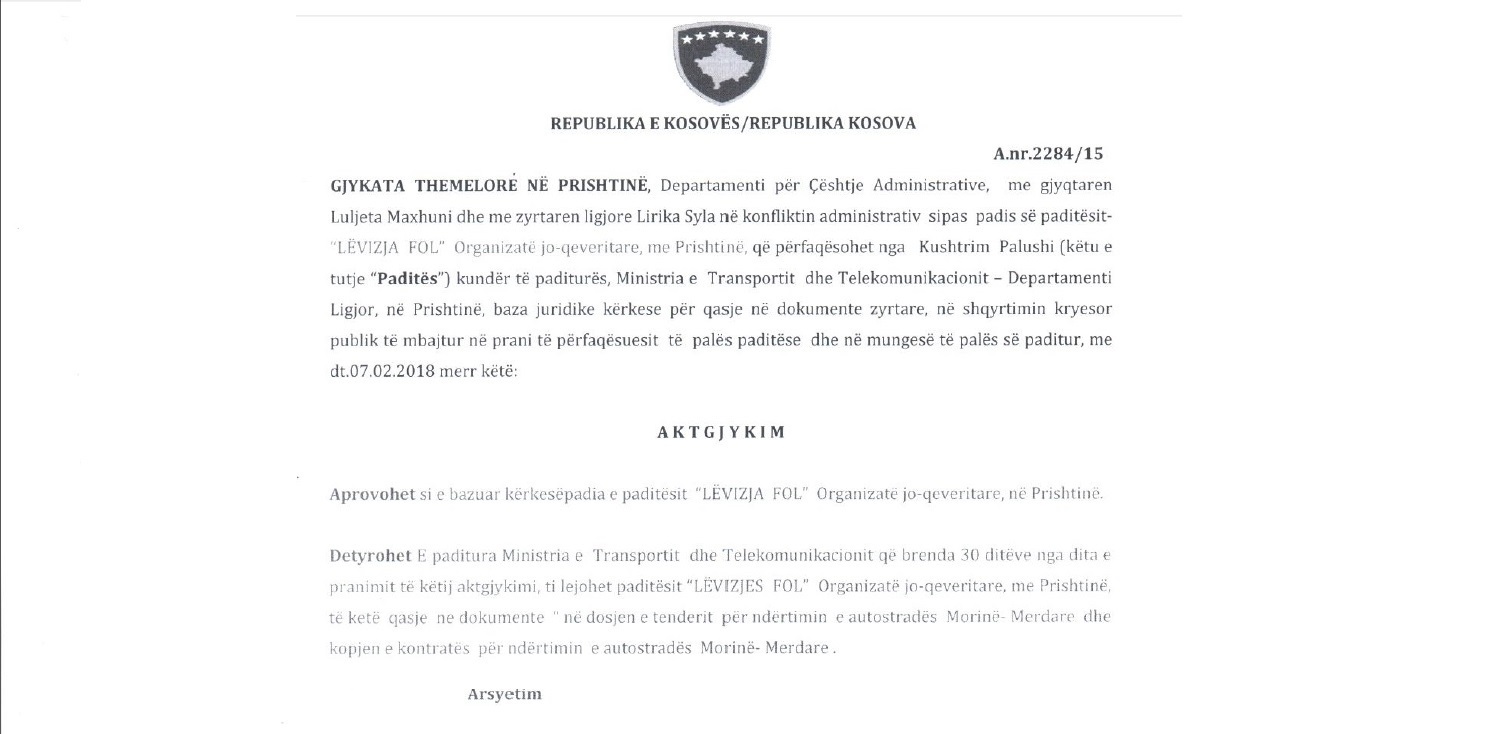
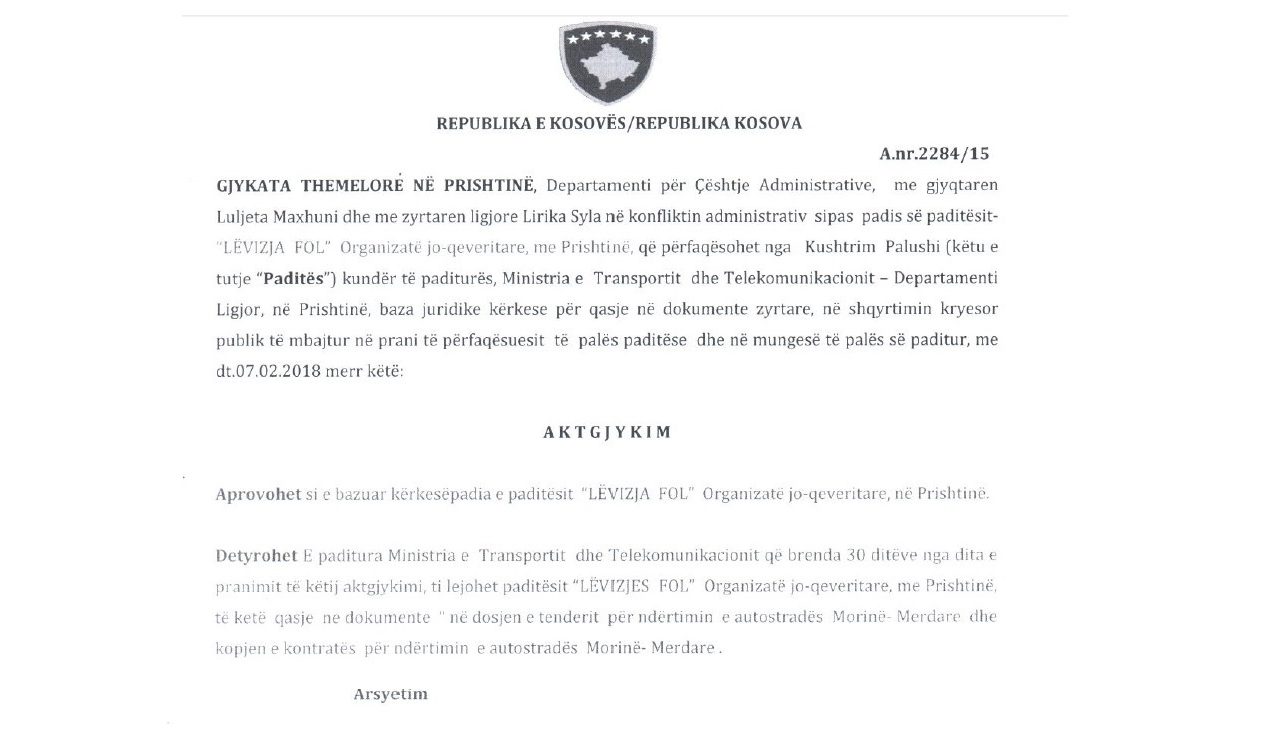
Prishtina, 19 March 2018 – Lëvizja FOL has been notified today that the Ministry of Infrastructure has appealed against the indictment of the Basic Court of Prishtina, through which was approved the lawsuit request of the Lëvizja FOL for access to the tender dossier for the construction of the Morine-Merdare highway and a copy of the contract for construction of this highway.

FOL considers that despite the legal right in the complaint that the Ministry of Infrastructure has against this indictments the main purpose of this complaint is the secret keeping of this contract as so far. This is also confirmed by the fact that one of the points of the complaint relates to maintaining the confidentiality of the Contract, even though it is a Public Contract.

This once again shows that the Government of Kosovo is not ready for the publication of the contract and the tender dossier for the construction of this highway, which seriously violates the citizens’ right to know how their money was spent.

FOL expects the Court of Appeal to validate the indictments of the Basic Court of Pristina in a reasonable time and to oblige the Ministry of Infrastructure to allow the access to public documents such as FOL’s request eight years ago.

FOL considers that the tendency to delay this process by the Ministry of Infrastructure, respectively Kosovo Government is a direct blow to transparency and accountability.

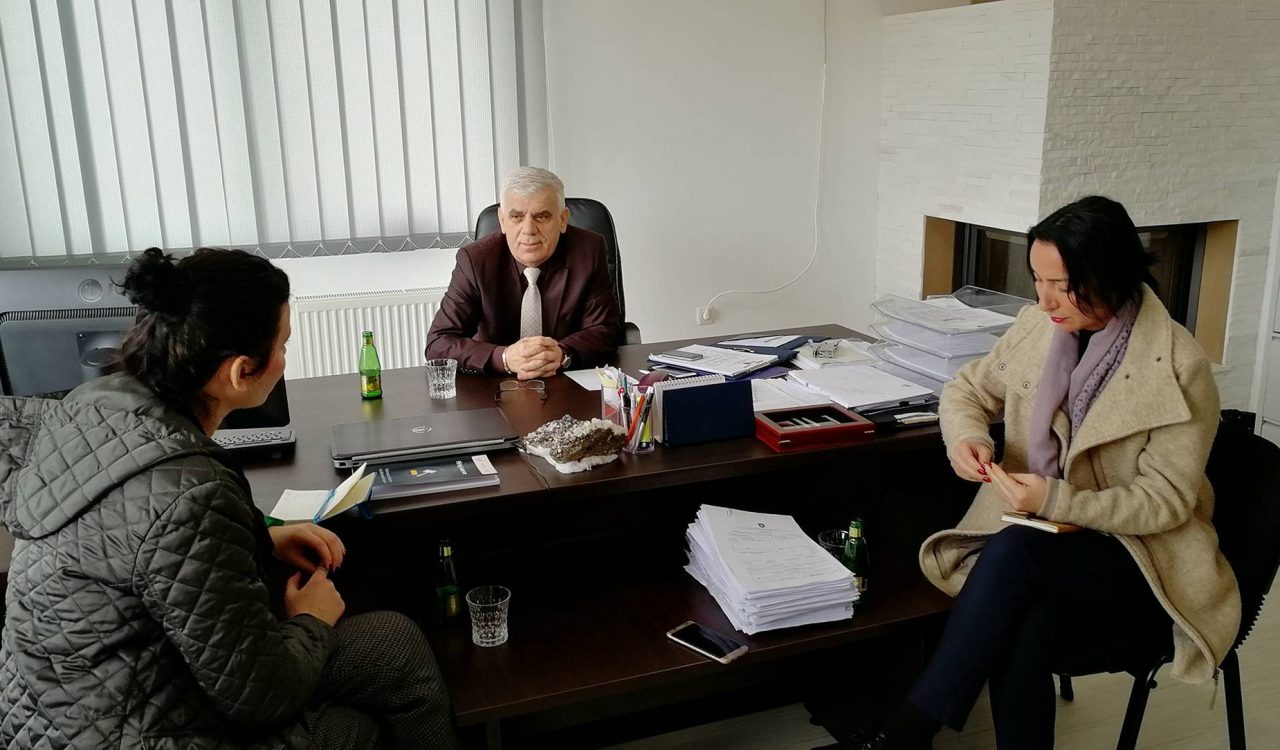
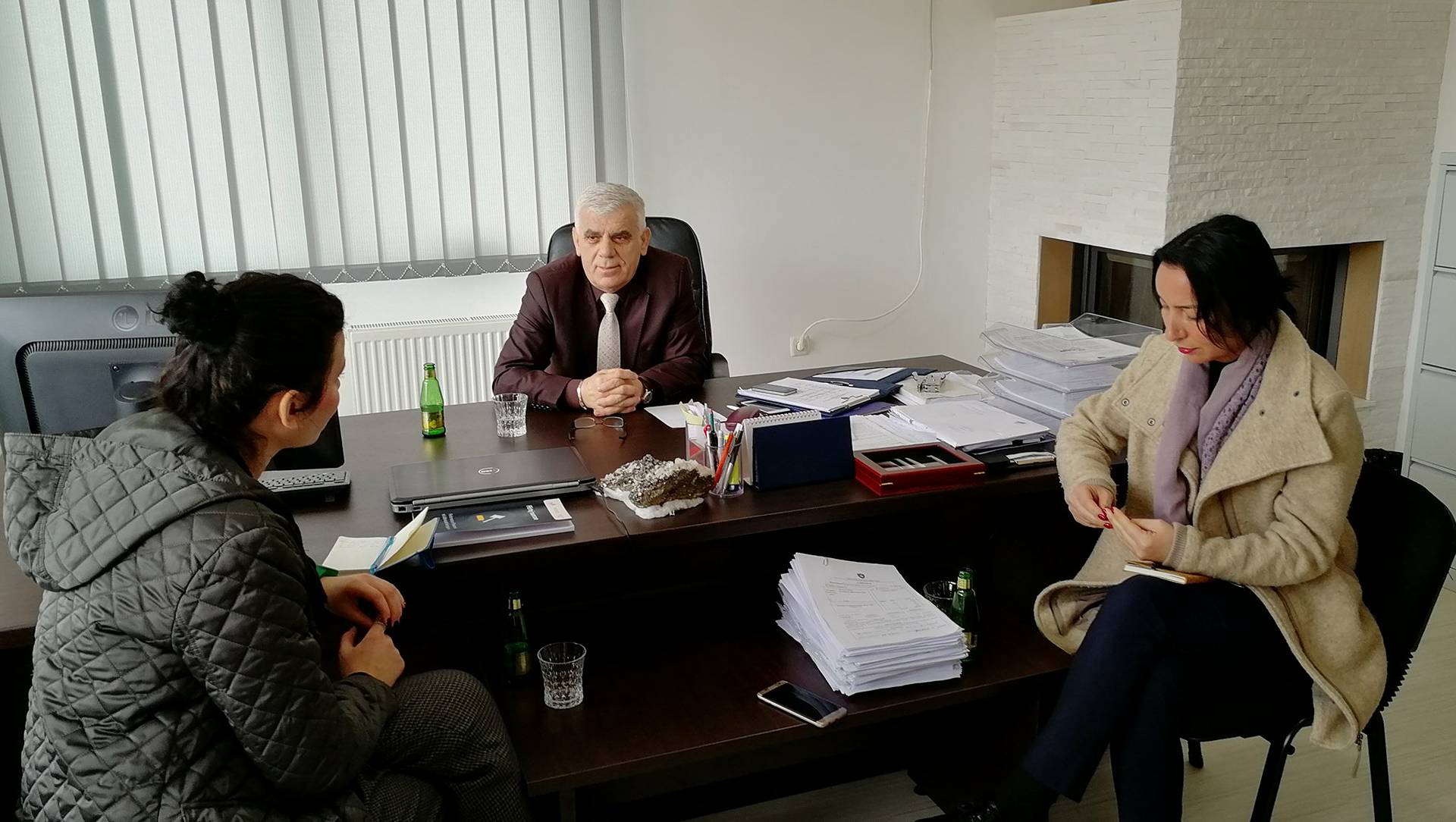
Meeting with the Chief Prosecutor of the Basic Prosecution in Mitrovica, Shyqeri Syla

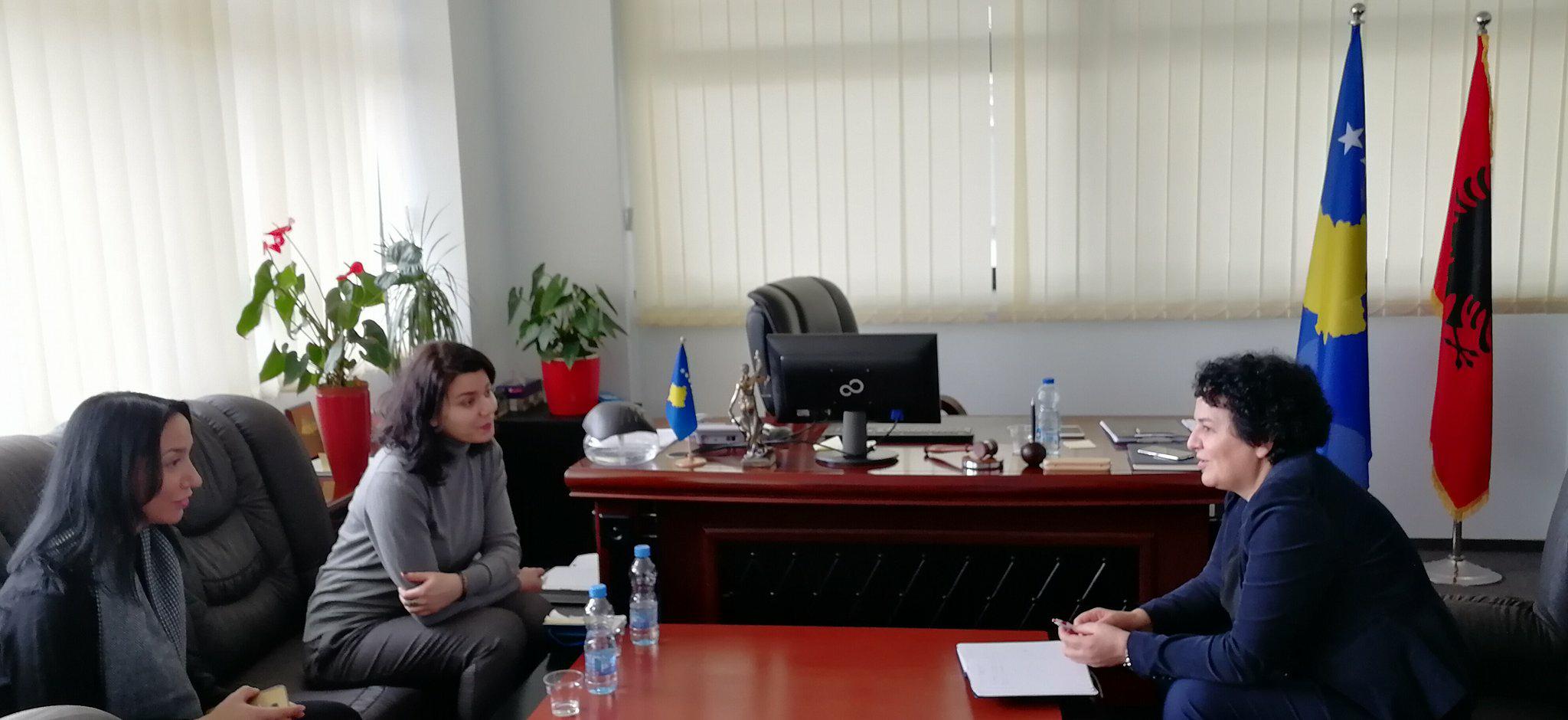
Mitrovica, 14 March 2018 – Representatives from the Lëvizja FOL met today mr. Shyqeri Syla, Chief Prosecutor at the Basic Prosecution in Mitrovica. During this meeting was discussed about the work in this prosecution, with special emphasis on the large number corruption cases.

Chief Prosecutor Syla said that the prosecution he currently runs has a small number of prosecutors and a large number of corruption cases. “Currently, there are 79 corruption cases, but we have a small number of prosecutors, we have only two prosecutors dealing with corruption cases,” Syla said, adding that three more prosecutors are expected to work this year. According to him, with three new prosecutors in this department will also be completed these backlog cases.

The Basic Prosecution Office in Mitrovica has no spokespersons or statistical officials. “We do not have statistics officers and I do not think it is necessary because every prosecutor puts his case on the system,” Syla said.

This grant is funded by the Democratic Society Promotion (DSP) project – funded by the Swiss Cooperation Office in Kosovo (SDC) and the Danish Ministry of Foreign Affairs (DANIDA) and managed by the Kosovo Civil Society Foundation (KCSF).

FOL wins the case against MTPT regarding the Morine-Merdare highway contract

Prishtina, 6 Mars 2018 – Lëvizja FOL has been announced today by the Basic Court in Pristina that it has won the case against the Ministry of Infrastructure, which has rejected eight years ago the request for access to public documents, concretely access to the contract for the construction of the Morinë-Merdare highway.

“In the Indictment of the Basic Court of Prishtina, it is stated that is approved as lawsuit request of the  the accuser “Lëvizja FOL”  so MTPT (now Ministry of Infrastructure) is obliged within 30 days to allow Lëvizja FOL to have access to ” tender for the construction of the highway Morine-Merdare and a copy of the contract for the construction of this highway”.

Since the beginning of this project, FOL had asked the responsible institutions to be transparent in this tendering process, but never happened.

FOL expects that after this verdict becomes final, the Ministry of Infrastructure will allow access to the required documents 8 years ago.

Civil Society urges MPs to ratify the state border agreement with Montenegro

Prishtina, 05.03.2018 – In the last three years, the issue of demarcation with Montenegro has almost paralyzed the institutional life in Kosovo and any further delay will further damage the citizens and the European integration process of our country.

Political entities must finally open the door to the idea of co-operation and consensus, no matter how difficult is it, to end the isolation of the country’s citizens. Kosovo citizens through free vote have elected representatives from whom they expect responsibility and representation of their interests. There is no doubt that the ratification of this agreement will fulfill the inevitable condition on Kosovo’s journey towards visa liberalization.

We, civil society organizations, believe that the debate about the demarcation has been consumed and that concrete action is now needed to unlock the situation, especially considering that now the Republic of Kosovo has available legal mechanisms to re-negotiate with Montenegro for improvements eventual agreement on the border line if it is established that errors have been made in its determination.

Therefore, through this letter, we once again call on members of the Kosovo Assembly to ratify the agreement on demarcation of the border with Montenegro, solving a link that has kept the Kosovo political scene connected for years, but also by marked progressive steps towards ending the isolation of the country’s citizens for free travel to Schengen countries.

With respect,


Demokraci Plus (D+)

Instituti Demokratik i Kosovës (KDI)

Instituti i Kosovës për Drejtësi (IKD)

Instituti Demokraci për Zhvillim (D4D)

Instituti KIPRED

Instituti për Politika Zhvillimore (INDEP)

Inicitiva për Progres (INPO)

Lëvizja Fol

Organizata Çohu

Qendra Kosovare për Studime të Sigurisë (QKSS)

Focus group with procurement officials at central institutions

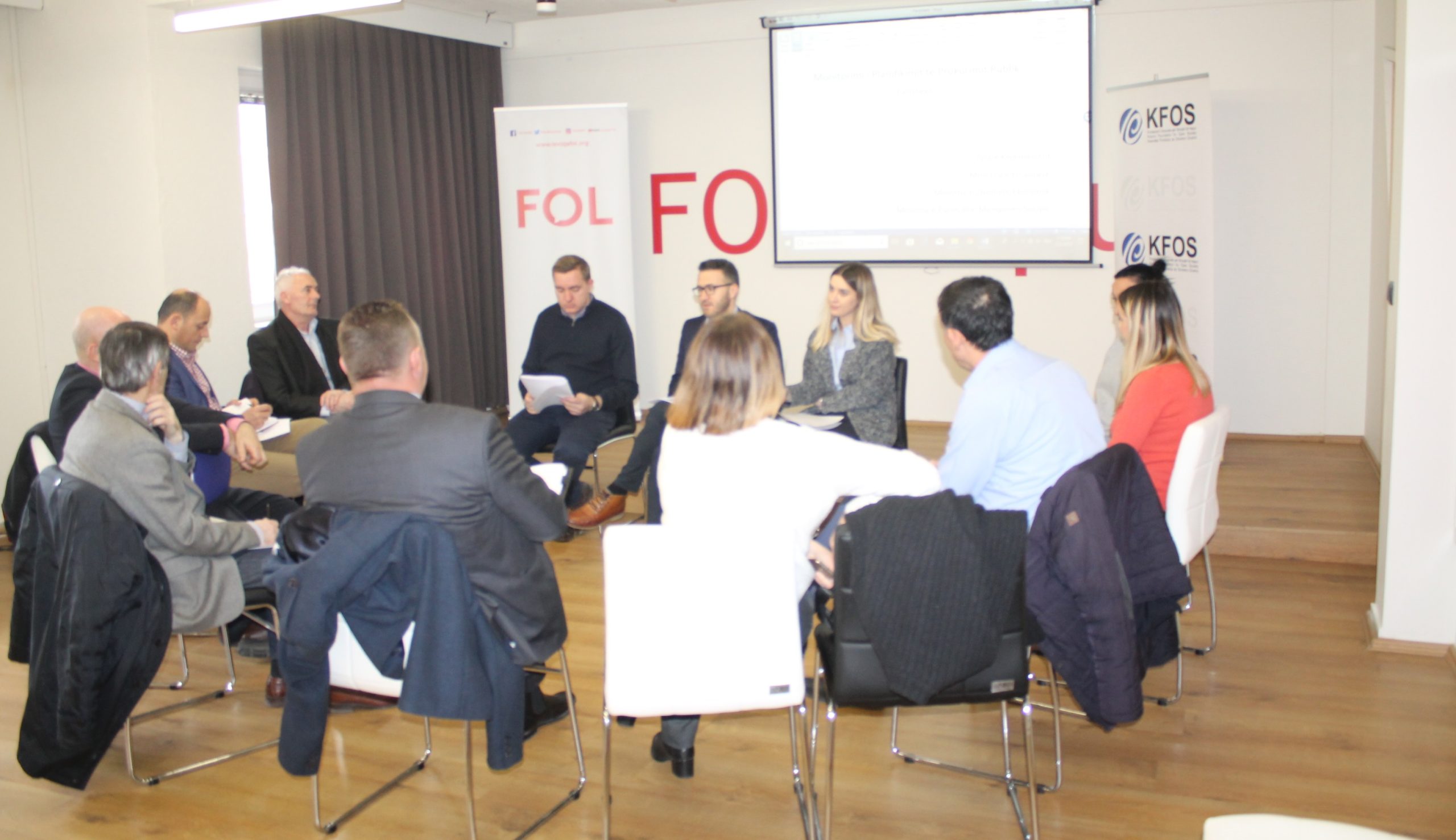
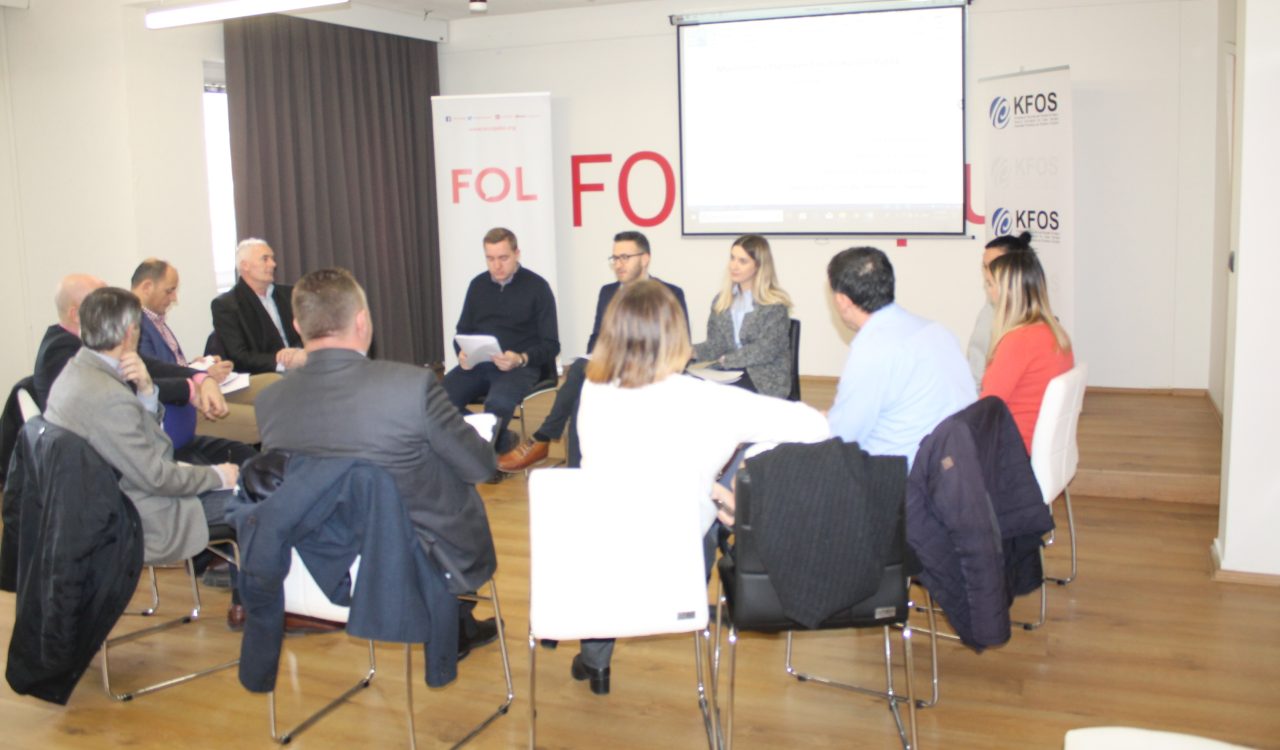
Prishtina, 22 February 2018 – Lëvizja FOL has held a focus group discussion with public procurement officials in certain ministries. During this discussion was debated about the importance of opening procurement plans as a means of promoting transparency and increasing accountability to citizens.

The present officials noted that the opening of the plans is not a problem since with their opening would benefit the contracting authorities and procurement departments as they often face problems that may arise during procurement activities.

Lëvizja FOL presented statistics on the realization of public procurement planning in the Ministry of Finance, Economic Development, the Office of the Prime Minister and the Ministry of Labor and Social Welfare. From the presented statistics, was discussed on budget deviations occurred during the implementation of the central procurement plans and processes.

Given that public procurement planning is the main stage from which the entire public procurement process is based, Movement FOL has monitored procurement plans in central Kosovo institutions.

It was a joint conclusion with procurement officers in certain ministries that:

The legal framework should be unique and harmonized and should regulate the opening of procurement planning,

The CPA should plan and publish joint procurements within certain deadlines by avoiding duplication of planning both in contracting authorities and CPAs,

Preliminary planning should begin and end earlier, not at the end of year, as this gives space to contracting authorities to give more detail in planning.

Meeting with the President of the Basic Court in Prishtina, Afërdita Bytyçi

Prishtina, 20 February 2018 – Representatives from the Movement FOL met today with Ms. Afërdita Bytyçi, President of the Basic Court in Pristina. During this meeting were discussed about the work in the Basic Court in general, with particular emphasis on the large number of cases of corruption in this court.

The President of the Court Ms. Bytyci said that the large number of cases of this nature are a consequence of the transfer from previous years. “Apart from the transfer of cases from previous years, there is also the very small number of judges in this court,” Bytyci said, adding that although they have a budget for admission to new judges, I do not know where the job was stuck recruiting them.

The Basic Court of Pristina has statistics officers, who are engaged in this post with a contract on act.

This grant is funded by the Democratic Society Promotion (DSP) project – funded by the Swiss Cooperation Office in Kosovo (SDC) and the Danish Ministry of Foreign Affairs (DANIDA) and managed by the Kosovo Civil Society Foundation (KCSF).

Lëvizja FOL part of the Pro Open coalition

Prishtina, 6 February 2018 – Lëvizja FOL will be part of the Pro Open coalition for data disclosure and accountability in Public Procurement.

Below you can read the statement on the establishment of this coalition:

Declaration on the Establishment of the Coalition for Data Opening and Accountability in Public Procurement – Pro Open

Good management of public funds is a key element of providing services to citizens from each public institution. Public procurement in Kosovo since the establishment of self-governing institutions has been and remains a green field for corruption, despite the intentions to regulate this sector with good laws, which are based on European legislation. Interventions of interest groups in many cases related to political parties have continuously violated all public procurement reform initiatives in Kosovo and the effective implementation of the law.

Despite numerous donor assistance projects for Kosovo institutions and ongoing attempts to regulate this sensitive sector in Kosovo, corruption remains at high levels. This situation has caused the provision of services to citizens to be weak, empowering companies that have paid bribes and enriched public officials who have an impact on the award and management of public contracts. Throughout this period, there was a lack of structured interaction between media and civil society, which should keep alive the pressure on public officials through public information on public procurement problems.

All this cannot happen until the government continues to be closed to the citizens. Open data disclosure is one of the key elements that can enhance the transparency of government officials, stimulating innovation, and provides business support to market research, thus contributing to raising investment and improving citizens’ lives. This coalition will put constant pressure on the government to make the opening of the data as soon as possible.

In order to combat corruption in public procurement, this coalition also aims to increase pressure on public institutions through exposure to corruption to address all identified violations in procurement. The Coalition will denounce all officials and companies who commit offenses in procurement and will monitor the response of the justice institutions.

Coalition for Open Data and Accountability in Public Procurement “Pro Open”:

Kosovo Foundation for Open Society

Luan Shllaku

Lëvizja FOL

Jeton Zulfaj

Organizata Çohu

Arton Demhasaj

EC Ma Ndryshe

Edon Mullafetahu

Democracy Plus

Valmir Ismaili

Kosovo Democratic Institute i

Ismet Kryeziu

Riinvest Institute

Alban Hashani

Iniciativa për Progres

Albulena Nrecaj

Columbus Institute

Dardan Selimaj

Request for offers: Development of Open Procurement Transparency Portal

As part of the project “Open Procurement Transparency Portal”, supported by USAID Transparent, Effective, and Accountable Municipalities (TEAM) Activity, Lëvizja FOL intends to award a contract to an eligible local company to develop and launch the “Open Procurement Transparency Portal”.

How to Obtain a Tender Dossier: To participate in this tender, interested companies need to express their interest by requesting the tender dossier. The tender dossier, which includes terms of reference and evaluation criteria may be obtained by writing to [email protected]  , from 31st of January, 2018.

Questions and Clarifications: The offerors will have the opportunity to ask questions regarding this solicitation by writing an e-mail to [email protected] until February 9th, 2018 at 2 pm. All correspondence regarding this solicitation must reference this solicitation in the subject line. No phone calls or in-person inquiries will be entertained.

Bid Conference: An optional bidder’s conference will be organized on February 7th, 2018 at 11:00 am at FOL Offices which are located at Str. “Andrea Gropa” No. 35, 10000 Prishtinë, Republic of Kosovo.

Offer Deadline: Offers must be submitted in English language in electronic format to [email protected] by email no later than 12th of February 2018 at 15:00 (local time).

All submitted offers must contain:

  • Technical Proposal
  • Financial Proposal
  • Declaration of Honor
  • Business registration documents (including Business Registration, Fiscal Number and VAT certificate)
  • Past Performance References
  • Proposed staff CV’s

Non-Selected offerors will be notified within 14 calendar days.

Prishtinë, 31 January 2018,

Coverage of employment policies a challenge for the media

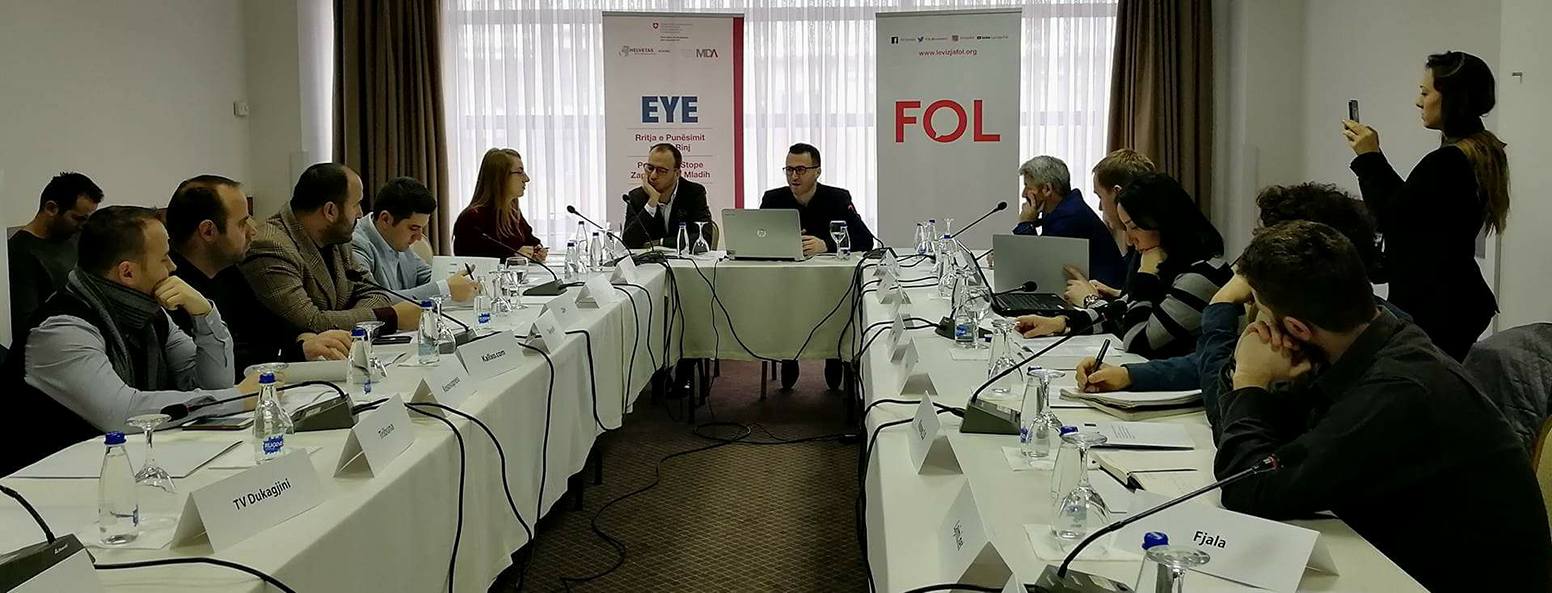
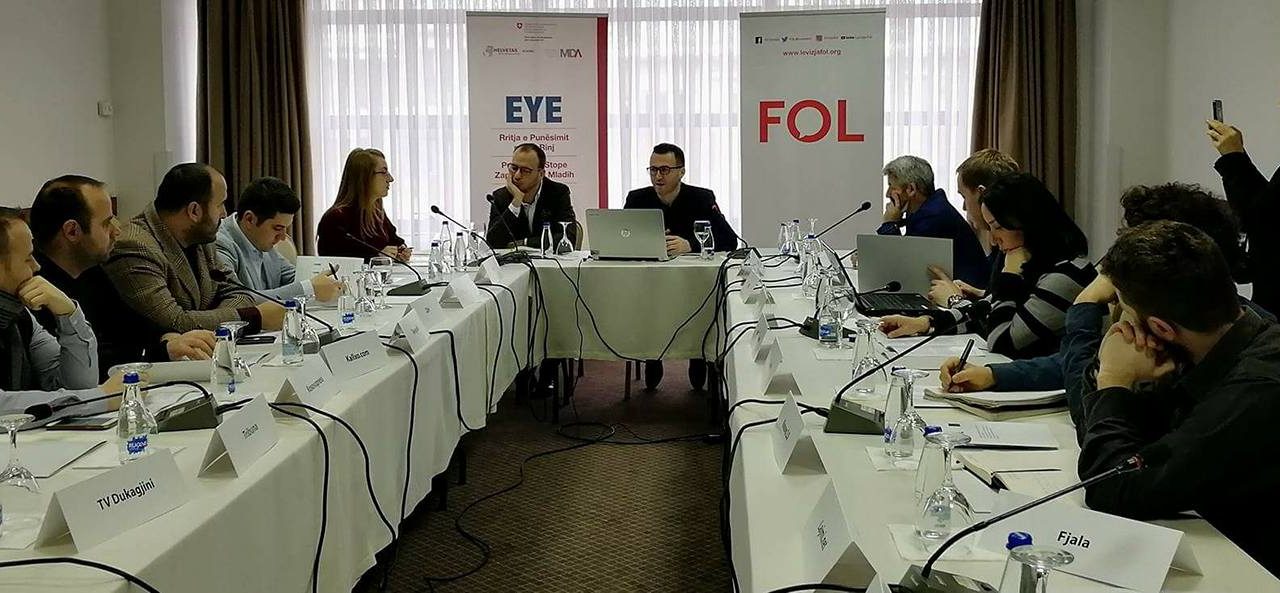
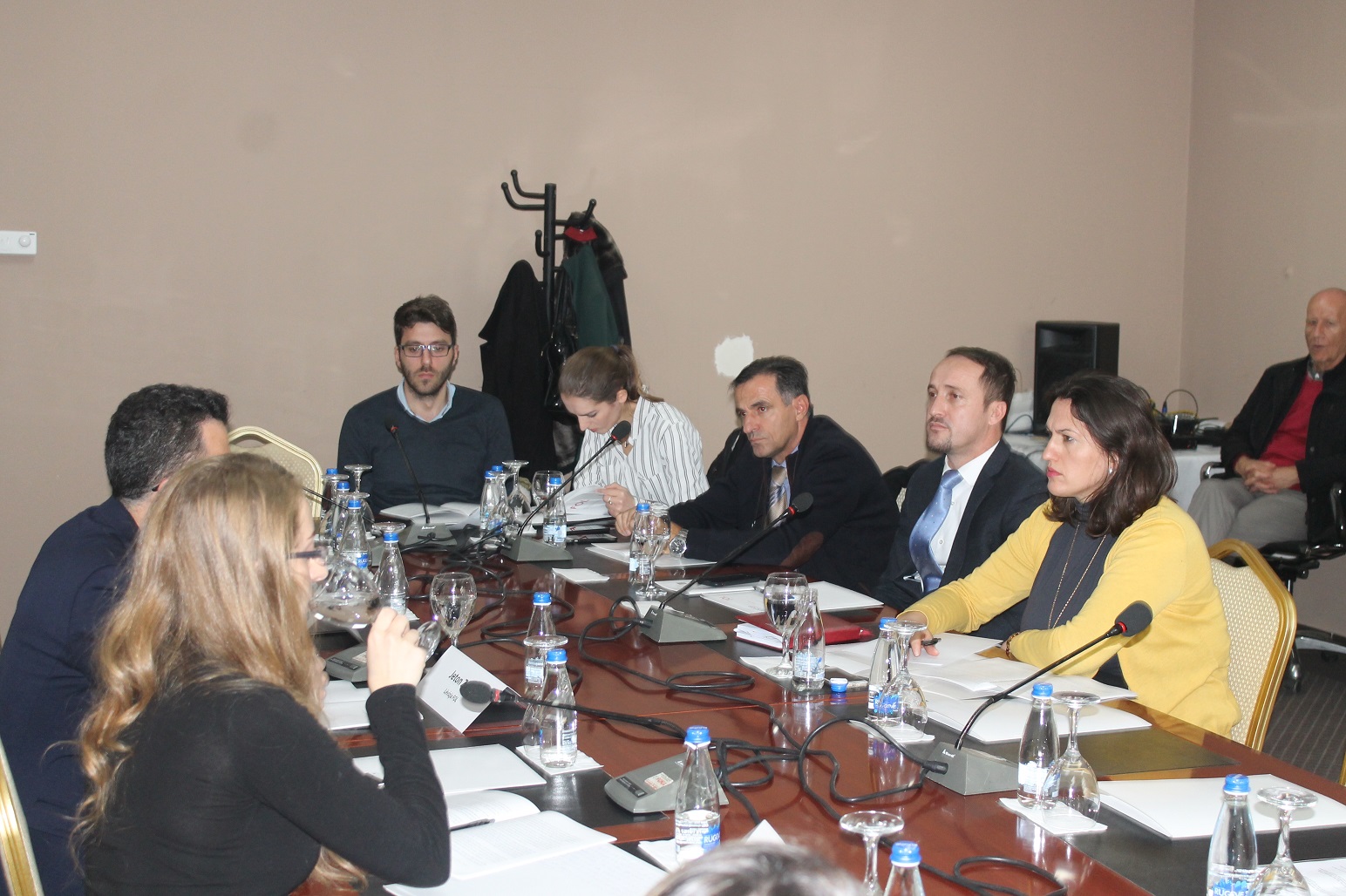
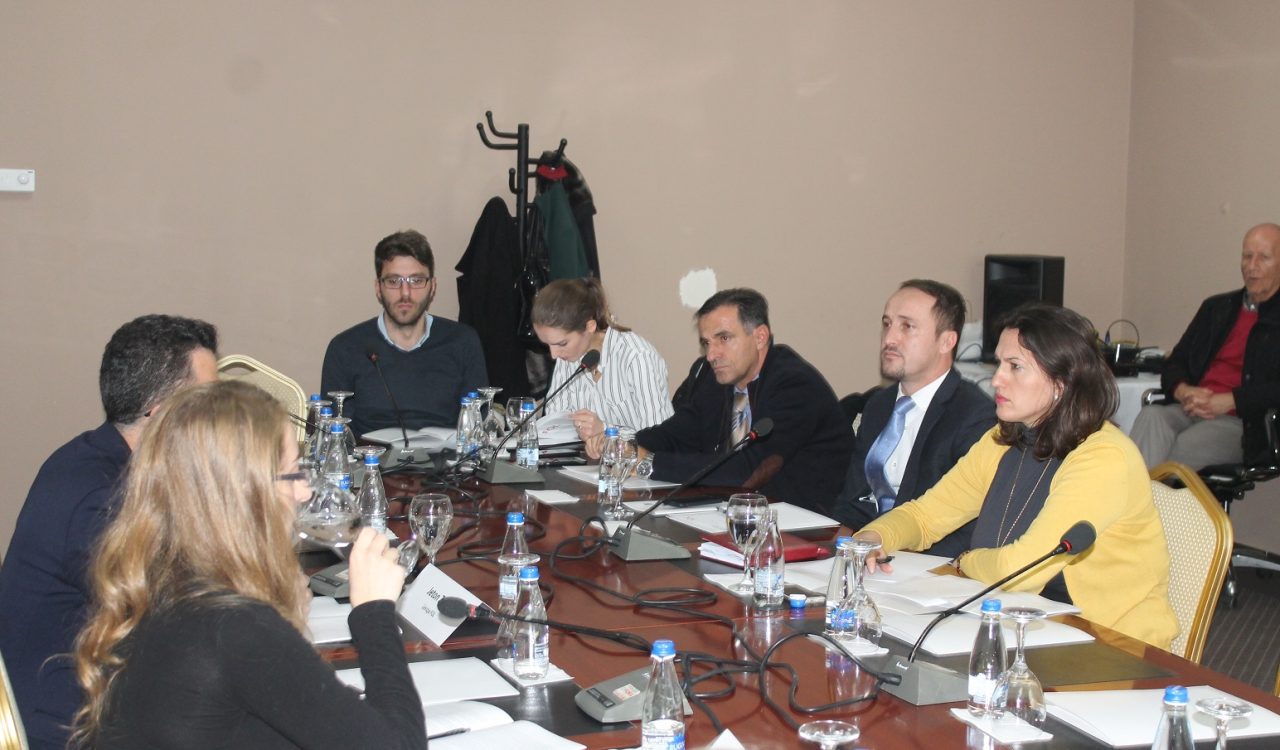
Prishtina, 23 January 2018 – Lëvizja FOL held today an open discussion on the topic “Media Access to Covering Employment Policies”, where the invited were media representatives in Kosovo.

Jeton Zulfaj, from Lëvizja FOL said that the purpose of this round table is to discuss media access to employment policy coverage. How do the media report on the topic of employment and how attractive is this topic – does this topic generate revenue for the media?

Meanwhile, Gresa Smolica from FOL presented the findings of the Lëvizja FOL report on this topic. “The report has analyzed media coverage of policy discussions on employment by focusing on youth employment. From media monitoring we noticed that thousands of articles that are produced only a few dozen are related to the employment issue, “said Smolica.

Dren Selimi from the EYE project – said that the measurementsmshow that media production mainly focuses on news and showbiz, and not on employment issues. “Written newspapers cover much more employment topics than portals,” Selimi said.

Visar Prebreza editor at Kallxo.com, said that he does not believe that employment topics will enter the top 100 ever-clicked news. “We should not fight how to put 100, but we have to fight how to make the best quality writings,” he said, adding that the issue of employment relates to broader topics. Prebreza said that more media should be monitored that they produce.

Bekim Kupina, editor of the Koha Ditore newspaper, said the news that talk on employment or unemployment cannot be attractive news. “The media do not contest who is presenting more news on employment. There is no room for daily employment news. If news is published that a company has employed some people this can be considered as marketing for that company. What is the dividing line between public interest and marketing? “Said Kupina, adding that nepotism, corruption, conflict of interest, competitions all relate to employment. “Employment has great problems, especially because of nepotism. Employment statistics are also big in relation to media reporting, “he said.

Enis Veliu, editor at the newspaper Zeri said that the public’s interest is not employment. “Re-enactment of young people is done in a very secretive way. Employment interest is, for example, as Xhafer Tahiri or Fatmir Limaj have employed close persons, it has become a practice that is happening through contracts on act so some individuals are occupying positions, “Veliu said, adding that employment is constantly written, but dominate new are about political employment.

Blerim Xhemajli, editor at Klan Kosova, said the reports that appear on the TV remain more in mind than the written ones. “We had a kind of concentration on social problems, with the simple problems of people. The biggest problems are the problems of political employment. “The media do not have the budget to have profiled journalists for just one area. Our business is informing citizens, “Xhemajli said.

Adrian Çollaku, editor-in-chief of Gazeta Blic, said that on the portal citizens read the ones they like, not the ones that are written there. “In the public opinion, the imposition of topics is mostly the Government, eg. in any government meeting has not been discussed on employment issues, nor in the Assembly. Without theming themes, these topics will remain in the shadows and we will deal with statistics, “said Çollaku, adding that if they talk about special court, nobody remembers the employment issues.

Arben Ahmeti from TV Dukagjini said that no portal can be held responsible for why it posts showbiz news, because this is a way of people’s interest. “People read what you care about. I can find thousands of articles that have talked about the well-being at work, but we cannot help to measure what difference they have made, “Ahmeti said.

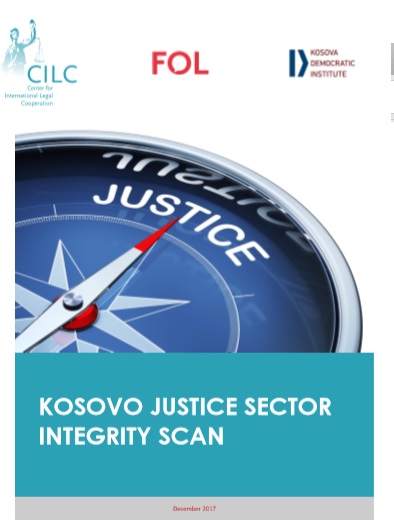
Kosovo Justice Sector Integrity Scan

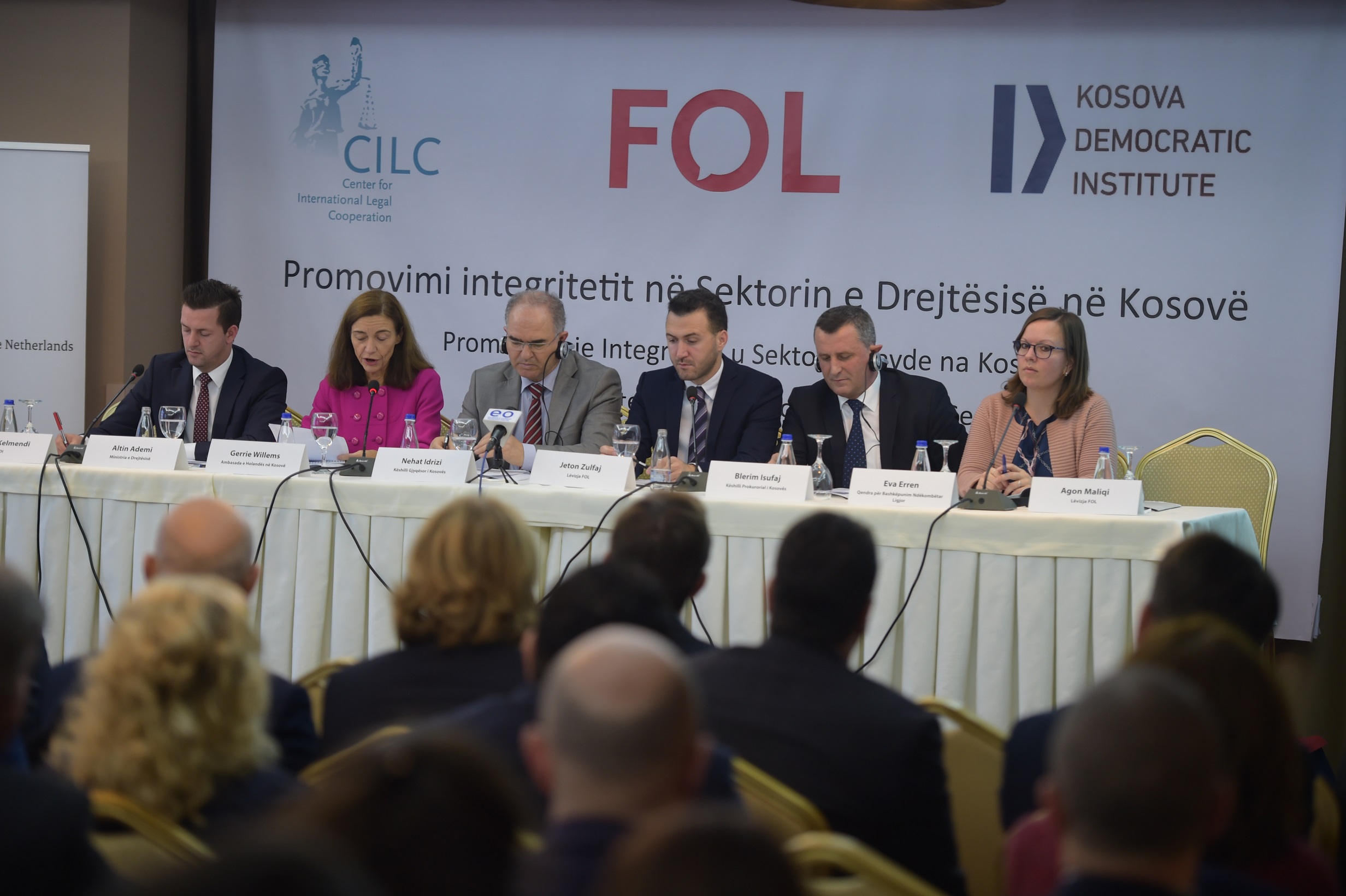
Prishtina, 14 December 2017 – Levizja FOL, CILC and KDI held today a conference where they presented the research data “The Scenario of Integrity in the Justice Sector”.

Students from the European Human Rights Program visited Lëvizja FOL

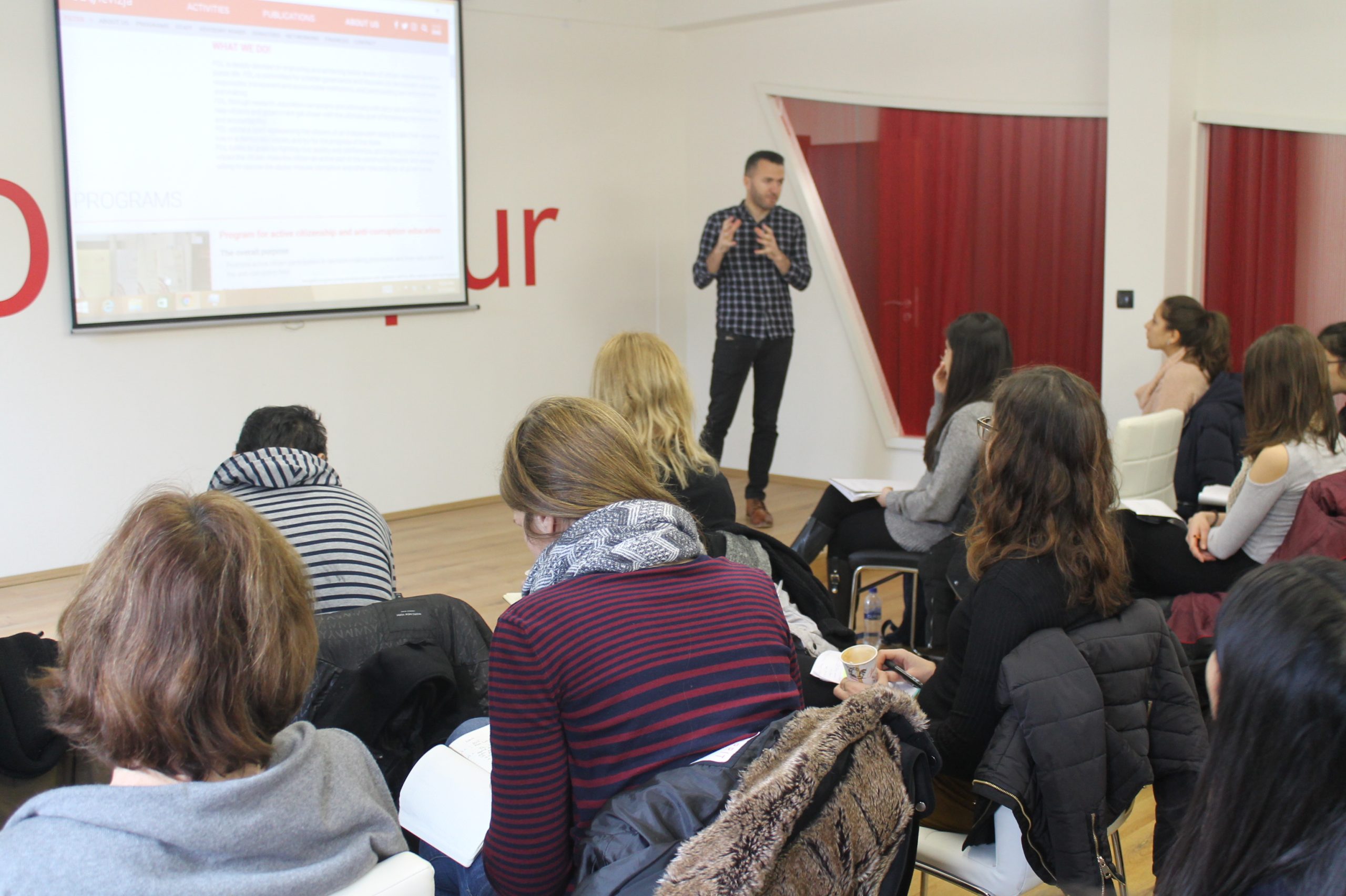
Prishtina, 17 January 18 – Lëvizja FOL hosted today about 20 students from different countries of the world who are attending Master studies in the European Program on Human Rights and Democracy – in Venice and Vienna.

Jeton Zulfaj, Program Director at Lëvizja FOL, presented FOL’s work over the years and talked about the political situation in the country.

During this meeting students became familiar with the work that FOL has done and is currently doing.

Enis Veliu, winner of the Citizen Award for 2017

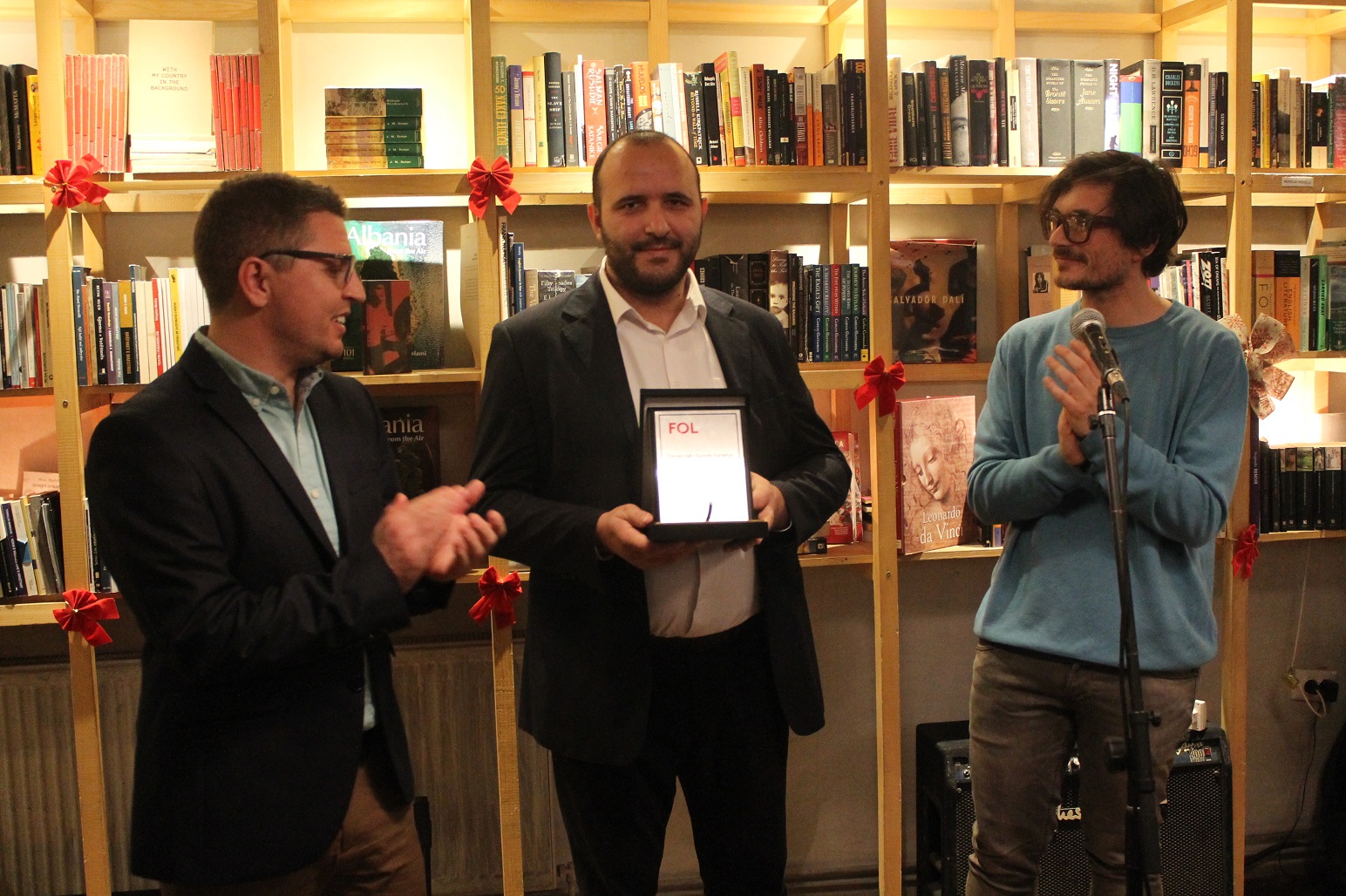
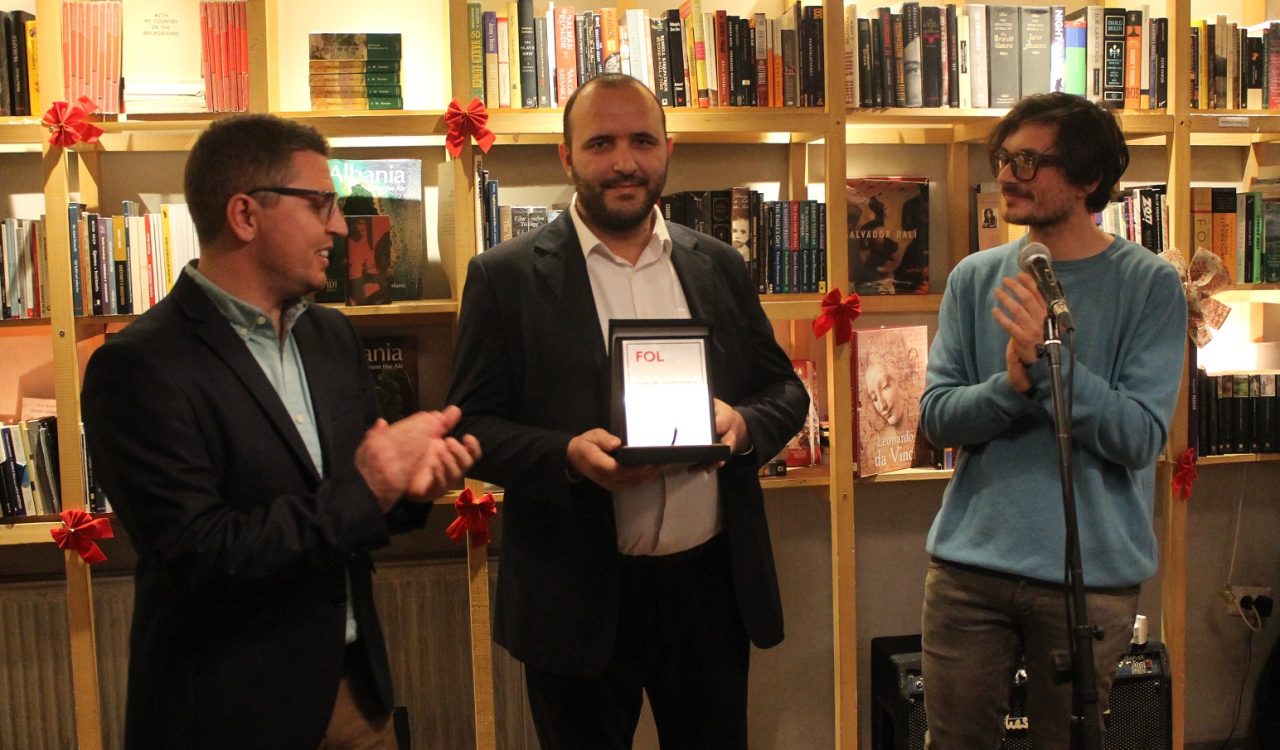
Prishtina, 26 December 2017 – Lëvizja FOL has held the ceremony of awarding the Citizens’ Courage Award for 2017, which this year was given to Mr. Enis Veliu.

Enis Veliu is editor of the economy in the daily newspaper “Zëri”, where after the publication of the article “KEDS bills us 8 million euros per year for the Serbs in the north”, the Ombudsperson started the investigations, which followed a decision from court for discontinuing the billing of energy without spending from one part of the population in Kosovo.

Petrit Zogaj, Executive Director of Lëvizja FOL, said that this year the award for courage was given to a person who in one form or another with his writing has influenced the life of all of us. “Thanks to Mr. Vleiu’s article, The Ombudsperson has initiated an investigation into this case, an investigation which follows the decision of the Basic Court which decided to prohibit such a practice. With this asrticle, Mr. Veliu decided to prohibit the discrimination of the majority of citizens, “said Zogaj..

Meanwhile, Genc Salihu Chairman of the Lëvizja FOL Advisory Board said that this is a price we as FOL share with lots of privilege and pleasure. “Enisi’s case with his article has made direct effect in our society and for this we thank him,” Salihu said.


Integrity Scan in Justice Sector

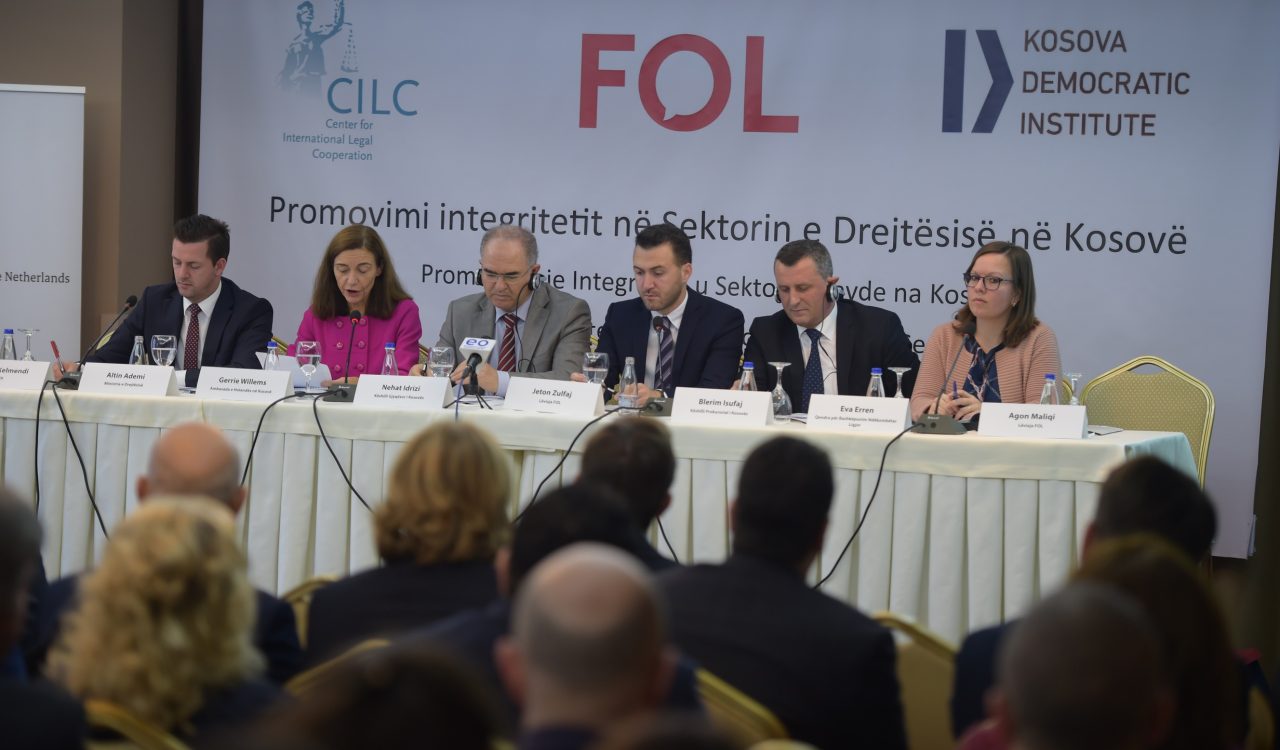
Prishtina, 14 December 2017 – Lëvizja FOL, CILC and KDI held today a conference where they presented the research data of the “The Integrity Scan in Justice Sector”. Panelists at this conference were: Gerrie Willems – The Ambassador of Netherlands in Kosovo, Eva Erren – Project Manager from the Center for International Legal Cooperation (CILC), Nehat Idrizi – Head of Kosovo Judicial Council, Blerim Isufaj – Chairperson of Kosovo Prosecutorial Council and Altin Ademi – Advisor to the Minister of Justice.

Jeton Zulfaj from Lëvizja FOL said that many reports so far have measured citizens’ perceptions of integrity in the justice system, but there have been reports that indicate the perception of judges and prosecutors themselves for the part of their system. “CILC, FOL and KDI have conducted a justice sector scan involving 229 judges and 112 prosecutors, in a research that for the first time points out sensitive parts of the justice sector,” said Zulfaj.

Gerrie Willems – Dutch Ambassador of Kosovo said that we have decided to support this project because the Netherlands attaches particular importance to strengthening the rule of law in Kosovo together with integrity as one of the key conditions for rule of law. “We must note that progress has been made, but there are still things to be done, although it is evident that there are many challenges that need to be overcome. That is what the EU, including the Netherlands, expects from Kosovo, to obey the rule of law, and to leave the principle that no one is above the law. Integrity in the justice system is very important because together with independence and impartiality are prerequisites for the creation of an effective and functional judiciary. I hope that this report, which provides detailed legal analysis and factual situation, will help the actors of the judicial system take steps to address integrity issues, “said Ambassador Willems.

Nehat Idrizi, chair of the KJC, said that the institution he leads has expressed friendly approach to initiatives for promoting integrity. “This report will also help us to improve the integrity of the justice system. The KJC has had many critics, but these are usually from people who are not sufficiently informed about the work of the KJC. We will take the recommendations of this report and try to implement them, to improve our work, “Idrizi said.

Eva Erren of CILC said that in all states where the rule of law functions, there are mechanisms to protect the core values of the justice system: Impartiality, independence and integrity. “With this report we are trying to address with a structured and systematic approach the challenges that the Judicial and Prosecutorial System encounter in Kosovo with regard to integrity,” said Erren, adding that the conclusions drawn from this report hope that they will together with all justice system actors, to take sweeping steps to find the best legal remedies to address the issue of integrity. Erren said that we expect that one of our next activities will be to change the ethics codes for the Judicial Council and the Prosecutorial Council in accordance with the findings of this report.

Blerim Isufaj, head of the KPC, said we are actively contributing to the development of training for prosecutors, so the media and civil society should be our partner in ways to improve the prosecution’s performance. “This research will be a good basis for KPC to enhance integrity in the justice system. We are committed to fight corruption by establishing a special institute on this issue. The legal framework is very much needed for good work, but the professional conditions as well as the professional staff is very necessary, “Isufaj said adding that 25 new prosecutors will complete the training now and from January 2018 will begin to deal with cases. Isufaj said that he will recruit 90 professional associates and legal officers as well as functionalize the electronic case management system.

Altin Ademi, advisor to the justice minister, said rule of law was priority for minister of justice. “There will be four laws in the package, part of this package is the law on the disciplinary responsibility of judges and prosecutors, which laws will serve to ensure full judicial independence and ensure the integrity and accountability of this system?”

Arben Kelmendi from KDI, said that earlier researches of KDI and FOL have highlighted the need for a more structured and systematic approach to address the challenges in the judicial and prosecutorial sector. “The findings in this report are a major contribution to the agenda in the legal reform in Kosovo,” said Kelmendi.

Meanwhile, Agon Maliqi presented the findings of this research and said that this particular study of integrity tried to understand how ethical standards within the judicial system are respected, including a third perspective. Namely, it aims to assess the respect of ethical and professional standards by examining the perceptions of key actors involved in the judicial system – namely judges and prosecutors.

Recommendations from the Integrity Scan in Justice Sector Research:

  1. Public trust in the judiciary can only be regained through comprehensive reforms, but it can also par-tially improve through more effective communication and increased transparency. The KJC and KPC should work more effectively and more systematically with media and civil society to raise public awareness on internal integrity mechanisms and showcase positive cases. The KJC and KPC should also increase the level of transparency of disciplinary proceedings so that citizens receive sufficient information on the measures taken against prosecutors and judges. Also, courts should consider in-creasing communications to the public that better explain court procedures, applicable fees, reasons for procedural delays, and other issues that can be misinterpreted as corruption or increase the risk of corruption. The KJC should also consider issuing a charter of service that clearly informs citizens of the ethical commitment and standards applicable to judges and staff. Last but not least, creative public information campaigns or media stories illustrating internal accountability mechanics could somewhat help in bridging the gap between the perception from the outside and the perception from the inside the justice system.
  2. Judges and prosecutors need to be further empowered to voice their concerns about integrity issues and to get involved in designing solutions. The KJC and KPC need to continue to create spaces for dia-logue and free expression so that the voice of those within the system who have objections can be heard. Anonymous integrity scans of this nature should be made periodic and with a consistent meth-odology so that those who are critical can express their objections and changes (improvements or re-gressions) can be measured year-on-year. In addition, judges and prosecutors need to be more in-volved in designing solutions to integrity challenges. The KJC and KPC, as well as court presidents and chief prosecutors should convene discussion meetings with judges/prosecutors and professional to discuss findings regarding the risks and vulnerabilities to corruption and design their own solutions to offset these perceptions or mitigate these risks and vulnerabilities.
  3. Specific measures need to be taken to address external influences in the work of the judiciary from political, commercial or other interests. The Ministry of Justice and political leaders in general should take necessary steps to eliminate all doubts related to political interference in judiciary processes, in-cluding here refraining from making public statements about cases. Court presidents and the KJC should meet periodically with those responsible for court security and conduct a review of security measures. Chief prosecutors and KPC should do the same. Based on these reviews, detailed plans should be crafted and periodically updated to confront existing and future threats to the physical se-curity of judicial actors. Court presidents should institute periodic meetings among the judges and/or court staff to review measures that can decrease improper influence such as restricting the access of the public to judges’ private offices and screening all phone calls to judges.
  4. There is space to improve process of recruitments and case assignments, as they are critical, among other things, in ensuring public trust in judicial outcomes. The KJC and KPC should use objective crite-ria, always based on merit and integrity, in the selection process of judges and prosecutors, as well as office staff. The KJC should also take further actions to randomize case assignments. Initial assign-ments to a judge should be done through an electronic system and the initial selection may then be adjusted by the court either to avoid potential conflicts or to allow related cases to be handled by the same judge. The KPC should also take further actions to inform the public regarding case assign-ments. While initial assignments to a prosecutor are at the discretion of the Chief Prosecutor, the ini-tial selection may then be adjusted by the prosecution office either to avoid potential conflicts or to allow related cases to be handled by the same prosecutor. Efforts should be made by both the KPC and KJC to communicate to the public reasons for re-assignment so they are understood as measures to mitigate conflicts of interest or improve efficiency rather than as means to manipulate case pro-cessing.
  5. Codes of Ethics should be updated in order to expand the scope of issues covered and give clearer definitions, while trainings on ethics should become mandatory and periodical. A process of consulta-tions should be initiated to update the Codes of Ethics, as it is normal for documents of this nature to improve based on inputs from experiences. Consultations should take into account recommendations from judges and prosecutors on expanding the scope of issues with which they are faced with should clarify and unequivocally define specific situations. Some of the issues that could be clarified are those identified in this report’s survey. The Codes of Ethics should also be associated with explanatory mem-oranda. The KPC should consider making continuing legal education training on judicial ethics manda-tory on a set periodic basis (e.g., annually, every three years, etc.) for prosecutors and prosecution of-fice staff. Particular focus should be given to young judges and prosecutors. The KJC should consider something similar for judges and court staff, through something like the KBA Continuous Compulsory Legal Education Program. Both the KPC and KJC should also request continuous legal education train-ing on judicial ethics to the Academy of Justice that is based on needs identified by prosecutors and judges.
  6. The technical capacities of the disciplinary mechanisms need to be strengthened, as do the trainings related to ethics. Both judiciary and prosecution attach low trust and confidence on the capabilities of ODC to carry out investigations, which begs the need to reform ODC. Efforts need to be undertaken to strengthen the technical capacities of the Office of the Disciplinary Prosecutor (ODC). A mapping of capacity building needs would be a first start that would be followed by at least a training program to be offered and possible other measures to be undertaken by the disciplinary mechanisms. KJC and KPC need to take measures to inform and instruct young judges and prosecutors entering the system on the available mechanisms for consultation on ethical standards, as many seem to be uninformed. The Academy of Justice also needs to review its training program on ethics to reflect the concerns ex-pressed by judges and prosecutors.
  7. General reforms in the justice sector should aim to reduce the high workload of judges and prosecu-tors, which increases stress to reach performance targets and creates incentives to cut corners on integ-rity issues. KJC and KPC should use their constitutional power as independent branches of government to ensure adequate resources (budget, physical infrastructure and human resources) as a means of not only improving general effectiveness, but also lowering high workload of judges and prosecutors. They also need to assess ways how to modify incentives so that judges and prosecutors don’t have to prioritize speed in resolving cases ahead of professional and integrity standards. An internal dialogue is needed on how to balance performance measurement so as not to be overtly focused on number of cases solved but also include quality components related to ethical standards.


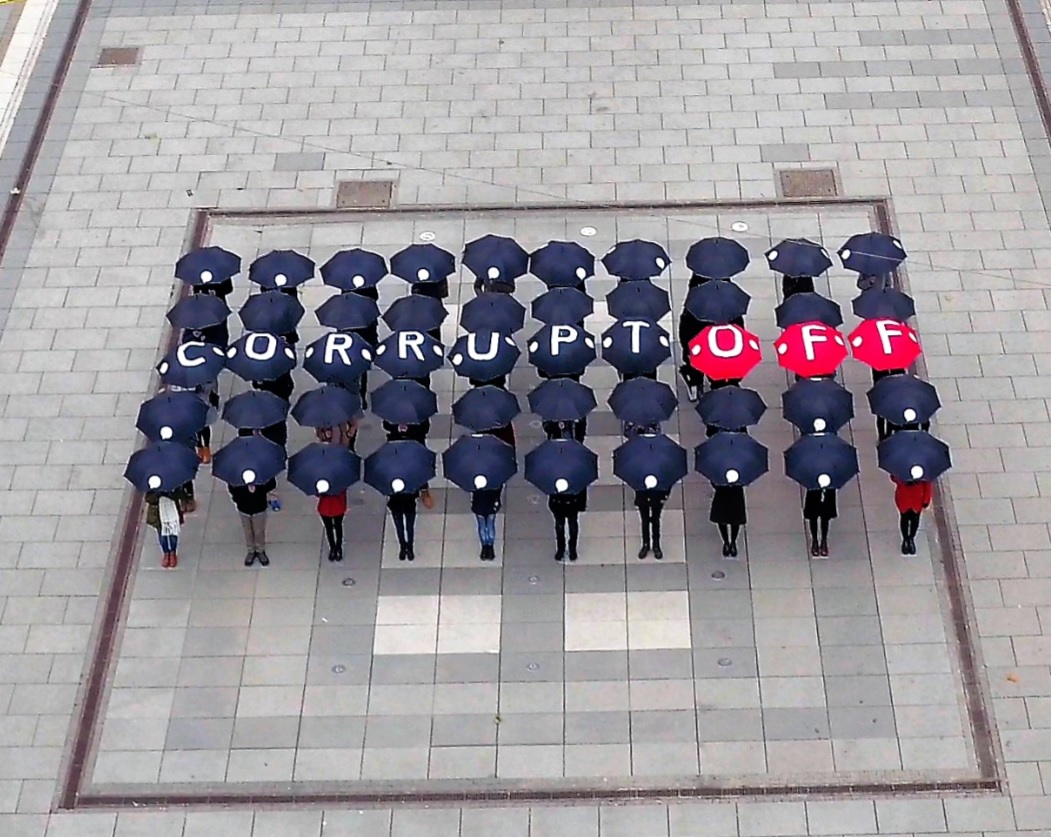
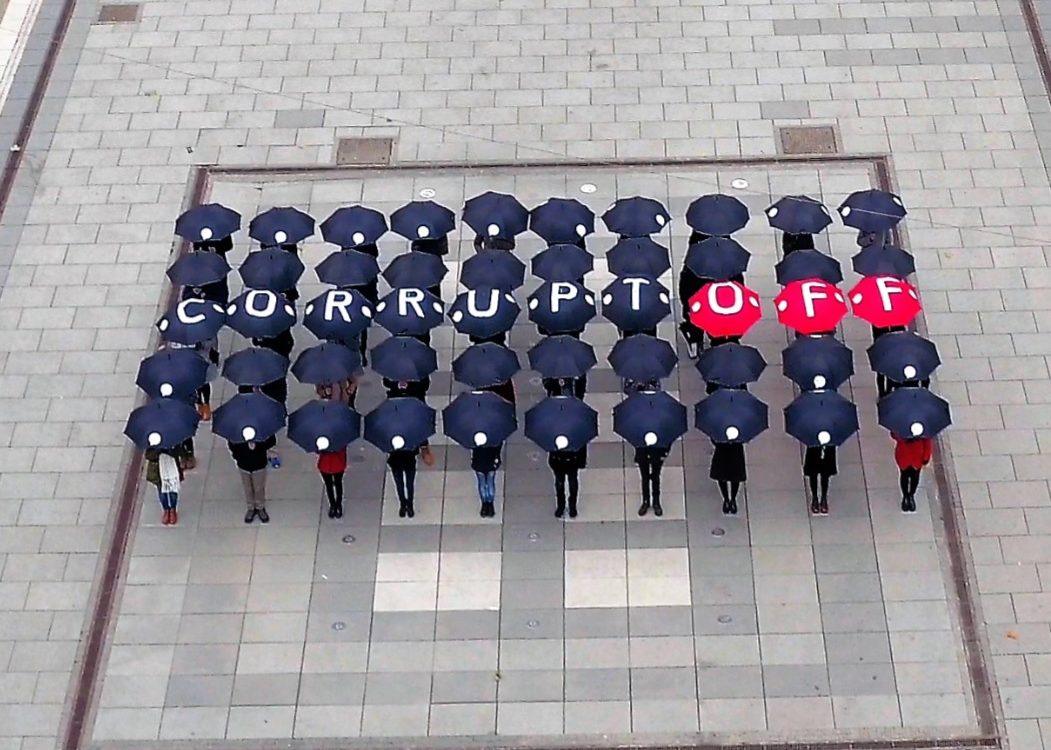
Performance CORRUPTION/OFF

Prishtina, 9 December 2017 – Lëvizja FOL through the USAID-supported Transparent, Effective and Accountable Municipal Program has organized an awareness-raising performance to mark the International Day against Corruption.

Jeton Zulfaj from Lëvizja FOL said that this performance was organized within the framework of the anti-corruption week, which has been marked by various activities led by a civil society coalition alongside the US Embassy and USAID, therefore a special thank is dedicated to USAID and this program that have supported this activity.

“The word Corruption is used around the world to describe the abuse of power for personal gain. In developed countries, corruption is associated with white ties and wealthy and influential individuals, while in poor countries it is associated with economic destruction, authoritarian regimes, and abuse of human and natural resources. Neither Kosovo is no exception in this regard, “Zulfaj said.

According to him, while the word corruption is used to describe the aforementioned phenomena, the word itself has never been analyzed in the context. “At first glance, it seems that the word ends with -ON, which is internationally a signal that expresses something active, something that works and is in action. Since we cannot change the word Corruption, on the International Day against Corruption we will change its meaning. Today, we are preventing corruption, from ON to OFF, “Zulfaj said.

Irregularities and mismanagement continue to follow public procurement

Prishtina 1 December 2017 – Lëvizja FOL, under the project Raising Accountability of Institutions on the ways of spending public money today has the findings from the monitoring of public procurement contracts in the Ministry of Health, the Ministry of Infrastructure and the Ministry of Trade and Industry.

This report presents the findings from a 3-month monitoring of high value contracts by the Ministry of Health, the Ministry of Infrastructure and the Ministry of Trade and Industry. Gresa Smolica from the Lëvizja FOL said that from the full monitoring of the procurement process in these three ministries it turns out that public procurement remains a non-transparent sector to the public as access to contract documentation remains limited. According to Smolica, FOL has monitored the procurement process, starting from the planning of the procurement activity to the signing of the contract and the implementation of the activity. “In many cases, the institutions are reluctant to open these documents, such as the case of the Ministry of Infrastructure, which did not give us access to the required contracts, necessitating the involvement of the People’s Advocate Office through the complaint filed by the Lëvizja FOL for not answering the request for access to public documents, “she said.

Contract dossier required by MI “Construction of the autopilot A7.1- Crossing at the A6 / A7.1 (Banullë) – Dheu i Bardhë – Part: Crossing at A6 / A7.1 (Banullë) – Crossroads Bresalc- L = 22.31km “was not given to FOL with reasoning that the case is in the PRB.

Meanwhile in the Ministry of Health is analyzed the contract “Supply with drugs from Essential List” with procurement number 206-17-452-1-1-1. This contract was accompanied by some irregularities and is still unimplemented today due to mismanagement of the budget for the realization of this contract. Part 6 or Lot 6 of this contract, after being given to the economic operator to be realized, has been canceled by the Procurement Officer, Alban Pozhegu, on the grounds that the Economic Operator has bid at a higher price than the market price. This shows mismanagement in the procurement process as well as misstatement of the budget for certain medicines.

For the same official, Lëvizja FOL has found that it does not possess a licensing certificate issued by the PPRC, and the same did not attend the obligatory training at the PPRC at the time of signing the contract that we monitored. Following the complaint of the economic operator in PRB, the expertise of the PRB argues that the contracting authority Ministry of Health with the cancellation of the contract has acted in opposition to article 62 of the Law on Public Procurement, and requires the case to be returned for re-evaluation. The irregularities that accompanied this process, the failure to observe the deadlines set by the PRB as well as the ascertainment by the PPRC that this official does not fully meet the requirements under section 25.6 to fully comply with the duty of the Procurement Officer on 13 October 2017, PPRC makes a decision that Alban Pozhegu is suspended the right to serve as a Procurement Officer.

According to her, all these elements make the institutions as well as civil society more engaging in finding the most appropriate ways to increase transparency in this area. “Amendments to the Law on Public Procurement are still needed especially in the principles of transparency, while enhancing the integrity of public officials is essential for the smooth running of the public procurement process. Raising accountability in this sector is only possible when the legal framework matches the accountability of officials and the public enjoys the legally guaranteed approach.”

Workshop on the Law on Declaration of Assets of Public Officials in Kosovo

Prishtina, 30 Novemerr 2017 – Lëvizja FOL held today a workshop on the Law on Declaration of Assets of Public Officials in Kosovo, whereby the findings and recommendations of the Lëvizja FOL report on the actual Law on the Declaration of Assets have been presented.

Jeton Zulfaj presented the work that Lëvizja FOL has done in the past regarding the declaration of assets. According to him, the list of officials who must declare the assets should be expanded. Also new software for filing should be created, but it remains problematic who should manage this software – ACA or TAK.

Gresa Smolica from the Lëvizja FOL presented the findings of the report that emerges the main shortcomings noted in the current law on asset declaration are the restriction of the powers of the NQA in the property control process as declared by public officials, the irregularity of the investigation of the origin of property, lack of confiscation of illegal property as a punitive measure and a clear definition of the persons obliged to declare the property.

Valdete Berisha-Podrimaj from TAK said that the electronic way of declaring the property proposed by FOL Movement is much better for TAK as it enables it to have more transparency. “She said that it was a proposal that tax inspectors and customs officials are obliged to make the declaration of assets.

Meanwhile, Lulzim Ejupi, Permanent Secretary at the Ministry of Internal Affairs said that examples from different countries should be taken. “Digitalization of all institutions needs to be done so that information can be easily taken from one institution to another,” Ejupi said.

Agron Qalaj from the Office of the Chief State Prosecutor said that the current law has serious shortcomings. AKM is not prepared for asset control. “The criminal reports of the KACA that come to the prosecution, in many cases come with delay. In the law there are serious defects, therefore the prosecution cannot file an indictment without a reasonable ground, “said Qalaj.

Lecture with Judge by the Court of Appeals Driton Muharremi

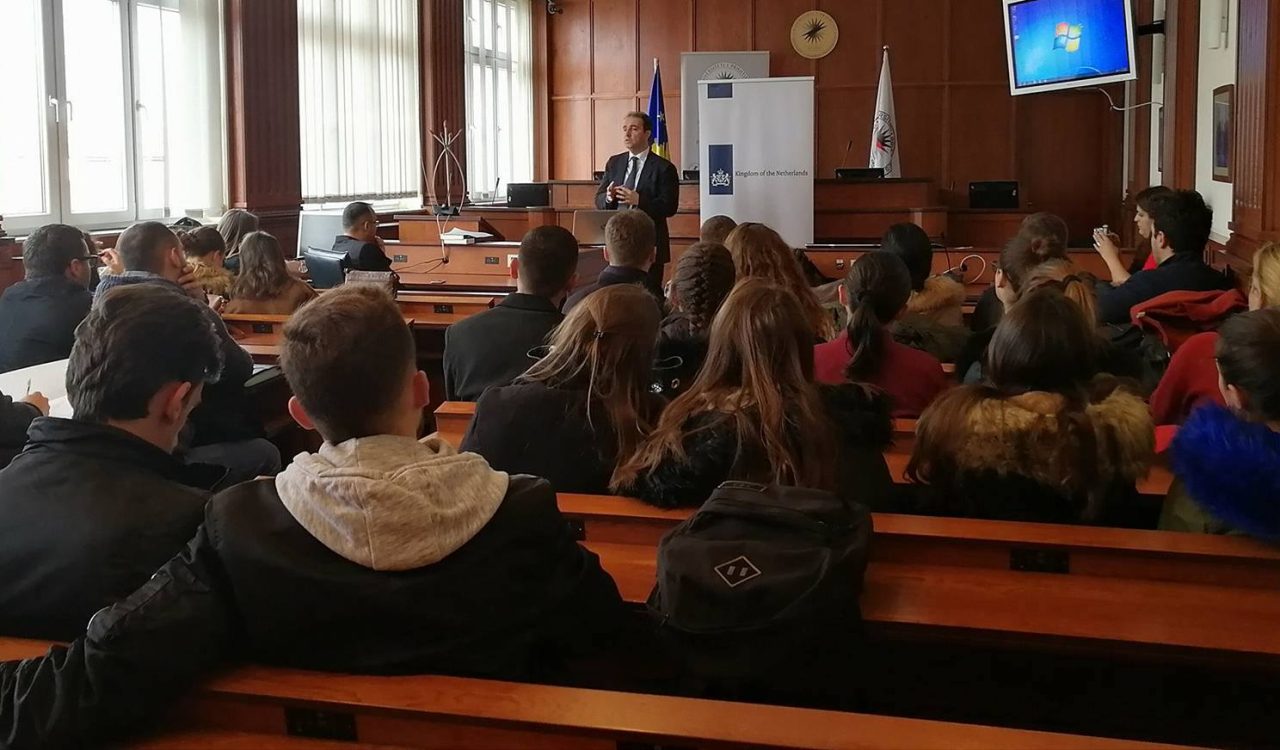
Prishtina 30 November 2017 – Lëvizja FOL has held today the next lecture with the Judge of the Court of Appeal, Driton Muharremi.

This lecture was held at the courtroom of the Faculty of Law at the University of Prishtina where the topic of discussion was the Integrity of the Judiciary.

The lecture is supported by the Dutch Embassy in Prishtina within the project “Promoting Integrity in the Judiciary Sector”.

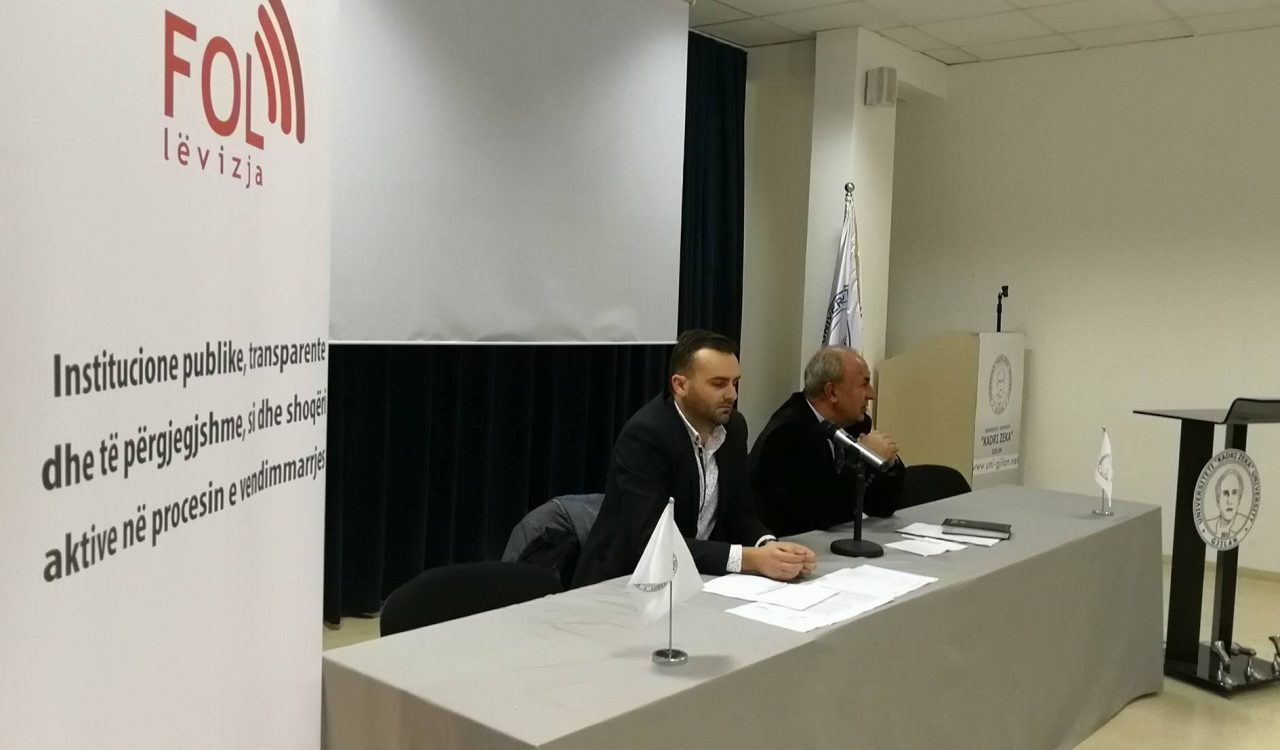
Conversation between students and representatives of the Court and Basic Prosecution in Gjilan

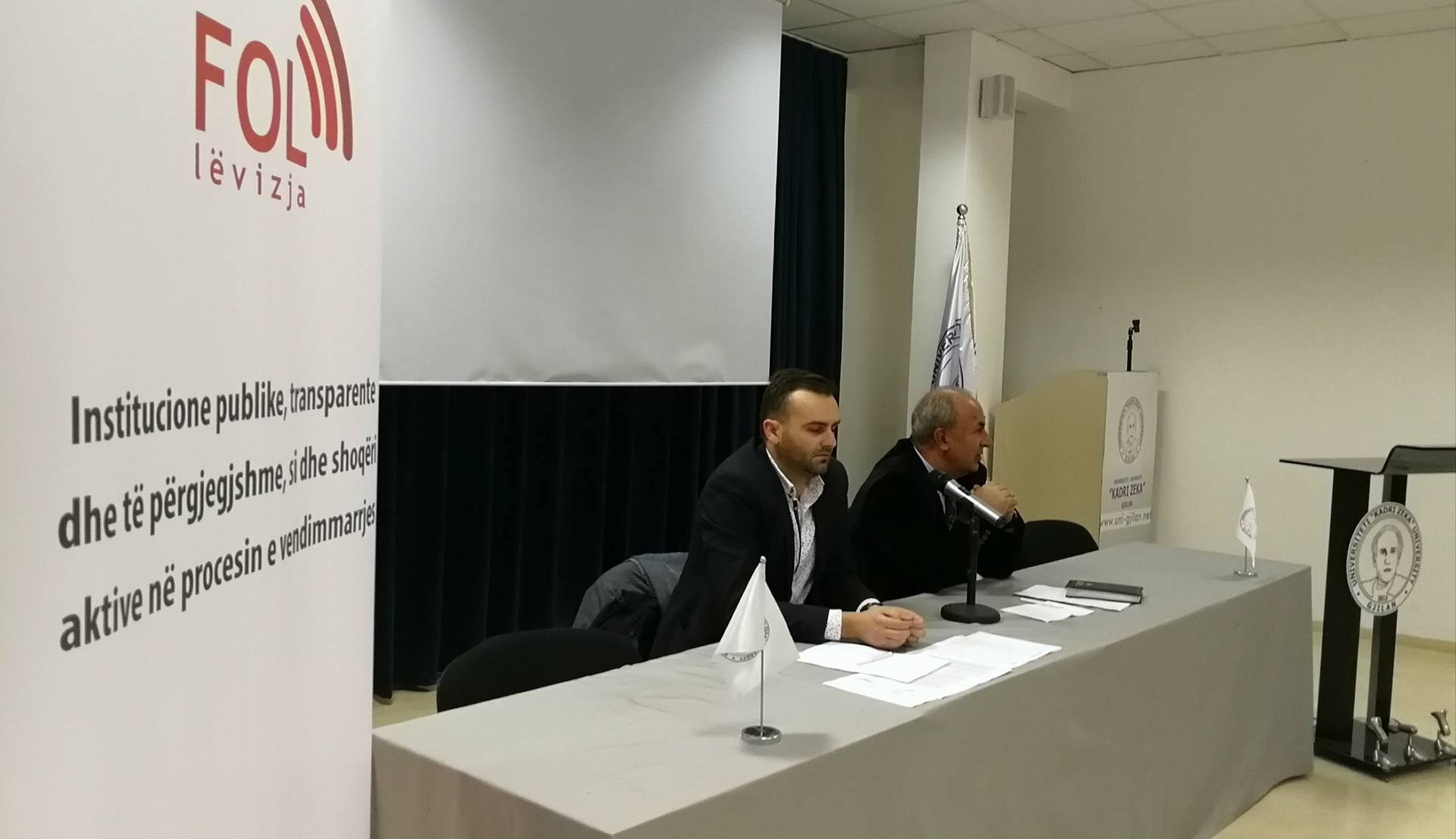
Gjilan, 29 November 2017 – Lëvizja FOL organized today the next conversation between students and representatives of the Court and Basic Prosecution in Gjilan. The topic of this conversation was: Education and awareness raising of students about the phenomenon of corruption and the fight against it.

Agron Uka, Deputy Chief Prosecutor at the Basic Prosecution in Gjilan, spoke about the work of this prosecution and in particular on anti-corruption cases. “This year there is a decrease, this year there are only 44 cases of this nature. The reason for this decline I believe is the cooperation of the Police-Prosecutor-Court institutions in this regard, “Uka said, adding that the eventual delays are largely procedural and therefore there may be delays because if a case is hurried and the foreseen procedures are neglected so the case will again be returned for retrial. He further told the students that the Basic Prosecution in Gjilan has given priority to anticorruption cases. It encourages students to take part in different sessions as this helps them to exercise this profession in the future.

Sabit Shkodra after presenting the work of the Basic Court in Gjilan said that the Basic Court of Gjilan has cases of this nature, according to him, until now there have been conducted 32 cases against corruption, including cases of mayors, municipal officials and other subjects including high profiles. Regarding the question of what Gjilan’s fundamental court has made to alert and raise awareness of youth in fighting corruption, he said that “about information campaigns we as a court are limited, but the KJC could do more.”

For two years FOL has been organizing such conversations with students and prosecutors of the court in Pristina, and now it has started to hold these conversations in other cities as well.

This grant is funded by the Democratic Society Promotion (DSP) project – funded by the Swiss Cooperation Office in Kosovo (SCO-K) and the Ministry of Foreign Affairs of Denmark (DANIDA) and managed by the Kosovo Civil Society Foundation. Civil Society Foundation – KCSF.

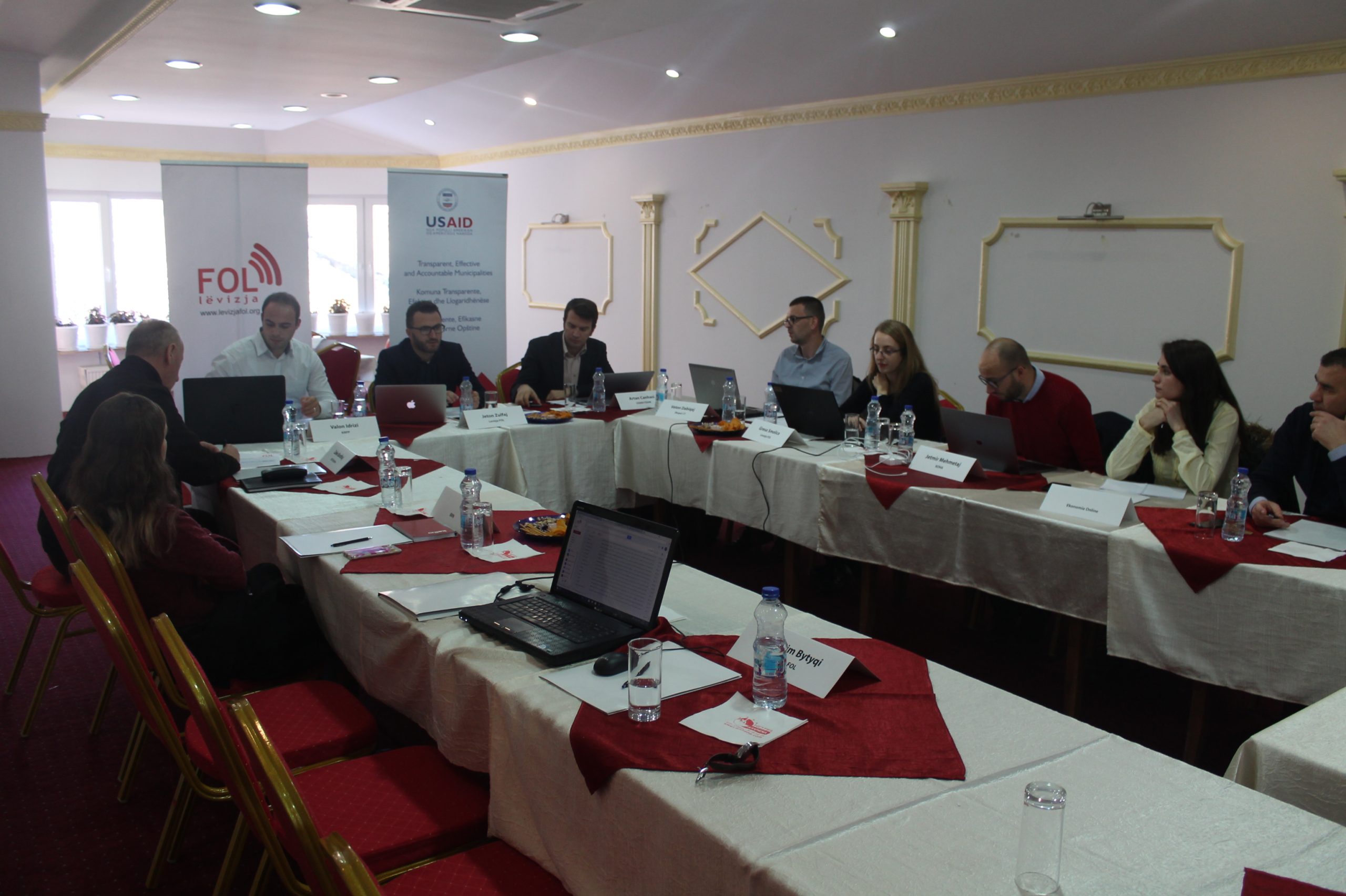
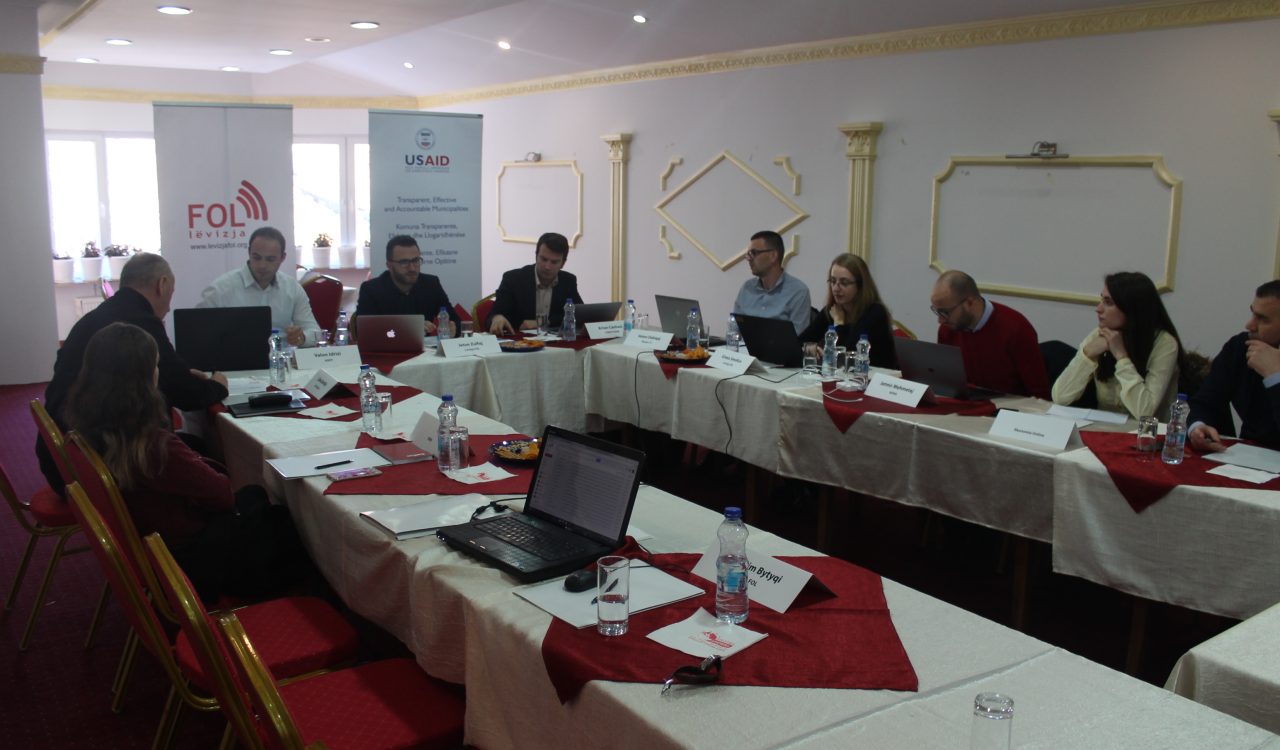
Workshop on “Open Procurement Transparency Portal”

Dragash – 23-24 November 2017 – Lëvizja FOL within the USAID Project for Transparent, Effective and Accountable Municipalities has held a two-day workshop on the design and structuring of the open and transparent procurement portal. Participants of this workshop were representatives of USAID, Public Procurement Regulatory Commission, Municipal Procurement Offices, media representatives and civil society.

The purpose of the project is to influence the incensement of transparency and accountability on the spending of public money. Through this portal it is intended to publish information on contracts linking public institutions with economic operators, to provide detailed information on economic operators contracted by public institutions, as well as detailed information on procurements of contracting authorities.

In this two-day workshop was discussed with all stakeholders involved in the public procurement field in order to enable the contribution of all parties in the development of the portal.

Open and Transparent Procurement Portal” will be launched in June 2018 and will be accessible to all citizens.

Lecture with students in Prizren

Prizren, 23 November 2017 – Lëvizja FOL organized today the next conversation between students and Judge of the Basic Court in Prizren, Skender Çoçaj and Prosecutor of the Basic Prosecution in Prizren, Ms. Mehreme Hoxha. The topic of this conversation was: Education and awareness raising of students about the phenomenon of corruption and the fight against it.

Judge of the Basic Court in Prizren, Skender Çoçaj, presented to the students the work of the Basic Court in Prizren, thus showing priority for anti-corruption cases. He encourages students to take part in different sessions as this helps them to exercise their profession in the future.

Prosecutor of the Basic Prosecution in Prizren Mrs. Mehreme Hoxha, this prosecutor is not much in charged with corruption, because these cases have been given priority.

For two years FOL has been organizing such conversations with students and prosecutors of the court in Pristina, and now it has started to hold these conversations in other cities as well.

This grant is funded by the Democratic Society Promotion (DSP) project – funded by the Swiss Cooperation Office in Kosovo (SCO-K) and the Ministry of Foreign Affairs of Denmark (DANIDA) and managed by the Kosovo Civil Society Foundation. Civil Society Foundation – KCSF.