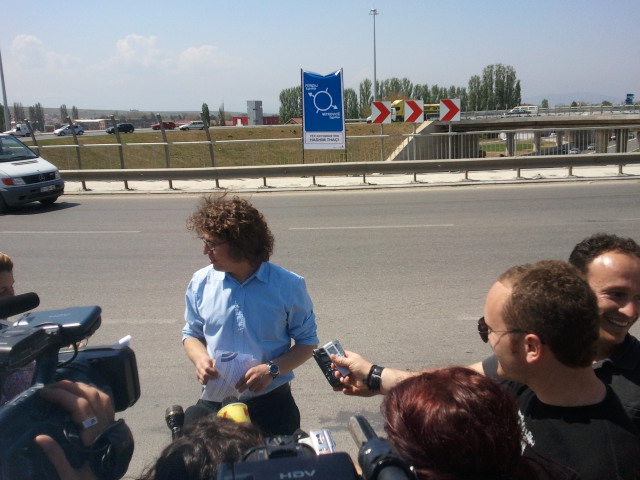
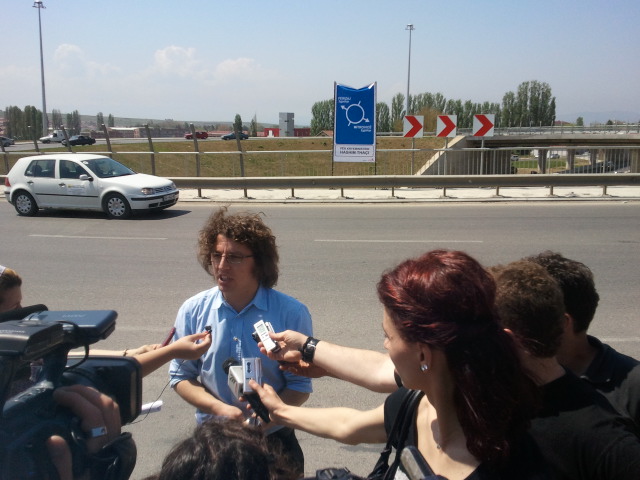
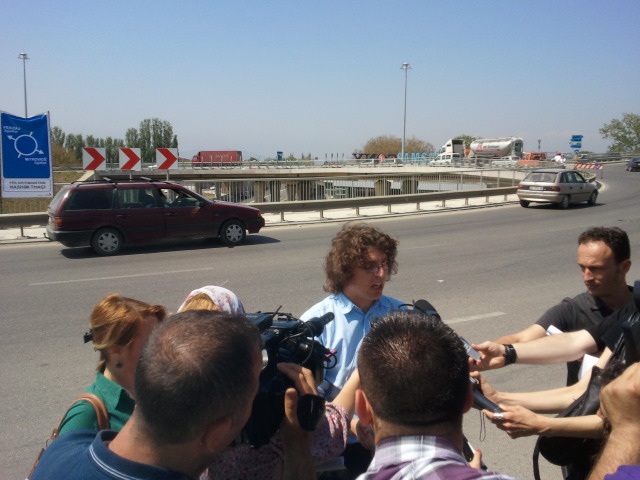
Corruption Monitor: Institutions continue to be in peace with corruption

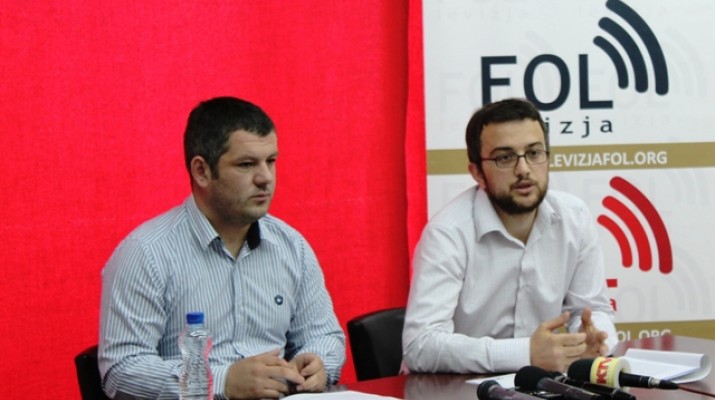
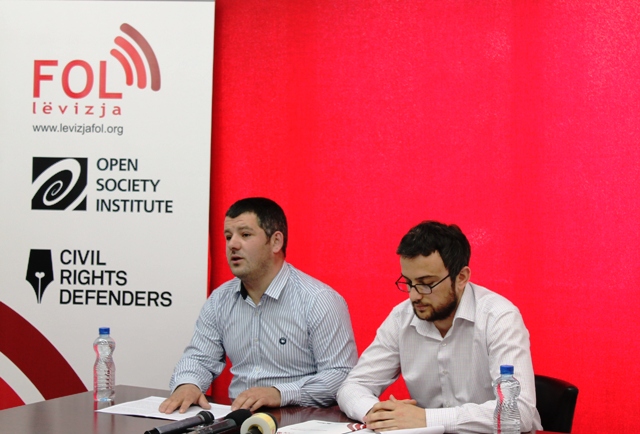
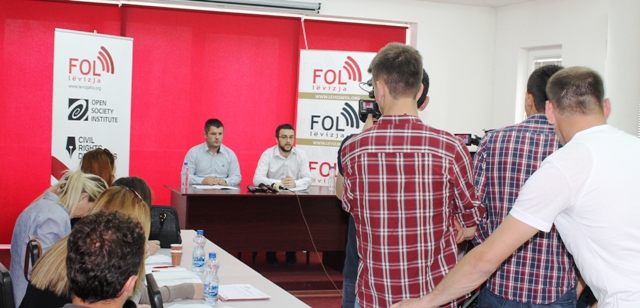
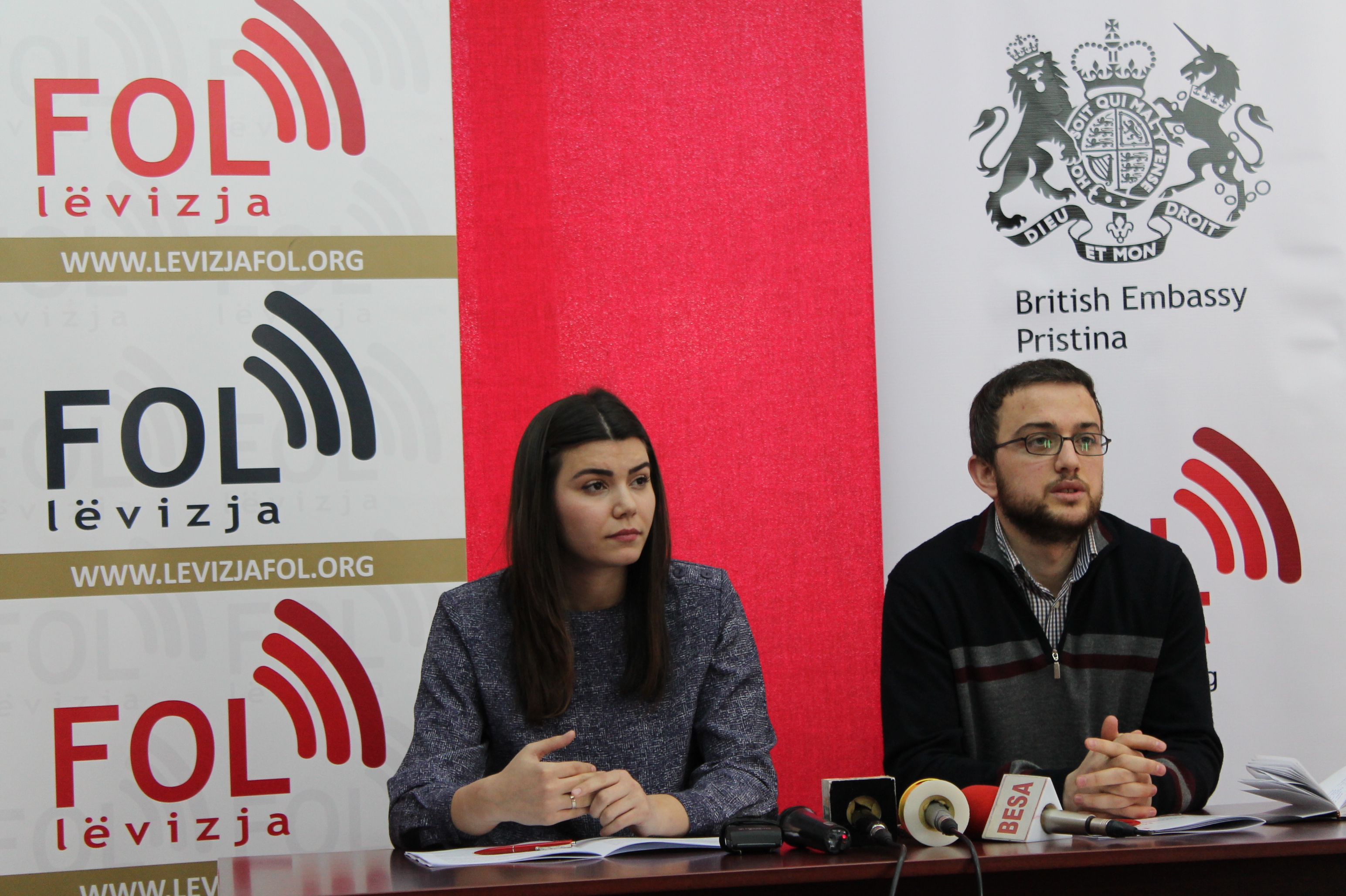
Pristina, May 13 – Movement FOL published the report Corruption Monitor for the period January-March 2012. Corruption Monitor monitors Institutional Activities in the Fight against Corruption.

The Government of Kosovo in the first trimester of 2012 has issued 82 decisions, only 4 of them on fighting (preventing) corruption. During January, the Government of Kosovo has approved 15 decisions, only one was on fight against corruption. In February the 41 decisions approved by the Government, 3 were on the fight against corruption. Meanwhile, in March from 27 decisions none was focused on this area.

Kosovo Assembly during the first trimester has been the most passive institution regarding the fight against corruption. During 10 plenary sessions as they were held during January, February, and March in neither of them the corruption was on the agenda.

Kosovo Judicial Council (KJC) – Based on the statistics of this institution during January, February and March in the category of “official misconduct” there are 120 unsolved cases at the beginning of the reporting period, 19 cases have been filed, and 14 solved cases, while 120 cases are unsolved at the end of the reporting period. In the category of “taking bribe” 10 cases have been filed and only 3 cases have been solved at the end of the reporting period. And in the category of “giving bribes” 17 cases have been filed and 16 cases have been solved at the end of the reporting period.
The Prosecutions of the Republic of Kosovo during the first trimester of 2012 in municipal level have filed 9 cases; the number of proposed charges is 42. Meanwhile we have 100 cases filed during the reporting period, 277 cases on going, 42 proposed charges and 4 charges, investigations were dismissed against two cases. Meanwhile, district prosecutors during the reporting period have filed 60 cases, 383 cases have been considered by them, 8 charges have been raised and five cases were dismissed regarding anti-corruption.

The statistics of the Department of Investigation of Economic Crimes and Corruption (DIECC) shows that in the first trimester of 2012 there are 69 cases under investigation. In these cases 39 cases were sent to the prosecutor with identified perpetrators, and no cases with N / N suspects. Meanwhile, among the cases sent with prosecutor’s reports for the first trimester there are 3 cases. As a result of Kosovo Police Investigation, 18 officials have been arrested: 6 in January and February, and 12 in March.

Kosovo Customs during the first trimester have announced 2 disciplinary actions. During January and February, Kosovo Customs did not announce any disciplinary action, whereas in March they announced a written warning and a verbal warning. During January and February in the professional standards department were initiated 2 cases, both cases were for property damage of Customs. Meanwhile in March is also initiated a case for unprofessional conduct.

Anti-Corruption Agency (ACA) within the first trimester of 2012 has been mainly focused on two activities in the fight against corruption. During this trimester, ACA has published its report presenting its annual work and ACA during this reporting period has completed the process of declaration of the property of senior public officials.
Get the full report in this link: http://levizjafol.org/images/uploads/files/Monitoruesi_i_Korrupsionit_Janar-_Mars_2012.pdf

Gallery

[av_gallery ids=’3966,3967′ style=’thumbnails’ preview_size=’portfolio’ crop_big_preview_thumbnail=’avia-gallery-big-crop-thumb’ thumb_size=’portfolio’ columns=’5′ imagelink=’lightbox’ lazyload=’avia_lazyload’]

The Article 410 of the Penal Code should be amended

Prishtina, 9 May 2012 – After the decision of the President of the country, Mrs. Atifete Jahjaga that the new Criminal Code of Kosovo must be reviewed again in the Assembly, because of the articles 37 and 38 as unacceptable for media and public opinion, Movement FOL appeals to lawmakers to revise also the Article 410, which by actual definition leaves various options of interpretation and is contrary to democratic norms.

Article 410, The Call for Resistance says:
Whoever calls others for resistance or disobedience against approved decisions or lawful measures issued by the competent body or officer is sentenced to three years. While the other paragraph continues: 2. If the offense in paragraph 1 of this Article results in great difficulty or impossibility of implementing the decision, measure or formal legal action, the perpetrator shall be punished with imprisonment from six months to five years.

Such a definition enables various powers in Kosovo to misinterpret this article, and the citizens of Kosovo will bear the consequences.
Movement FOL finds it as necessary that this article be revised and redefined by the Legislation and Judiciary Committee, and the members of the Assembly of Kosovo, in order to avoid any possibility of violation of human rights, freedom of rally, protest and demonstration of the will of Kosovo citizens.
Believing in building a state of democratic values and principles, we hope that our request to review this article of the Criminal Code will be taken seriously by local institutions and the response to this concern will be positive.

Procurement Monitor: Law violations continue

Prishtina, May 7, 2012 – Ministries, Public Enterprises (CEC and PTK) and the Republic of Kosovo Municipalities have continued with law violations and irregularities in public procurement as they used to. Throughout the three-month period, January to March 2012, these institutions have committed violations in 11 various tenders. 8 tenders are returned in re-evaluation by the Procurement Review Body, 2 are returned in re-tendering and for only one procurement activity was decided to go on with procurement activity.

Ministries that have violated the law of public procurement in 4 tenders: a) Ministry of Internal Affairs on the tender “Supply of Fuels”, b) Ministry of Culture, Youth and Sports in the procurement activity “Constructing the Sport Gym in Klina municipality – Phase II “, c) Ministry for Communities and Returns in the tender” hotel services in MCR “, and d) Ministry of Infrastructure when evaluating the tender “Maintenance Services of section 1 to 5 of road no. 7: Merdare-Morine highway. ” In addition, the Public Procurement Review Body has also issued a fine to the Ministry of Infrastructure in amount of 10,000.00 euros, and has revoked the license of the acting director of this ministry to be active in public procurement.
Public Enterprises (KEK and PTK) have committed offenses in four (4) various tenders. Kosovo Energy Corporation has committed offenses in three (3) different tenders: a) additional services in the removal of overburden (as needed) “b)” supply of chemicals “and c)” Supply of rubber bands. “Meanwhile, the Kosovo Post-Telecom committed a violation in one tender only: “Benefits for health insurance.” These four tenders of these companies are turning for re-evaluation.

Municipalities have committed violations in three various tenders. Prizren Municipality has violated the provisions in evaluating the tender “summer and winter maintenance of roads, sidewalks, public green spaces, squares and decorative trees in Prizren and winter maintenance of roads in the villages-areas”, Municipality of Gjilan in the case of the cancellation of the tender “Transport of workers and students in Gjilan Municipality, divided into 7 Lots” and Peja Municipality during the tender evaluation “Maintenance of traffic signs – Lot 1”. Two of these tenders have been returned for re-evaluation, and only one is cancelled by the Public Procurement Review Body.
Reports of daily newspapers regarding the public procurement are of a great importance in the elimination of legal irregularities and corrupt practices within this field. During the quarterly period newspapers have published 69 various reports. From these 69 reports, 34 were investigative reports and 35 of them have been published as news.

Gallery

g66

g65

g64

g63

g62

g61

foto (85)

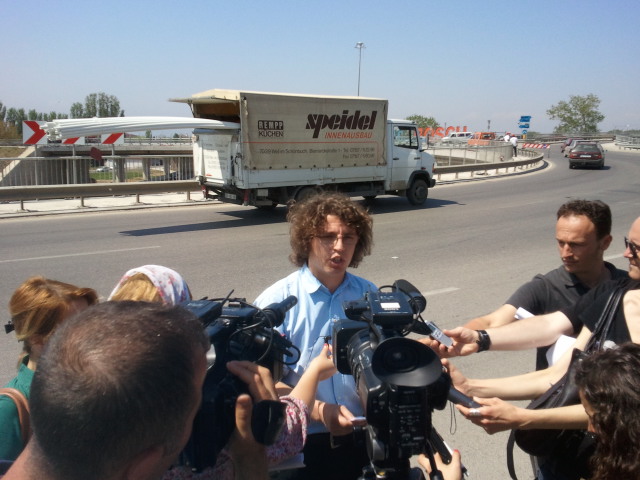
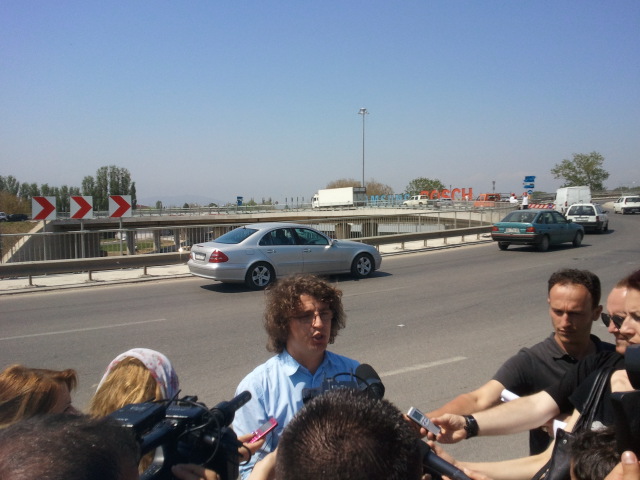
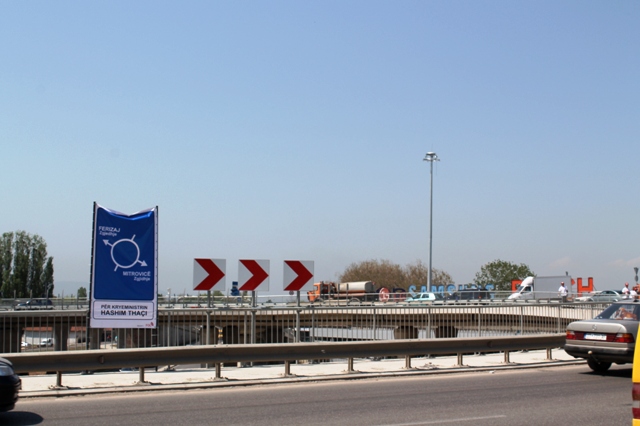
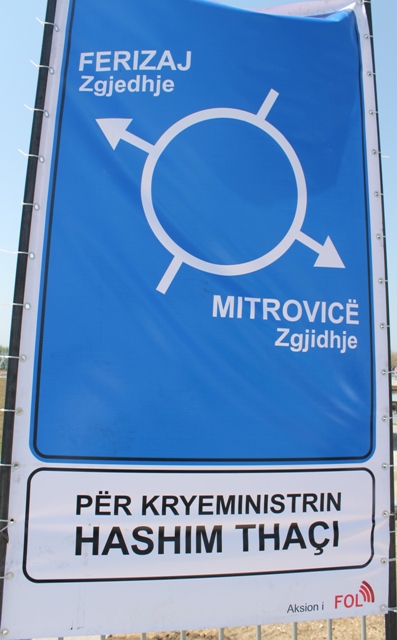
The Prime Minister should be serving the country not the party

Prishtina, May 2, 2012 ” even though we are in the fifth year of the Independence, the institutions of the Republic still do not control entirely its territory. It is the 13th year since the north of Kosovo remains over flown by criminality and lawlessness. The state of Kosovo, it”s rather contested from inside than outside. Our institutions travel daily to different countries of the world, but it”s “impossible” to be present in the north.

The Prime Minister stayed for days in the United States of America, but did not stay even a single hour in Zvecan, Zubin Potok and Leposavic.
Movement FOL during the election campaign for mayor of Ferizaj monitored and analyzed the commitment that Prime Minister has shown for the elections there.
The presence of the Prime Minister in Ferizaj would give you the impression that he himself is running for mayor of Ferizaj. Almost the whole government was there: ministers, deputy ministers, advisers, directors and almost all the chief executives of the Government. We have never seen such devotion of the Government towards north of the country and its citizens. Thus, there we have seen everything: organized crime, informality, anti-state structures, but we did not see and cannot see the Republic of Kosovo institutions.

“Elections in Ferizaj showed that to Government of Kosovo is more important the power in that municipality the state in the north. Government and the Prime Minister has indicated that the Strategy for the North, the coordinator for the part and the intervention of Special Forces in July 25 were not about the extent of the authority of Kosovo, but it was entirely about the rehabilitation of his power within the public “, stated Petrit Zogaj, executive director of the Movement FOL.
Therefore, considering this, FOL through this activity requires the Government to strengthen the state power throughout the Republic of Kosovo, and not party and personal power of the Prime Minister.

Gallery

g511

g510

g59

g58

g57

g56

g55

g54

g53

g52

g51

Movement FOL, expands its activities in the municipality of Podujeva and Gjakova

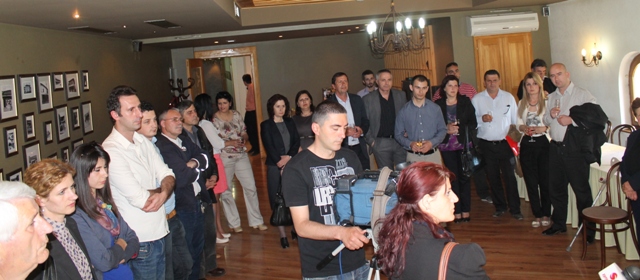
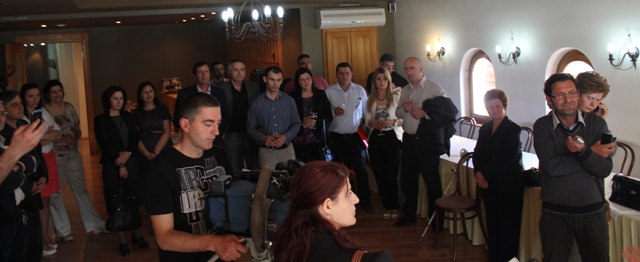
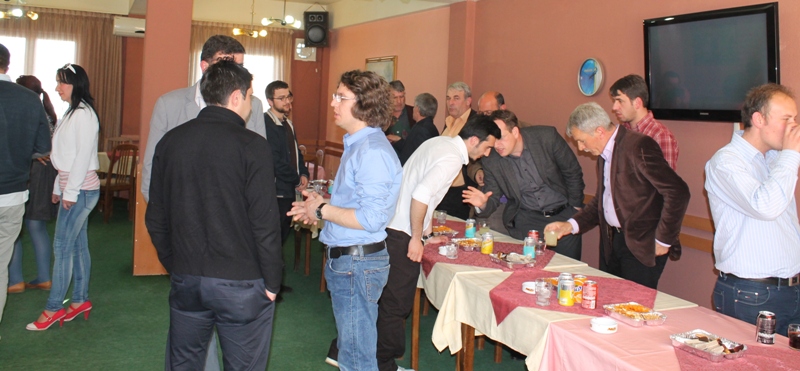
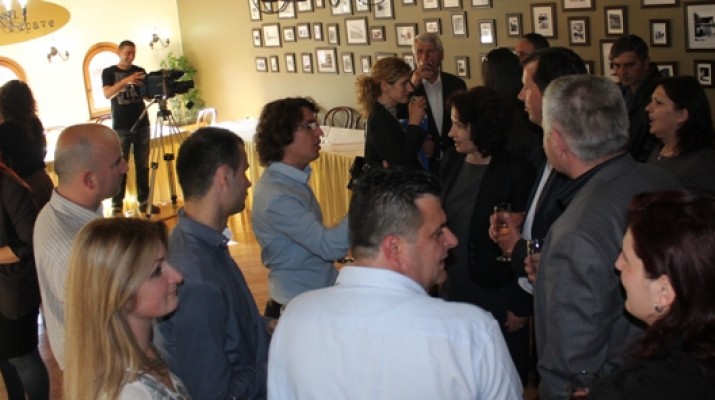
Podujeva – Gjakova, 26-27 April 2012 – Movement FOL has expanded its activities directly in the municipalities of Kosovo. In the last two days FOL through occasional ceremonies revealed the goals of expanding activities in Podujeva and Gjakova municipalities. Participants in the ceremony were representatives of local institutions, civil society, and representatives of political parties, media, business sector and citizens of these municipalities.

On this occasion the Executive Director of the Movement FOL Petrit Zogaj thanking the participants said that “after more than two years since the founding of the Movement FOL, whose main mission is the promotion of democratic governance, transparency and accountability of central institutions and now this movement will accomplish its mission more directly, through its expansion in the municipal level. “Movement FOL its decision to expand its activity in these municipalities based on the principle that “expanding our movement, we believe that will bring public supervision to local government level and to improve the existing situation of civil society and to have more effective research and advocacy in order to increase the transparency, accountability and promotion of local government reform, “said Petrit Zogaj. According to him “this is the best way for them to encourage citizens to express their grievances against vulnerable public policy and decisions coming from the misrule”.

The forms of misrule, mismanagement and malfunctioning of public institutions of central and local levels have led to reduce the confidence of citizens in the institutions and also have caused civic indifference to political, social and economic developments. Because of this ” Movement FOL, will focus on increasing public supervision over local government institutions in these two municipalities, encouraging active citizenship through involvement of relevant actors and citizens in decision making process,” said Petrit Zogaj.
These meetings have continued with discussions about the most suitable forms of advancing the level of cooperation between civil society, local government sector, media and other relevant sectors in promoting transparency, accountability and good governance in these municipalities.

Gallery

g47

g46

g45

g44

g43

g42

g41

foto (83)

The offices of FOL MOVEMENT were broken

Prishtinë, 23 April 2012 ” Today, at 8:30 AM the offices of FOL MOVEMENT were broken by unknown persons. After notice by the Insurance Company, at the scene also came the units of Kosovo Police for the necessary expertise.

In this case the entry door was damaged but, after verification by the Kosovo Police and staff of the FOL was concluded that there, was no theft of equipment or documents.

Kosovo Police opened the case for investigation, which we believe will result in detention of persons.

NATIONAL DEBATE TOURNAMENT “KOSOVO OPEN 2012”

6 – 9 April 2012 – Movement FOL in collaboration with six local organizations: Syri Vizion in Peja, Initiative for Progress (INPO) in Ferizaj ,Youth Center in Malisheva, Youth Centre in Suhareka, CBM Mitrovica and Local Youth Action Council in Prizren held the National Tournament debate “Karl Popper” format “Kosovo Open 2012 ” from 6 – 9 April 2012.

FOL Movement with the support of Foundation SOROS/KFOS since January 2010 has been working with partner organizations establishing debate clubs in Ferizaj, Prishtina and Peja. Meanwhile, from January 2011 this program was extended to three other municipalities, Mitrovica, Malisheva and Suhareka. During this year the program will be extended in other municipalities as well such as Prizren, Gjakova and Podujeva. Currently in Kosovo there are seven debating clubs in seven municipalities and the number of debaters from high schools is constantly growing. However, the debate club in Ferizaj already formed a team of RAE community debaters.

A major contribution to the organization of the Tournament “Kosovo Open 2011” has given the Kosovo Security Force, because this tournament was held in the Training and Doctrine Centre of KSF in Ferizaj for three days.
On Saturday and Sunday (7-8 April) during six rounds of debates have been faced 20 teams from seven municipalities in Kosovo. Meanwhile, semifinals and final were held on Monday. On semifinals were qualified four teams that had collected the most points based on the number of the won matches and the points that were collected from individual speakers within the team. Semifinals of this debate were: Team-Trifty Trifty, iHithat, Nemo and Sokratet. Meanwhile, in the final were Trifty-Trifty and iHithat. Debates were on the general topic of Safety and Freedoms and the final topic was “The use of violence of protesters could be justified.”

Judges in this tournament were former debaters who have previously taken part in the debate “Karl Popper” format. jury who judged the finals of this tournament, unanimously announced the winner of this tournament iHithat from Pristina. The winning team of this tournament will represent Kosovo in the international debate competitions IDEA Youth Forum 2012, which this year will be held in Mexico in July / August 2012.
The format of the debate ‘Karl Popper’ aims to handle the essential elements of a controversial issue. it stresses above all the development of critical thinking, tolerance and assessment of different views. This format was developed in schools and is supported by the Foundation for Open Society.

Gallery

g317

g316

g315

g314

g313

g312

g311

g310

g39

g38

g37

g36

g35

g34

g33

g32

g31

FOL: Illegal Property is not treated with the current draft law

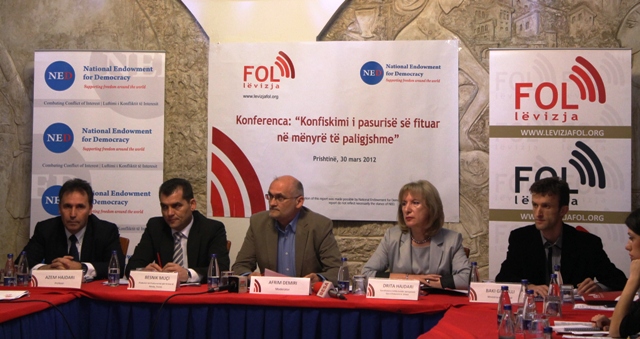
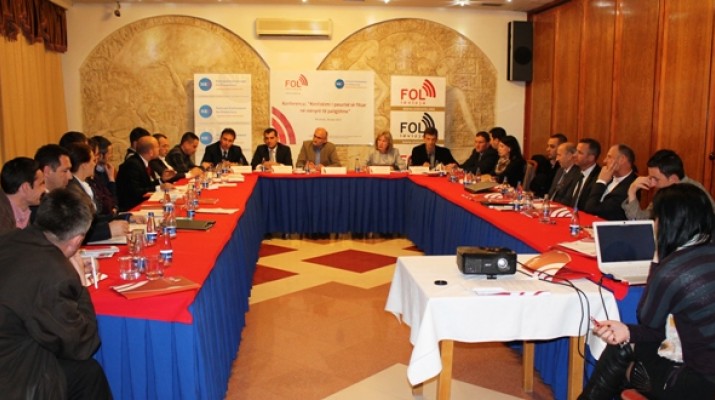
Prishtina, March 30, 2012 – Today, Movement FOL held the conference on the topic: “The confiscation of illegally acquired property.” The purpose of this conference was to argue for the importance of this draft law in fighting organized crime and corruptions, taking into account the regional experiences, respectively Albania, regarding the drafting and implementation of this law.

Panellists at the conference were representatives from the Ministry of Justice, the District Prosecution, Professors of Law Faculty of the University of Prishtina and Serious Crimes Prosecution Office of Albania.

Researcher at Movement FOL, Admir Salihu, said that “the Advisory Forum of NGOs for Anti corruption law package, part of which is also FOL, has held several consultative meetings, analyzing the content of the initial version of the draft law on confiscation of property acquired by criminal offense. This forum has concluded that the current draft law does not meet basic standards and that this forum has offered four recommendations to the basic principles of this law, “said Salihu.
Prosecutor of District Prosecution in Prishtina, Drita Hajdari, said that “there were cases of fighting crime, but there was no confiscation of property, according to her, this law would reduce this phenomenon. Confiscation is punishment and prevention as well, “said Hajdari. According to her, the draft law distinguishes the seizure and confiscation, seizure is a temporary measure, while the confiscation has to do with the definite taking of any property that becomes state property and the owner is unable to return the property.
The Representative from the Ministry of Justice, Baki Gimolli said that “The Draft Law on confiscation of property is still in its initial stage. We sent the initial draft to all other actors for various comments. “On April 5 will be the next meeting and present will be the other actors as well, but these recommendations will be considered one by one,” said Gimolli.

The Professor of Criminal Procedure at the University of Prishtina, Azem Hajdari, said that “this debate is very important because it has involved all relevant actors, but also for the fact that this draft law is in the process towards the finalization and will be a good suggestion for the Ministry of Justice to collect these conclusions and finally develop a draft, which provides solutions to the problem. Hajdari in his presentation was focused on the four recommendations of the Advisory Forum of NGOs, qualifying them as very important for this law. “The name of the law must change. The criminal offence is one of the most severe ways to gain wealth, but not the only one. Even without a criminal charge one could gain wealth. Without these observations and without their involvement, this law will have no value, “said Hajdari.

Meanwhile, Besnik Muçi from Prosecution of Serious Crimes of the Republic of Albania shared his legal basis and his experience in Albania regarding this field. Once unveiled the legislation and how it regulates the confiscation of the property illegally acquired, he also showed the results that have been attained in this direction since the approval of the Anti-Mafia Law. “Since the approval of the anti-Mafia Law in Court have been presented 40 requests for confiscation of assets, some even fell. The assets have been confiscated and became state property, such as houses, apartments, land, money, motor vehicles etc., worth about 10 million Euro “, Muci said.

Recommendations of the Conference

1. The name of the draft law should be changed, which at the same time reflects the scope and purpose of this draft law. The Forum recommends that the qualifying “assets obtained by criminal act” change to “assets obtained illegally” (even when not related to the criminal offense).
2. The property illegally acquired should be certified by the suspect, not by the official assignment. By transferring the burden of proof to the suspects, it would increase the possibility of more efficient fighting organized crime and illegal property. Such experience what the Forum recommends is also in the regional countries, like Albania, Slovenia and Bulgaria.
3. This draft law should also apply to assets illegally acquired by suspects, before this law became applicable.
4. Establishing specific mechanisms within the existing institutions (police, prosecutor, and court) is suggested in order to implement more effectively the legislation in this area.
5. Ministry of Justice is recommended to find spaces within the provisions of this law to decide the issue of property that may be without holder.

Gallery

g210

g29

g28

g27

g26

g25

g24

g23

g22

g21

foto (81)

FOL: The agreement with the state of IMO-s/Nigeria should be public

Prishtina, March 29, 2012 ” Yesterday, In our country’s media was reported about an agreement between the Government of Kosovo (signed by the deputy Prime Minister Behgjet Pacolli) and IMO State Nigeria (signed by Governor Rochas). The notification of this agreement is published in the official web site of IMO State Nigeria, but the same is not done on the web sites of the institutions of our country. In the official announcement of the Governor of the IMO State Nigeria, it is said that “The Government of Kosovo will invest in the energy sector in this country.”
Meanwhile, yesterday we have been looking at all the web sites of the institutions of the country, but we did not find any information on like that published by the Governor of the State IMO.

Government of Kosovo has developed a non-democratic and non- transparent practice about the recently signed agreements.
“Today we are asking the country’s government to make public the agreements signed. This is to understand what deal is it about as the Government has decided to invest in this country and in what capacity has the Deputy Prime Minister Pacolli signed such an agreement” If signed in institutional capacity, then how is it possible that the Kosovo Government invest in energy field in this country, a problem that is still pending in our state” ” stated Petrit Zogaj, executive director of the Movement FOL.
And if the Deputy Prime Minister Pacolli signed it as a businessman, what happens most of the times, we ask the Anti-Corruption Agency to immediately start the preliminary investigation procedures for conflict of interest.

Thus, all we ask is a communication with the citizens of Kosovo, a responsibility for the government regarding the policies that undertake, and implementation of democratic practices which are provided by the Constitution of the country regarding international agreements.

Gallery

g15

g14

g13

g12

g11

foto (80)

FOL: Public Procurement Law prevents transparency

Prishtina, March 26, 2012 – Today Movement FOL held a press conference, publishing “Analysis of Changes in Public Procurement Law – in the context of the Principle of Transparency ‘.The purpose of this legal analysis is to highlight the degree has the Public Procurement Law in the Republic of Kosovo managed to provide for the implementation of the principle of transparency in public procurement procedures.

According to project coordinator, Armend Pajaziti, “the new version of the draft law, approved in August 2011, repeats many of the weaknesses of the previous law.” He further added that “this law is still far from EU standards in the field of public procurement, what is confirmed also in the Progress Report of the European Commission for the year 2011”. Also, according to him “this law does not meet the required needs of transparent procedures and some new procurement procedures are regulated in a way that excludes the possibility of public information and leave the opportunity for exclusion of Economic Operators from competition”.

Meanwhile, legal analyst in this movement, Admir Salihu, noting the many weaknesses of this law, said that “almost none of the recommendations of civil society is taken into account by the Government and the Assembly”. According to him, “one of the issues that directly affect the application of proclaimed principle of transparency in procurement activities is the paragraph on exceptions of certain procurement activities (Article 3, paragraph 1)”. He further stressed that “this law allows the Government to exclude from the scope of this law certain procurement activities, what puts into question the transparency of spending public money of the citizens of the Republic of Kosovo”.

Meanwhile, speaking of the many uncertainties that characterize the scope of the main institutions of procurement, PPRC and PRB, he claimed that “the competencies of public procurement institutions should be revised, because there is a great confusion among the PPRC and PRB, regarding which is the final interpreter.
At the end of this conference are also provided numerous recommendations for changing this law.

FOL: Abuses with tenders, damage to public money

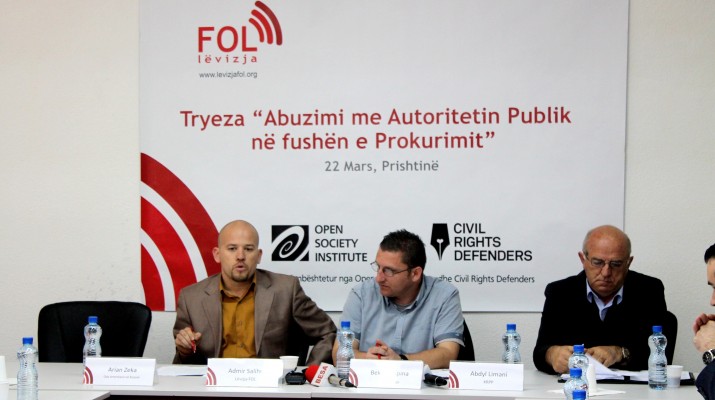
Prishtina, March 22, 2012 – Movement FOL held the round table “The abuse of public authority in procurement”, discussing aspects of abuse of authority in public procurement by procurement officials, contracting authorities, economic operators and other institutions . On the panel to discuss this topic were Abdyl Limani, an expert in Public Procurement Regulatory Commission, Admir Salihu, procurement monitoring at Movement FOL, however, despite confirmation that will be participating, Arian Zeka of American Chamber representative in Kosovo was missing.

In this debate was stressed the un-coordination of the institutions to regulate various aspects of Procurement, cases where the PRB, and PPRC did not have the same opinion and procurement officials have remained confused with interpretations and penalties.

The participants also mentioned the recent changes in the Procurement Law which have not yet regulated some aspects of procurement, leaving unregulated the issue of very low prices low in tender or very high ones, as a consequence the economic operators abuse with offered prices.

Admir Salihu, monitoring officer at movement FOL said that FOL since March 2011, has monitored and supervised about 40 tenders from the tender opening procedure, examination, evaluation and comparison of tenders to the award of contract. We also have participated in more than 20 re-tenders and re-evaluations “. Movement FOL has reported about legal and administrative irregularities where sometimes there were direct influences to be revised or cancelled as a whole these irregularities. “There are 14 reports on tenders where FOL has concluded that there were serious problems, three of them have been cancelled by the Public Procurement Review Body, regarding the other three we were guaranteed from the procurement office that our suspicions are carefully examined and are avoided and two other tenders FOL has requested that the Ministry of Justice must proceed to the Prosecution for suspicion that economic operators have committed crimes, fraud, falsification of documents and legalization of the falsity. Permanent secretary the Ministry of Justice has sent the report to the State Prosecution by e-mail. “

Meanwhile, Abdyl Limani, an expert in Public Procurement Regulatory Commission (PPRC) said that PPRC within the powers we have, we offer opinions to contracting authorities and economic operators, prepare and distribute flyers for the implementation and interpretation of legal provisions. PPRC has its department of Regulations, Monitoring, IT and Training. Within the Department of Regulations has been formed the advisory or helping table in which any interested person has the address and any time one can ask for help, advice and interpretation, “said Limani. According to him, this institution every day accepts calls for help and advice. “Currently there are some cases which are being investigated and monitoring. Typical violations are wrong preparation of tender documents by procurement officials, cancelling the tenders without legal basis, specification of measurable criteria without discrimination, breach of contract and determining the criteria that favour one group of public operators and discriminate against others, declared Limani. According to him Contracting Authorities have the opportunity to leave negative references to Economic Operators who do not meet the contracts properly; this will help the other Contracting Authorities not to select those economic operators.

Bedri Bahtiri, Permanent Secretary in the MJ said that greater transparency in the procurement offices reduces the malpractices. They should also work in the education of personnel in the procurement field, giving everyone the opportunity to professionalise. Further, Mr. Bahtiri added that it is important that the Central Procurement Agency be in charge of similar procurement services of various institutions such as fuel supply and other services, which would lower the cost of expenditure of some of the institutions.

Establishing the debating club in Prizren

Prizren, March 17, 2012 – Movement FOL has broadened the debating program in the city of Prizren as well. FOL, on Saturday officially has established the debating club in this city where three teams of high school students has been trained in the format of the debate “Karl Popper”, who will be participating in the National Debate Tournament “Kosovo Open 2012” , which is going to be held in April of this year.

FOL movement has re-turned the debate program in Kosovo, in February 2010 were initially included three municipalities (Municipality of Pristina, Peja and Ferizaj) whereas during 2011’s, the program was extended in three other municipalities (municipality of Suhareka, Malisheva and Mitrovica). Besides the municipality of Prizren, FOL movement aims at expand the debate program in other municipalities of Kosovo as well, in order to include as many young people as possible in the debate program.
The debate is an exceptional opportunity for development and education of the youth. To achieve success in academic and school life, young people need to know how to present their ideas and how to respond to the arguments of others who disagree with their ideas. Debate in a democratic society expands students’ knowledge, ways to understand the political and social developments and to argue about issues which they believe.

The Government of corrupted tenders

Pristina, March 12, 2012 ” Today, FOL Movement held a conference where he published the annual report Public Procurement Monitor 2011. Fidan Kalaja the Program Manager at FOL, said that “even the year 2011, is generally accompanied with the lack of seriousness by Kosovo institutions, which did not take any concrete and serious steps to improve the situation and prevent violations, fraud and corruption in the sector of public procurement, making this sector even in the year 2011 the lead regarding development of corruption “.
He stated that “Our main findings that we have identified during our monitoring and research in several contracting authorities (mainly ministries) are failure to meet the technical specifications of the tender dossiers by economic operators (hereinafter EO), providing false documents and illegal preliminary agreements between EO and relevant institutions officials, the bidding prices of EO which harm competition, the reward of EO who have been irresponsible in the implementation of earlier contracts on new contracts, etc.. “

In early October of last year, FOL has published a report on violations and irregularities that are committed by the Ministry of Health, in this case Fidan Kalaja stated “we have mentioned the exact names of the officials who have been arrested for their involvement in corruption affairs. Regarding this case Movement FOL has provided an official confirmation from prosecution that senior official is being investigated also, respectively Deputy Prime Minister of Kosovo, Mr. Bujar Bukoshi. In the persistence of Movement FOL for a government free from corruption and organized crime, we now take the opportunity to ask Mr. Bukoshi resigned his assignment, because it is a public responsibility and an example that should be followed by many other officials of the country, respectively colleagues of Mr. Bukoshi. The Prime Minister of the Government should also be responsible for such cases and the high level of corruption that involves all levels of the Government. “

Project Coordinator, Armend Pajaziti presented the results of the report Public Procurement Monitor 2011. He stated that “ministries have committed numerous legal violations in thirty (30) different tenders. Ministry of Justice has committed violations in 5 tenders, the Ministry of Public Administration, Ministry of Infrastructure and Ministry of Culture in four (4) tenders, the Ministry of Security Force and Ministry of Agriculture in 3 tenders, Ministry of Health and Ministry of Economic Development in 2 tenders. Meanwhile, the ministries with violations in only one tender are the Ministry of Finance, Ministry of Internal Affairs and Ministry of Diaspora. ”
Public enterprises have committed numerous legal violations in nine (9) various procurement activities. Kosovo Energy Corporation has committed violations in six (6) tenders, Post and Telecom of Kosovo has committed violations in three (3) various procurement activities. Municipalities in 2011 have committed numerous legal violations in a total of 37 procurement activities. Municipalities with more violations are municipality of Lipjan and municipality of Suhareka with four (4) tenders. Then, the municipality of Pristina, Gjilan, Rahovec and municipality of Viti with three (3) tenders. Meanwhile, with two (2) tenders are municipality of Gracanica, Podujeva, Shterpce and Kamenica. With one (1) tender are Municipality of Peja, Ferizaj, Prizren, Kacanik, Istog, Kllokot, Fushe Kosova, Mitrovica and Klina.

PUBLIC PROCUREMENT MONITOR, ANNUAL REPORT 2011

Legal Irregularities of public institutions and enterprises Jan-Dec 2011 Ministries have committed numerous legal violations in thirty (30) different tenders. Public enterprises have committed numer…

 
PUBLIC PROCUREMENT MONITOR, ANNUAL REPORT 2011

Government: Only 10 anti-corruption verdicts among 367 of them in 2011,

Pristina, March 9, 2012 – Kosovo as the most affected country by corruption in 2011 was faced with a lack of willingness to fight against corruption.
“The Government of Kosovo during 2011 has approved 367 verdicts. Only 10 verdicts have been regarding prevention and fighting corruption. Within these verdicts are approval of the draft law on Public Procurement, Declaration, Origin and Control of property and gifts of Senior Public officials, the one on the Prevention of Conflicts of Interest, the draft law on protection of informants (whistle blowers law), draft law on witness protection, the one on financing of political parties, draft law of amendment of the law for the benefit of former senior officials., “said Nora Bajrami, Researcher at Movement FOL.

Also, the Kosovo government has supported the request of Kosovo Special Prosecutor for reimbursement of allowances and financial support to its employees, the chief executive officer at the Agency of Management of Seized Property has been appointed and the draft Criminal Code of the Republic of Kosovo has been approved.
“Assembly of Kosovo during 2011 has held a total of 37 sessions. During this period several anti-corruption laws have been approved, which are expected to affect directly or indirectly in fight against corruption, organized crime and the informal economy. The laws that have been approved during this year are: Law on Witness Protection, Law on Protection of informers, the Law on Declaration, Origin and control of property of Senior Public Officials, Law on Preventing Conflict of Interest, and Law on public procurement, law on political parties finance and the amending and supplementing law for the benefit of former senior officials” said Bajrami.

According to her, the statistics of Judicial Council, show that during 2011 have been undertaken several decisions and measures in fight against corruption. During the reporting period District Court had inherited 45 cases, 24 cases summoned and 16 cases solved. Among 9 cases with court sentence, 6 cases were with imprisoning sentence, 3 with a suspended sentence, other sentences 1, 2 with the acquittal verdict and 5 cases in other sentences. At the end of the reporting period 53 cases remain unsolved. “

Meanwhile in municipal courts, 206 cases have been inherited from the reporting period, 132 cases have been summoned, and 120 cases have been solved. Among 82 cases with court verdict, 14 cases are imprisoning sentence, 45 cases with financial fine, 22 cases, suspended sentence, 1 case other sentences. With acquittal verdicts have been pronounced 6 cases, with rejecting trial 3 cases and 29 in other ways. The year 2011 has been closed with 218 unsolved cases.

Prosecutions of the Republic of Kosovo during 2011 have submitted 959 criminal charges of corruption against 1862 people. During the period January-December 2011 the country’s prosecutions have solved 538 criminal charges against 1038 people, while 421 criminal charges against 824 people remain unsolved. Among the solved cases, 107 charges were filed against 139 people, 107 charges against 478 people, 165 criminal charges against 216 people and the investigations have been pended in 31 cases against 71 people, said Nora Bajrami a researcher at Movement FOL..

Gallery
foto (12)

g71

Corruption Monitor for 2011

Annual Monitoring report on Kosovo Public Institutions activity in fight against corruption

 
Corruption Monitor for 2011

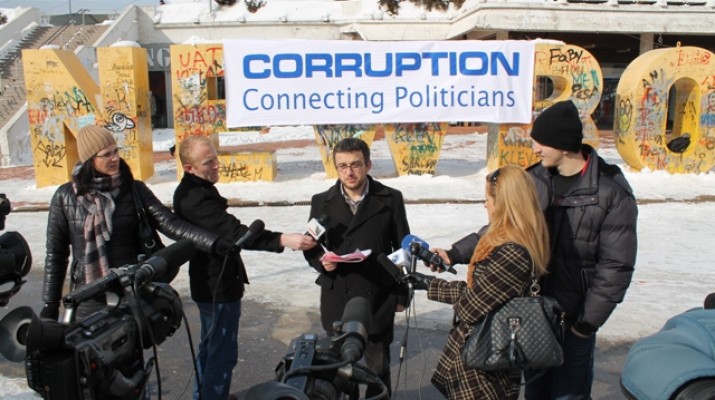
“Corruption Connecting Politicians”

Prishtina, February 17, 2012 – Citizens of Kosovo today are celebrating the fourth anniversary of independence that came as a result of great sacrifices of the people of Kosovo during many years and the strong support of friendly countries of the freedom-loving peoples.
We all celebrate the creation of the state of Kosovo, which is built on democratic principles, which means a state for citizens, and by citizens.

While today we have lots of reason to celebrate, February 17 should also be a date when we should remember the values and principles on which the state of Kosovo was founded. While the political elite in Kosovo today will speak about the achievements, we will talk about corruption which threatens the state of Kosovo the most.
Corruption and organized crime are harming the economic progress of Kosovo having a direct impact on worsening social situation, the democratic functioning of the state institutions of Kosovo and above all prevent conclusion of supervision of independence of Kosovo.

In this sense, today”s activity, ‘Corruption Connecting Politicians’, is a civic protest against a rude behavior on the part of the country’s political elite, which has lost the country into corruption. Corruption is widespread in all state institutions because this is the will of Kosovo’s political elite, who made the public budget of the country a permanent source of funding of their pleasures.
To build a strong and functional state it is vital that citizens have confidence in institutions. Corruption and organized crime have ruined the relationship between state and citizen. While today we celebrate the political independence, it”s a long way ahead that the state of Kosovo should do to have genuine independence in order to have the self-consistency. Corruption is a major obstacle in this regard.
Corruption and organized crime have clouded the future of Kosovo. The only way to lasting peace in Kosovo, is fighting corruption by the state institutions of Kosovo and interruption of connections between political elites and crime.

FOL: The Anti-corruption National Council should not become a “copy” of other institutions

Pristina, February 15 ” Today, with the initiative of the President of the Republic is held the first meeting of the Anti-corruption National Council. We consider that the establishment of this Council should be the crucial step in enhancing the effectiveness of institutional activities in preventing and fighting corruption in Kosovo.

FOL considers that the Council must indeed engage in concrete actions, in no way be reduced to empty and rhetoric speeches of senior officials of the institutions fighting corruption.

FOL considers that the Council must take concrete actions in order to realize joint activities of the institutions in fight against corruption and not become one of the so far mechanisms showing no concrete results.

FOL believes that corruption continues to harm the processes of state building, democratization and good governance.

Regular reports of FOL Movement have highlighted the lack of coordination between institutions which are responsible to fight against corruption. Many times we have asked to establish a platform that enables a better exchange of information between these institutions.

Although FOL is not part of this Council, we will monitor continuously its work.

Meanwhile, other participants in this debate expressed some of their concerns about the rush drafting this strategy, ignoring the calls of civil society for implementation of empirical researches, for a more direct approach in identifying the sectors that are most affected by corruption, such as public procurement, privatization of public enterprises, political parties, and a more stable time limit of anti-corruption measures.

2011

The Anti-corruption Strategy 2012-2016 with the same weaknesses of previous strategies

Prishtina, 27 January “ Today Movement FOL held the debate on “Anti-Corruption Strategy 2012-2016: Expectations of institutions and civil society in the fight against corruption”. In this debate was discussed about the weaknesses and advantages of this strategy in preventing and fighting corruption.

The researcher of Movement FOL Armend Mazreku, stated that “during the process of drafting the new strategy 2012-2016, it has unfortunately repeated some of the weaknesses of the previous strategy.” Further, he stated that “the fight against corruption cannot be successful if there is no political will of public institutions. The Lack of preliminary analyses which would indicate the high level of corruption, its causes and characteristics, the lack of an objective analyses on the applicability of the previous strategy 2009-2011, and a more comprehensive inclusion of all sectors in the strategy 2012-2016 are some of the concerns of Movement FOL ” said Mr. Mazreku.

Meanwhile, the chief of the division for legislation and education in the Anti-Corruption Agency, Burim Sadiku, said on the other hand, that the Agency has made a report of the previous strategy. According to him “the new strategy is grounded on local and international institutions” estimations regarding the level of corruption in our country.” Further he stated that, “the purpose of the new strategy is the progressive reduction of the level of corruption in our country and the Agency, along with other institutions and civil society, will do anything possible to apply this strategy and thus to achieve the expected results”.